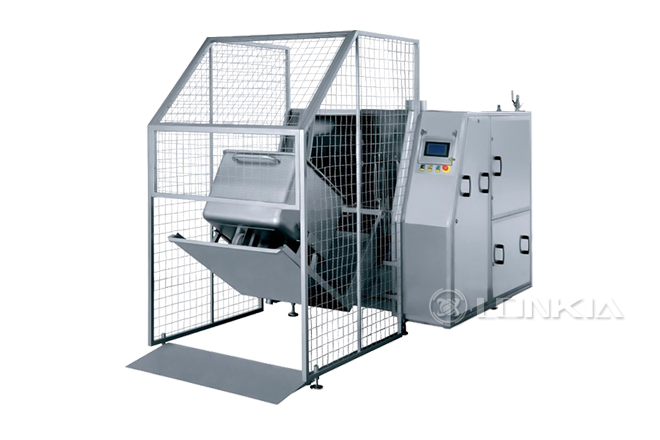
In the chocolate production process, molds play a crucial role in directly influencing product appearance, molding results, and production efficiency. As market demands for product quality and production stability continue to rise, an increasing number of chocolate manufacturers are focusing on the mould cleaning process and incorporating chocolate mould washing machines into their production line upgrade plans. For modern chocolate factories, mold cleaning is no longer merely a support task but a critical step in ensuring product quality and improving production efficiency.
Why Mold Cleaning Has Become a Critical Step in Production?
Over extended periods of use, chocolate molds are prone to accumulating chocolate debris, syrup, grease, and other processing residues. If not cleaned thoroughly, this not only affects the surface finish of the next batch of products but may also lead to product defects and increase the scrap rate. Particularly in high-standard chocolate production, even minute stains and water marks on the mold surface can be directly visible on the finished product.
Traditional manual cleaning methods suffer from low efficiency and inconsistent cleaning quality, whereas automatic chocolate mould washing machines can standardize the cleaning process, ensuring that every mould achieves a consistent level of cleanliness.
How Chocolate Mold Cleaning Machines Improve Production Efficiency?
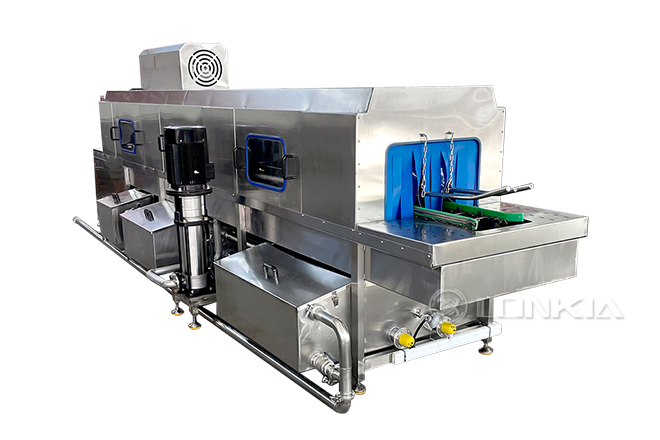
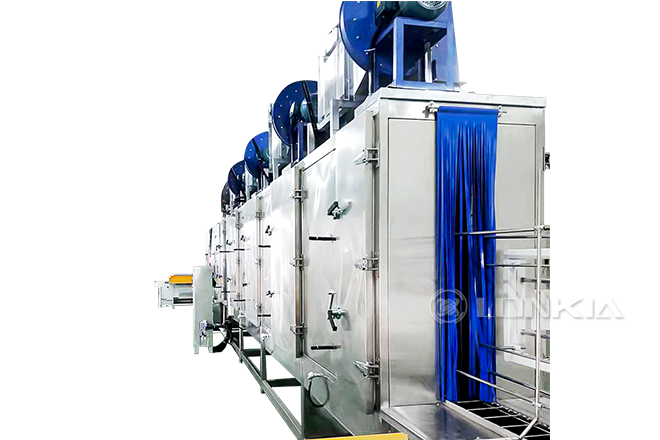
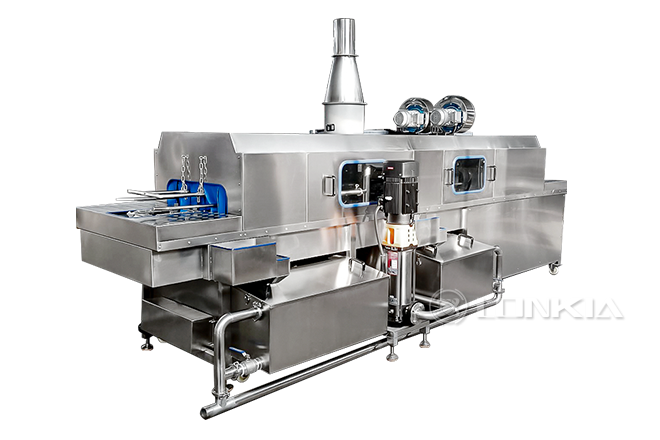
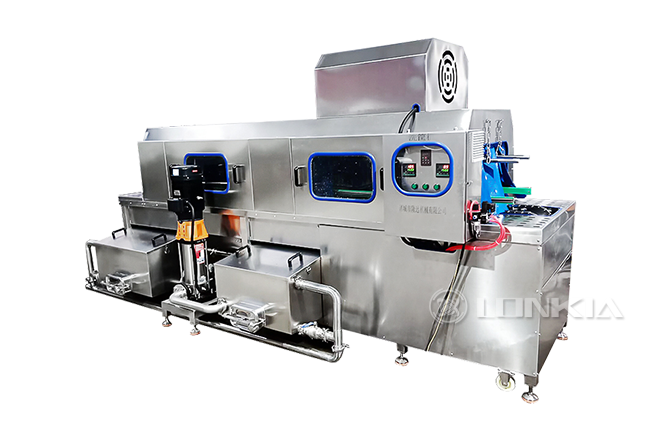
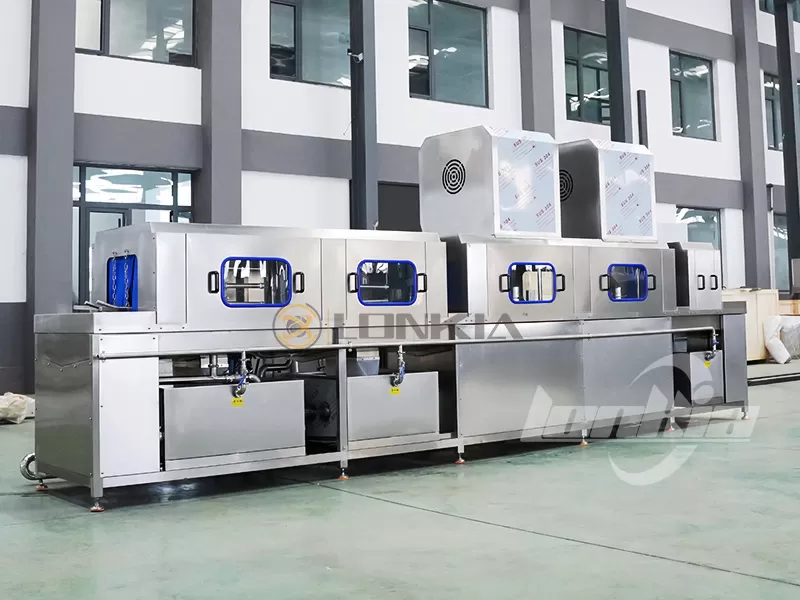
Modern chocolate mould washers typically employ a multi-stage cleaning structure, including pre-rinsing, main washing, rinsing, and hot-air drying, to enable continuous operation. High-pressure spray systems cover every corner of the mold surface, effectively removing stubborn residues, while automatic conveyor systems reduce manual handling and waiting times.
For manufacturers, faster mold turnaround means greater production continuity. Molds do not have to wait long for cleaning and drying and can be quickly returned to production, thereby improving overall equipment utilization.
Drying Effectively Impacts Chocolate Quality
Many companies tend to overlook the importance of the drying process when purchasing equipment. In fact, even after cleaning, water droplets or mineral deposits left on the mold surface can still affect the quality of the molded chocolate.
Professional chocolate mold washers are typically equipped with a hot-air circulation drying system combined with blow-dry technology, ensuring the mold surfaces are left free of visible water marks. Some systems also use demineralized water for the final rinse to prevent scale residue from causing defects on the chocolate surface.
Companies Place Greater Emphasis on Long-Term, Stable Equipment Operation
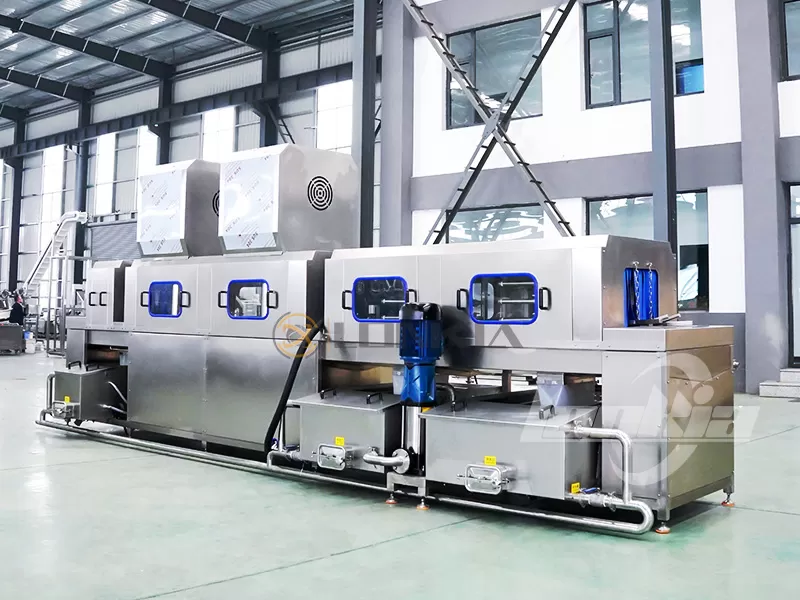
In addition to cleaning performance, equipment stability is equally important in procurement decisions. High-quality chocolate mold washers are typically constructed from food-grade stainless steel, offering corrosion resistance, ease of maintenance, and a long service life. Modular design also simplifies future maintenance and allows for expansion and upgrades based on production needs.
Lonkia has accumulated extensive experience in the field of chocolate mold cleaning. Its chocolate mould washing machine utilizes high-pressure spraying, intelligent control, and efficient drying technologies, and can be customized according to customers' mold specifications and production requirements to help companies achieve more consistent cleaning results.
Conclusion
As the chocolate industry continues to raise its standards for product quality, production efficiency, and hygiene,chocolate mould washing machines are gradually becoming an essential component of modern production lines. Compared to traditional cleaning methods, automated equipment not only delivers more consistent cleaning and drying results but also improves mold turnaround efficiency and ensures consistent product quality.
For companies seeking to enhance their production management and product competitiveness, investing in a reliable chocolate mold cleaning machine has become a common choice among an increasing number of manufacturers.