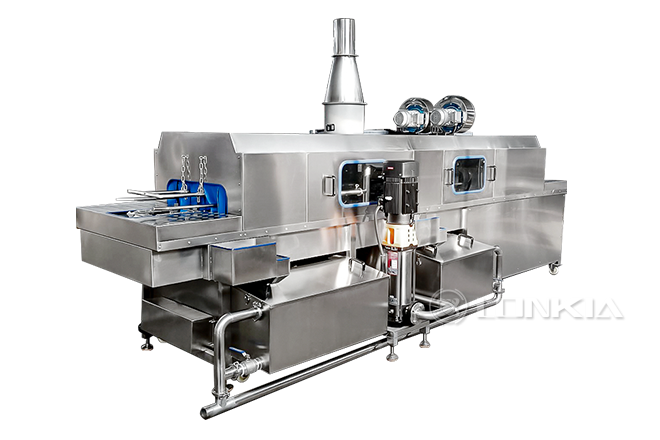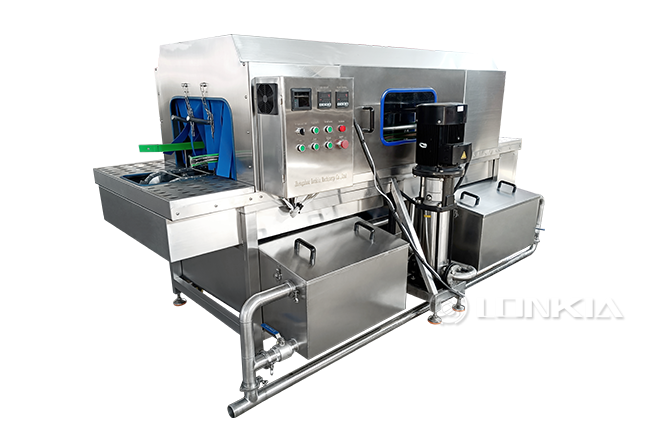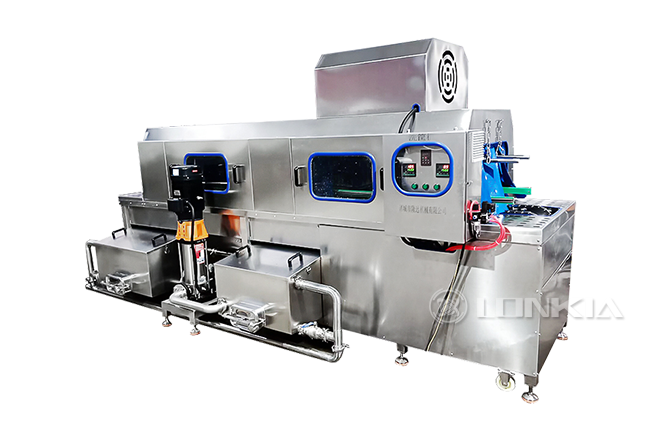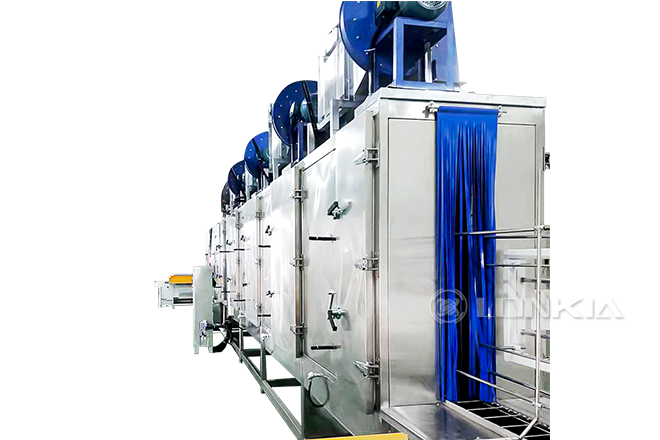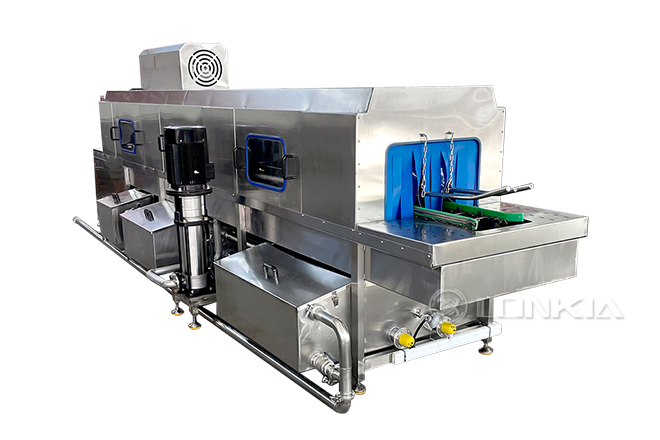
In industries such as food processing, central kitchens, dairy, and condiments, plastic buckets, stainless steel buckets, and reusable containers are frequently reused. If they are not thoroughly cleaned, it will not only affect the quality of the next batch of products but also reduce production efficiency. As a result, more and more companies are adopting bucket wash machines to automate the cleaning process.
So, how exactly does a bucket washer work? This article will provide a detailed overview of the complete cleaning process and help you understand the core components of the equipment as well as the key factors that influence cleaning effectiveness.
How Does a Bucket Washer Work?
A bucket wash machine is a continuous, automated cleaning system that uses a conveyor system to transport buckets into the cleaning area. It then employs multiple stages—including high-pressure spraying, water circulation and filtration, and hot water rinsing—to thoroughly clean both the interior and exterior surfaces of the buckets.
Compared to manual cleaning, the equipment maintains consistent spray pressure and cleaning duration, ensuring uniform cleaning results for every bucket. At the same time, it reduces manual labor and enhances production continuity.
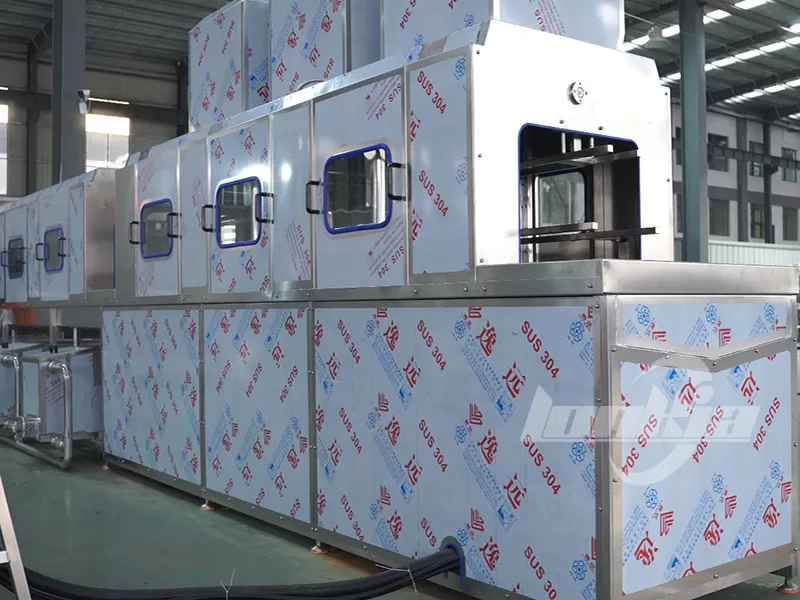
Analysis of the Complete Bucket Wash Machine Cleaning Process
1. Automatic Bucket Conveyance
Operators place buckets awaiting cleaning onto the conveyor system, and the bucket washing equipment automatically transports them through each cleaning station. The conveyor speed can be adjusted based on bucket size and production cycle, ensuring a stable and smooth cleaning process.
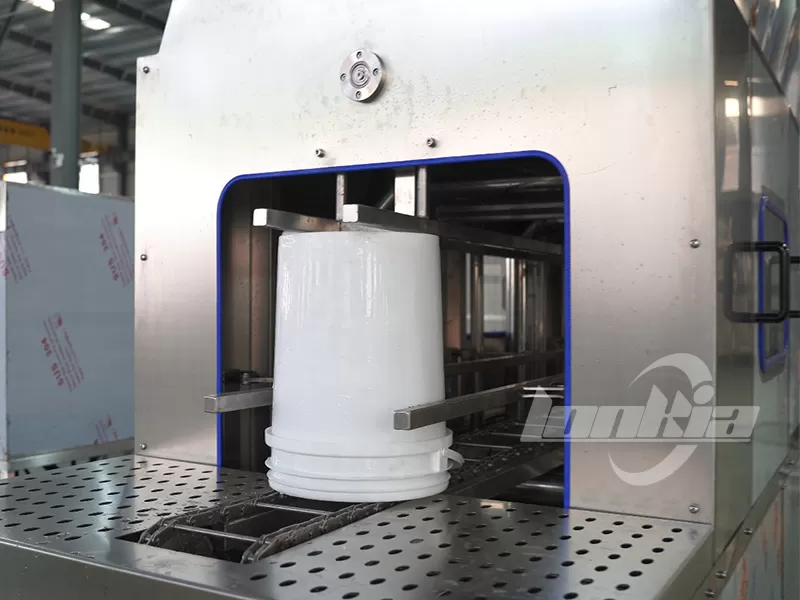
2. Pre-Rinse to Remove Surface Contaminants
Once the buckets enter the pre-wash zone, multiple sets of nozzles first rinse the bucket bodies, quickly removing dirt, debris, residues, and other attachments. This reduces the cleaning burden on the subsequent main wash zone while improving overall cleaning efficiency.
3. High-Pressure Spray Deep Cleaning
This is the most critical stage of the bucket washer's operation.
The equipment uses multi-angle high-pressure nozzles to spray simultaneously from the interior, exterior walls, bottom, and edges of the bucket, ensuring that the water flow covers as much of the surface as possible. For stubborn grease, sauces, or food residues, hot water or cleaning agents can be used as needed to further enhance cleaning effectiveness. The multi-directional spray design also minimizes cleaning blind spots, ensuring the bucket is thoroughly clean both inside and out.
4. Rinsing and Recirculating Filtration
After the main cleaning cycle is complete, the buckets enter the rinsing zone to further flush away residual contaminants and cleaning solution.
At the same time, the washing machine for bucket is equipped with a recirculating water tank and filtration system that filters impurities from the recirculated water before reusing it. This maintains stable operation of the spray system, reduces nozzle clogging, and improves the reliability of continuous operation.
5. Discharge to the Next Process
Once the entire cleaning process is complete, the buckets are automatically conveyed to the discharge end, where they can proceed directly to manual inspection, disinfection, or subsequent production stages. The entire process is completed continuously, eliminating the need for frequent manual handling.
What Factors Affect the Cleaning Effectiveness of the Bucket Washing Machine?
Many customers believe that as long as the spray pressure is sufficient, the cleaning results will be optimal. In reality, cleaning quality is influenced by multiple factors, such as nozzle layout, water temperature, conveyor speed, spray duration, and the filtration system.
Furthermore, different bucket types vary in height, diameter, material, and degree of contamination. Therefore, the equipment should support adjustments to spray parameters and conveyor cycle times to meet the cleaning needs of different products. For companies with special dimensions or specific process requirements, customized solutions are also available to align the bucket wash machine with actual production needs better.
Why Are More and More Companies Choosing Automatic Bucket Washers?
Automatic bucket wash machines not only enable a continuous and stable cleaning process but also ensure consistent cleaning results for every bucket, reducing variations caused by manual operation. At the same time, the equipment features a modular design that facilitates maintenance and ensures stable operation, and can be configured to add functions such as hot-water rinsing and disinfection based on production needs.
Lonkia specializes in automated cleaning equipment for various types of containers. We provide customized solutions based on customers' bucket specifications, production capacity, and process requirements, helping companies achieve more stable and efficient bucket cleaning processes and providing reliable support for downstream production.