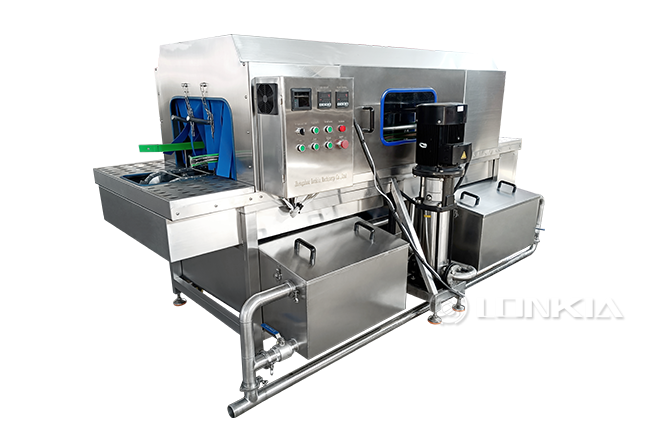
Whether egg trays need to be air-dried after washing depends on how the trays are used, the subsequent processing steps, and the requirements for residual moisture. For egg grading, packaging, and egg processing companies, if there is a significant amount of water accumulated in the wells of washed plastic egg trays, it may affect the efficiency of subsequent stacking, transportation, and handling. Therefore, when selecting an egg tray washer machine, in addition to considering its cleaning capacity, you should also evaluate whether the air-drying system meets actual production needs.
Why Is Residual Moisture Still a Concern After Egg Trays Are Washed?
1. Water Easily Accumulates in the Egg Tray Wells
Plastic egg trays typically feature multiple wells, edges, and connecting sections. After spray washing and hot water rinsing, moisture may remain in these areas, and relying solely on natural drainage may not remove it quickly enough.
If the egg trays need to be stacked immediately or moved to the next process, residual moisture may complicate handling and throughput. Therefore, companies should determine whether an additional water-removal step is necessary based on the egg tray's structure and discharge requirements.
2. Cleaning and Drying Serve Different Purposes
The cleaning process primarily removes egg liquid, broken eggshells, and other surface contaminants, while the drying process is mainly used to reduce residual moisture after cleaning. The two processes are not interchangeable, and air-drying is not equivalent to disinfection.
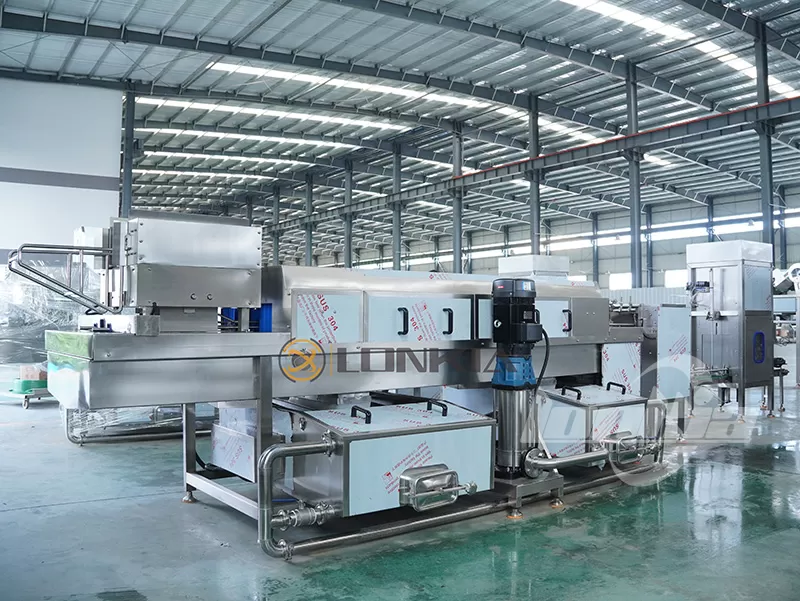
How Does an Egg Tray Washer Reduce Moisture on Egg Tray Surfaces?
1. Reduce Water Accumulation Through Conveying and Draining
After the egg trays pass through the egg tray washer machine's rinsing zone, appropriate conveying speeds and discharge designs can allow some moisture to drain naturally. For trays with deep grooves or those prone to water accumulation, special attention should be paid to the orientation of the trays during discharge and structural compatibility.
2. Configure an Optional Air-Drying System
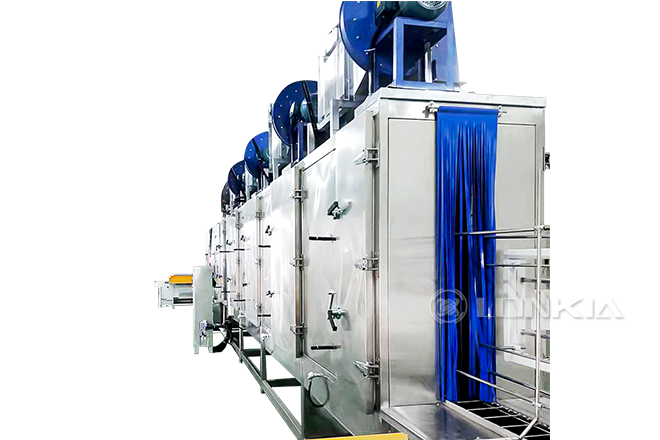
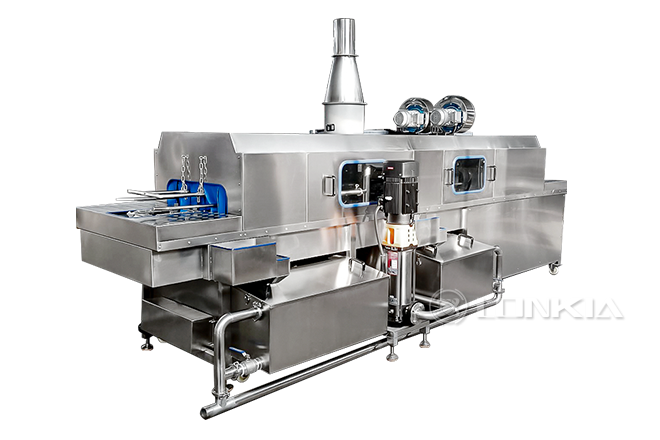
LONKIA egg tray washer machines can be configured with an air-drying zone. Airflow directed at the surface of the egg trays helps blow away some of the adhering moisture, shortening the time required for subsequent draining. Actual results depend on airflow volume, airflow direction, tray structure, conveyor speed, and air intake conditions.
When purchasing, it is recommended to verify the length of the air-drying zone, the fan configuration, and the compatible tray specifications, and to conduct tests using actual trays—rather than judging drying capacity solely based on whether the equipment is equipped with a fan.
In Which Situations Is the Air-drying Function Recommended?
1. When Rapid Turnaround Is Required After Washing
If egg trays need to be returned quickly to the grading or packaging stages after washing, the air-drying system helps reduce surface moisture and improves the convenience of subsequent handling.
2. When Egg Trays Need to Be Stacked or Transported in Bulk
When trays need to be continuously stacked, temporarily stored, or transported, pay attention to whether water easily accumulates in the grooves and whether residual moisture affects stacking and subsequent use. If natural drainage already meets the requirements, an air-drying configuration may not be necessary.
How to Evaluate Air-Drying Performance When Selecting an Egg Tray Washer?
Before purchasing an egg tray washer machine, it is recommended to provide the supplier with the length, width, and height of the egg trays, along with photos of their structure, and to specify the hourly processing capacity, post-washing handling methods, and desired residual moisture levels. You should also confirm whether the equipment includes an air-drying zone, the fan specifications, the discharge method, and maintenance requirements.
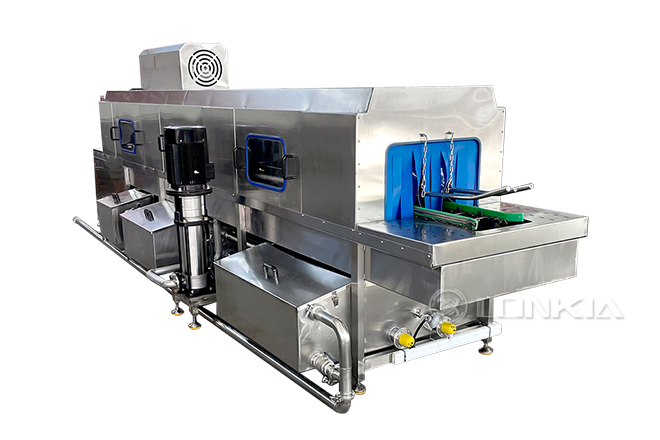
For the LONKIA egg tray washer machine, companies can evaluate whether the entire process—combining pre-wash, main wash, hot water rinse, and optional air-drying configuration—is suitable for their existing production workflow. It is recommended to conduct operational tests using actual egg trays before equipment acceptance, check for residual moisture on surfaces and in grooves, and adjust conveyor speed and air-drying parameters based on the results.
Conclusion
There is no one-size-fits-all answer to whether egg trays need to be air-dried after washing. The key factors are the tray structure, post-washing usage, and production cycle. When selecting an egg tray washer machine, cleaning effectiveness, residual moisture, conveyor efficiency, and equipment maintenance should all be considered to determine the configuration that best suits your specific production needs.