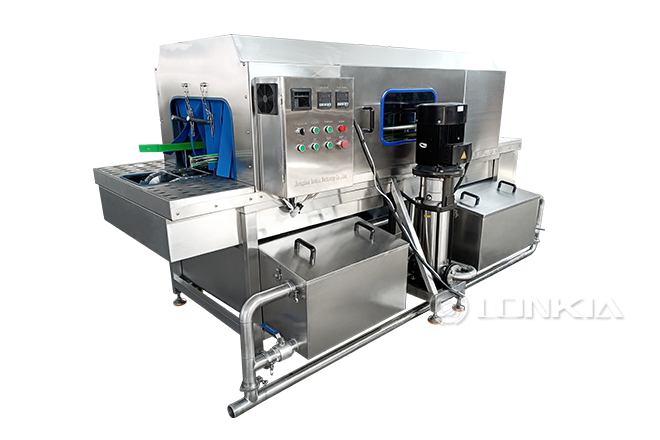
In the food processing, warehousing and logistics, and industrial manufacturing sectors, plastic pallets are widely used for product transportation, material handling, and warehouse management. Due to differences in application scenarios, plastic pallets vary significantly in terms of dimensions, base structure, surface design, and load-bearing capacity. These differences also present challenges for pallet cleaning. So, can pallet washing machines handle different types of plastic pallets? The answer is yes, but to ensure effective cleaning and stable equipment operation, the conveyor system, spray nozzles, and cleaning process must be properly configured based on the pallet's actual specifications and structure.
What Types of Plastic Pallets Can Pallet Washing Machines Clean?
The structure of a plastic pallet directly influences where dirt adheres and determines which areas require special attention during the cleaning process.
1. Flat-Panel Plastic Pallets
Flat-panel pallets have a relatively smooth surface, with dirt typically concentrated on the surface, edges, and bottom support areas. During cleaning, multi-angle rinsing using top, bottom, and side nozzles can remove dust, grease, and adhered residues.
2. Mesh-Type Plastic Pallets
Mesh-type pallets feature numerous holes and an interlaced support structure, making it easy for food residue and grime to accumulate at the mesh junctions and on the bottom. During cleaning, special attention must be paid to nozzle angles and water coverage to ensure thorough contact with these areas.
3. Pallets with Reinforcing Ribs and Complex Bottom Structures
Some pallets have reinforcing ribs, grooves, and multiple support feet on the bottom, resulting in a relatively complex structure that can create cleaning blind spots. The pallet cleaning equipment must improve cleaning effectiveness in these areas through a reasonable nozzle layout and multi-angle spraying.
How Do Pallet Washers Adapt to Different Pallet Structures?
When dealing with plastic pallets of varying specifications, it is not sufficient to simply use an identical equipment configuration. Adjustments must primarily be made in three areas: the conveyor system, the spray system, and the cleaning process.
1. Configuring the Conveyor System Based on Pallet Dimensions
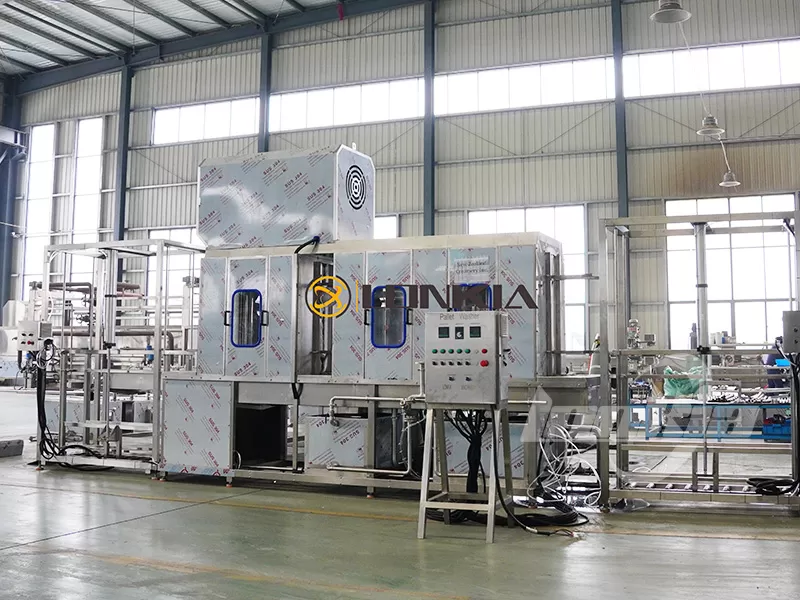
The length, width, height, and weight of the pallets influence the design of the automatic pallet washer's conveyor channel. Before purchasing, it is necessary to confirm that the pallets can enter the cleaning area smoothly and to verify that the conveyor chain, guide structures, and drive system are suitable for the actual pallet specifications to avoid issues such as jamming, misalignment, or unstable conveyance.
2. Improving Cleaning Effectiveness Through Multi-Angle Spraying
The number of nozzles, their mounting positions, and spray angles directly affect the cleaning coverage. For areas such as grids, grooves, and bottom support feet, the positions of top, bottom, and side spray nozzles must be strategically arranged. Combining rotating nozzles with high-pressure water jets can improve cleaning performance for pallets with complex structures and minimize cleaning blind spots.
3. Configure the Cleaning Process Based on Contamination Level
Pallet washing machines typically employ a multi-stage continuous cleaning process:
- Pre-wash: Use a water jet to remove dust, dirt, and loose debris from the pallet surface.
- Main Wash: High-pressure spraying, combined with appropriate water temperature and detergent, is used to treat grease and stubborn residues.
- Rinse: Trays are rinsed with clean water to remove residual dirt and detergent.
- Drying: An air-drying system is configured according to operational needs to reduce residual moisture on the tray surfaces.
Properly scheduling the cleaning time and spray parameters for each stage helps improve cleaning effectiveness for trays of various structures.
What Information Should Be Confirmed Before Purchasing a Tray Washer?
To avoid issues such as trays failing to move through the conveyor properly or incomplete cleaning after the automatic pallet washer is put into use, it is recommended to prepare the following information before purchase:
- Tray Dimensions: Provide length, width, height, and weight to confirm compatibility with the equipment's conveyor channel.
- Tray Structure: Provide photos of the front, bottom, and sides, focusing on areas such as grids, grooves, and support legs.
- Degree of Contamination: Specify whether the pallets are primarily contaminated with dust, dirt, grease, or food residue.
- Cleaning Throughput: Determine the equipment's processing capacity based on the number of pallets that need to be processed per hour.
- Drying Requirements: If cleaned pallets need to proceed immediately to the next production step, confirm in advance whether a drying system is required.
This information helps equipment manufacturers assess pallet compatibility and develop a more appropriate equipment solution.
Customized Solutions for LONKIA Pallet Washers
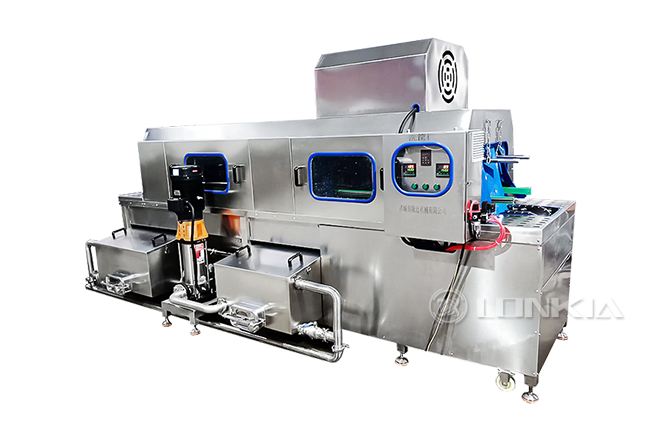
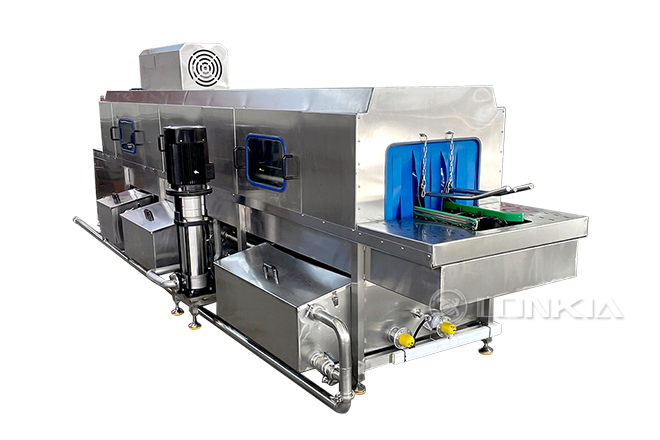
LONKIA offers pallet washing machines with a reference processing capacity of 200–800 pallets per hour. The equipment features a SUS304 stainless steel structure and is equipped with a PLC automatic control system. The conveyor channels, spray layout, and washing process can be adjusted based on the customer's pallet dimensions, structural characteristics, degree of contamination, and production capacity requirements.
For companies that need to process plastic pallets of various specifications, we recommend providing photographs of the actual pallets, their dimensions, and cleaning requirements prior to purchase so that our engineering team can assess the equipment's suitability. By optimally configuring the conveyor and spray systems, the equipment can better meet the continuous cleaning needs of different pallets.
If you are looking for automatic cleaning equipment suitable for various plastic pallets, please contact LONKIA. Provide your pallet specifications and cleaning requirements to receive a tailored equipment configuration plan and quote.