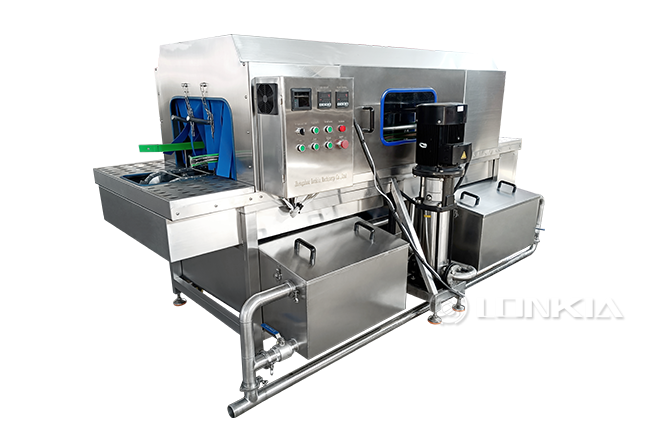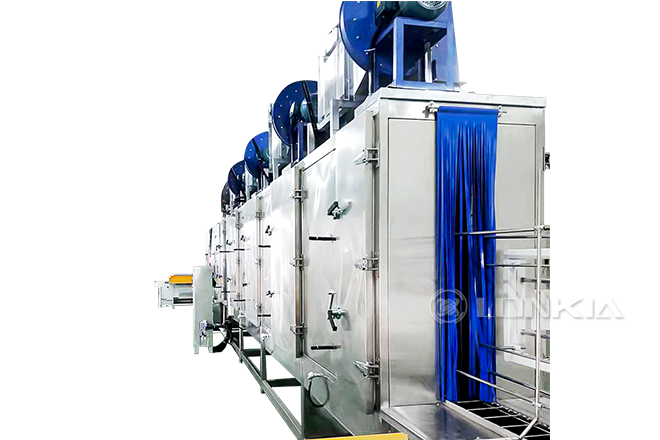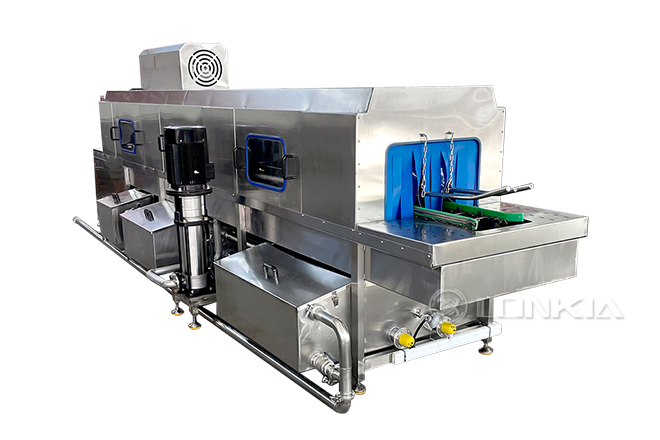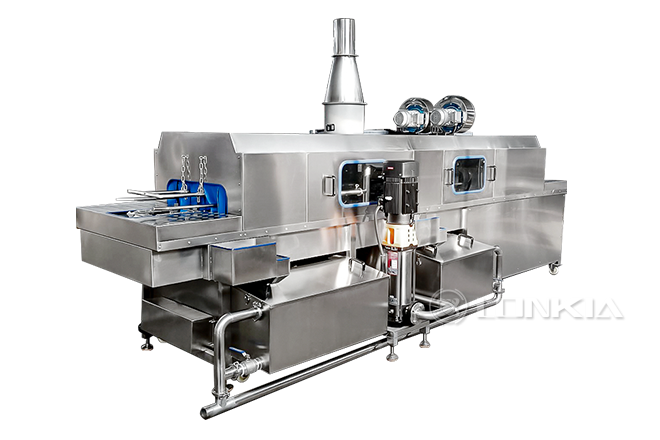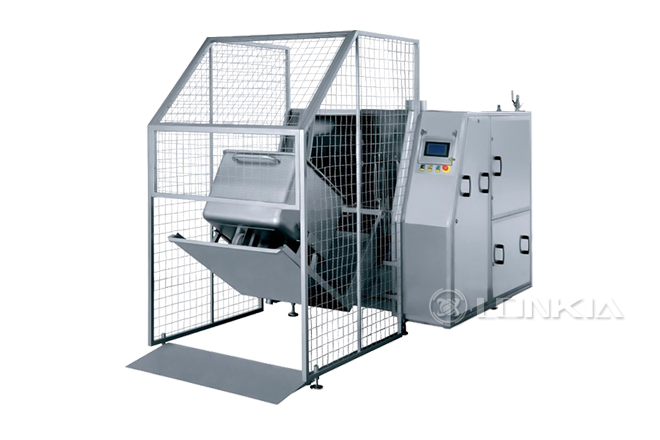
Automatic pallet washers are widely used in industries that require the reuse of pallets, prioritize cleanliness management, and seek consistent turnover efficiency. From food processing to warehousing and logistics, different industries have varying requirements for pallet cleaning frequency, types of contamination, and hygiene standards. Selecting the appropriate automatic pallet washer requires considering pallet specifications, actual contamination levels, and production pace to determine the cleaning process and equipment configuration.
Industries Suitable for Automatic Pallet Washers
1. Food Processing Industry
During food processing, pallets may come into contact with food residues, grease, starch, and other contaminants. If not thoroughly cleaned, pallets may increase the risk of cross-contamination when reused.
Automatic pallet washers typically involve steps such as pre-wash, main wash, and clear-water rinse. Pre-washing removes loose surface contaminants; main washing further cleans the pallets through spraying, water temperature, and appropriate detergents; and rinsing removes residual detergent. For facilities requiring drying, a drying system may also be considered.
When purchasing, it is important to verify that the nozzles can reach areas prone to dirt accumulation—such as the bottom of the pallet, support legs, and grooves—and to set cleaning parameters based on the hygiene requirements of the food processing operations.
2. Beverage Manufacturing
In beverage plants, pallets are typically used for the transport of raw materials, packaging materials, or finished products. Pallets may be contaminated with sugar syrup, beverage residues, dust, or stains from the packaging area; therefore, cleaning procedures must be developed based on the actual level of contamination.
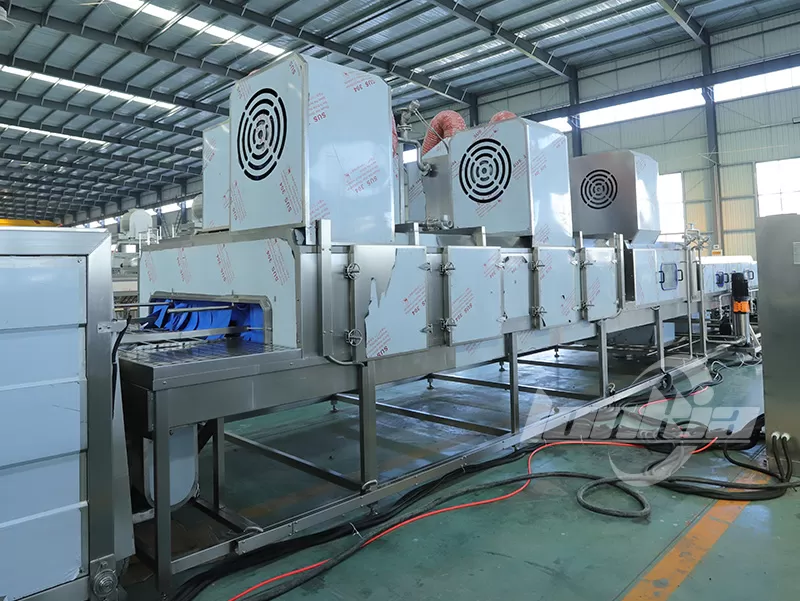
An automatic pallet washer equipped with a continuous conveyor system allows pallets to pass sequentially through different cleaning zones, reducing manual handling and ensuring a more consistent cleaning process.
For production lines requiring continuous turnover, it is recommended to prioritize evaluating hourly throughput capacity, feed-in and feed-out coordination, cleaning time, and drying requirements to prevent cleaning equipment from becoming a bottleneck in the production process.
3. Warehousing and Logistics
In warehousing centers and logistics distribution operations, pallets are frequently reused across different areas, and their surfaces are prone to accumulating dust, mud, and residues generated during transportation. When pallet volumes are high and turnover is frequent, manual cleaning may struggle to meet continuous processing demands.
Automatic pallet washers use conveyor systems and multi-angle spray systems to perform continuous cleaning, helping to improve pallet processing efficiency. For companies using plastic pallets of different sizes, it is also necessary to verify that the equipment’s conveyor width, inlet height, and spray coverage are compatible.
If a facility needs to further reduce manual handling, it should evaluate how the washer integrates with automated de-stacking, conveying, and stacking equipment.
4. Cold Chain and Distribution
Pallets used in cold chain logistics are repeatedly circulated through warehousing, sorting, and transportation. Packaging debris, mud, or other contaminants may remain on the pallet surfaces, and cleaning requirements depend on the specific cargo being transported and the intended use of the pallets.
When selecting pallet washing equipment, focus on cleaning effectiveness, processing capacity, and the drainage and drying requirements after pallet washing. For applications with specific hygiene standards, also verify that the cleaning procedures meet relevant requirements and, if necessary, employ validated disinfection processes.
How to Choose the Right Automatic Pallet Washer?
Cleaning requirements vary by industry; it is recommended to confirm the following information before purchasing:
- Pallet specifications: Pallet dimensions, material, weight, and bottom structure.
- Cleaning requirements: Type of contamination, cleaning standards, and whether drying or disinfection is required.
- Production capacity: Number of pallets to be processed per hour or per day.
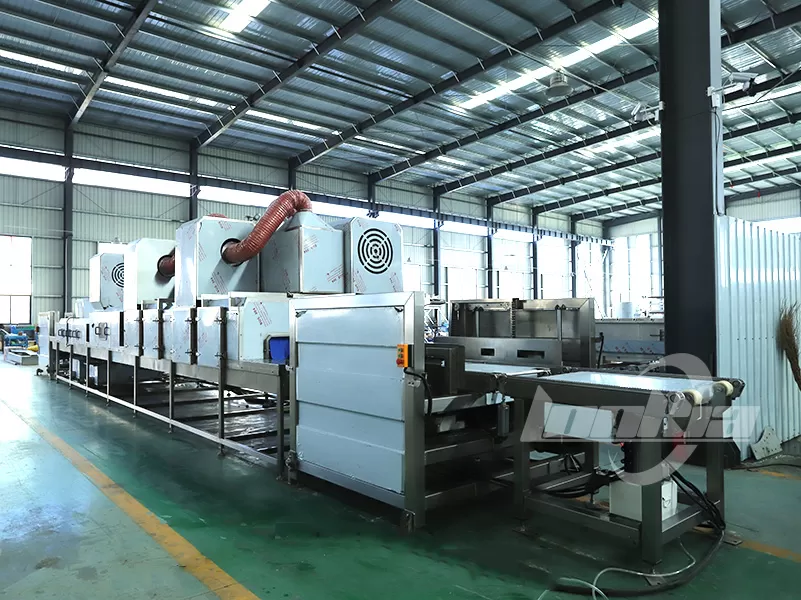
- Machine configuration: Cleaning stages, nozzle layout, heating method, and conveyor system.
- Factory conditions: Power supply, water supply, drainage, installation space, and existing production line layout.
LONKIA can assist in determining an equipment solution based on pallet specifications, cleaning requirements, and target production capacity. By confirming key parameters in advance, companies can more accurately assess whether the equipment is suitable for their existing production processes and minimize the need for configuration adjustments after purchase.
If you are looking for a suitable automatic pallet washer, we recommend having your pallet dimensions, types of contaminants, and expected throughput ready to facilitate further confirmation of equipment specifications, cleaning processes, and pricing.