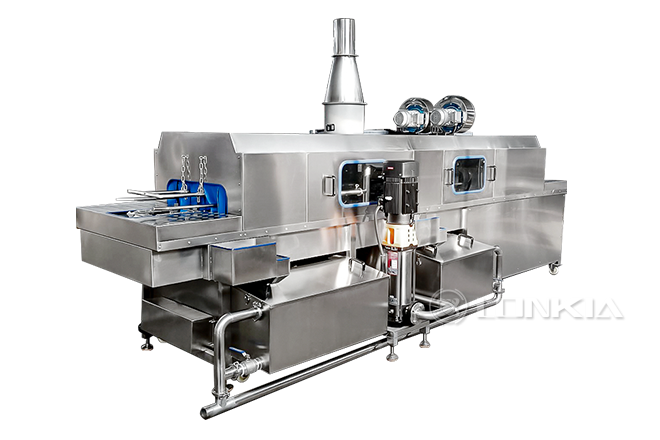
For food processing plants, meat processing plants, fruit and vegetable processing plants, and other manufacturing facilities that need to continuously process large volumes of returnable pallets, processing capacity is often one of the first parameters considered when purchasing a pallet cleaning machine. However, the "pallets per hour" rating listed for the equipment is not the only factor determining production capacity. What truly affects the equipment's processing capacity is the combined interaction of conveyor speed, cleaning time, pallet specifications, the degree of contamination, and the cleaning system as a whole.
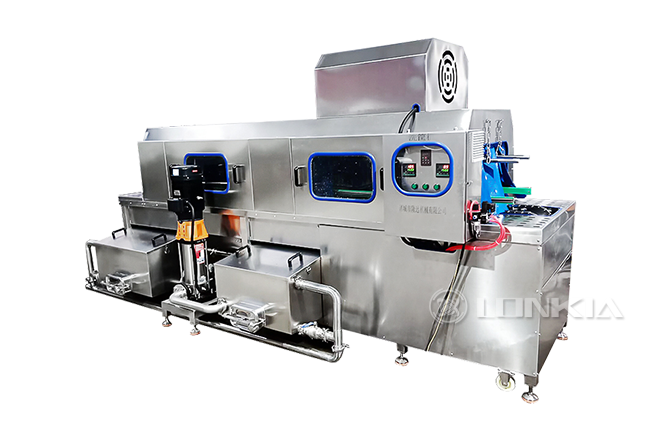
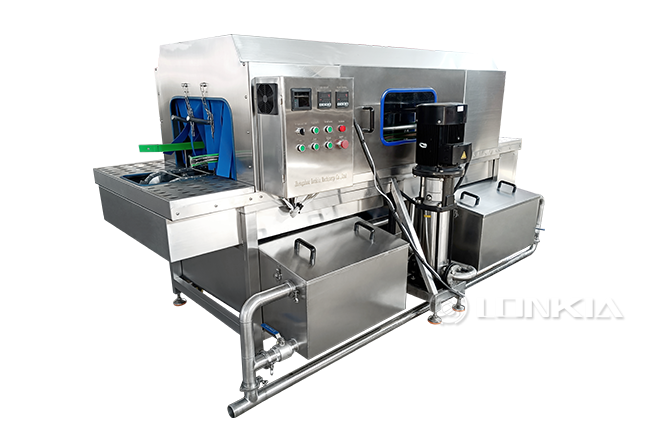
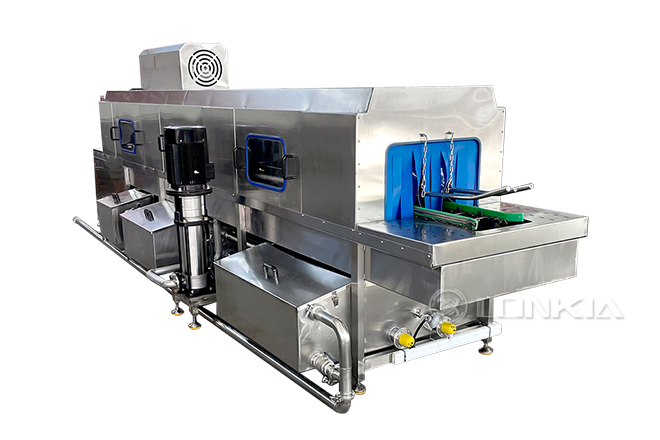
Lonkia pallet washers are designed with a processing capacity of 30–1,000 pallets per hour. Through continuous conveying and a multi-stage washing system, pallets are fed into the machine, washed, and processed according to a preset speed.
Factors Affecting Pallet Washer Throughput
Conveyor Speed Determines the Number of Pallets Processed Per Unit of Time
After entering the pallet cleaning machine, pallets are conveyed sequentially through different washing zones via the conveyor belt. Therefore, the conveyor speed directly affects how many pallets can be processed per unit of time.
The equipment uses a variable-frequency drive motor, allowing the conveyor speed to be adjusted according to production volume. When pallets are lightly soiled and higher throughput is required, the operating speed can be appropriately increased; when pallets are heavily soiled, the operating speed must be adjusted based on actual cleaning effectiveness to ensure sufficient contact time for the spray and brush cleaning stages.
Cleaning Time Should Not Be Judged Solely by "Speed"
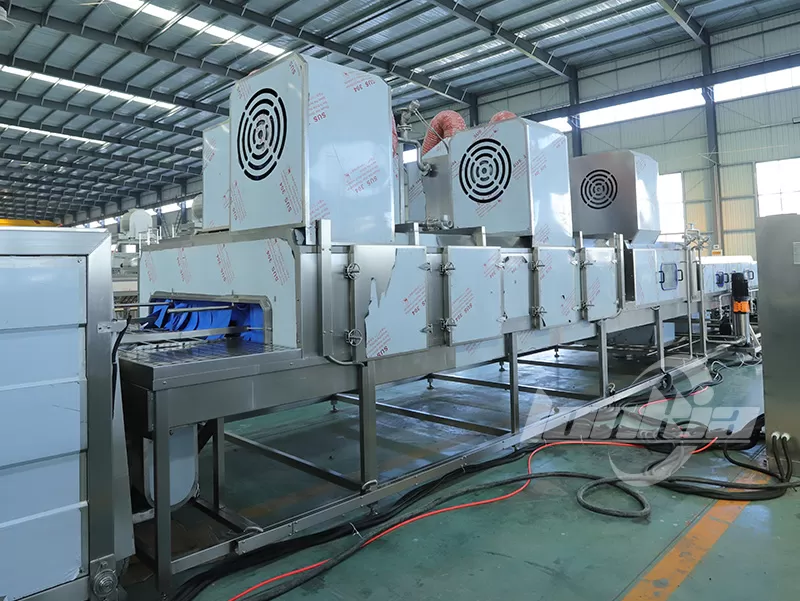
Increasing the conveyor speed does not necessarily result in higher effective throughput. If the time a pallet spends in the machine is too short, the high-pressure water jets and cleaning solution may not be able to fully penetrate the surface.
Therefore, the throughput of a pallet cleaning machine requires a balance between conveyor speed and cleaning time. Lonkia equipment employs three stages—hot alkaline water cleaning, high-temperature, high-pressure hot water cleaning, and high-pressure clean water rinsing—allowing each cleaning stage to perform distinct functions.
Pallet Size and Structure Also Affect Throughput
The length, width, height, and surface structure of different pallets all affect conveying and spraying efficiency. Larger pallets may require more optimal conveying spacing and nozzle layout; pallets with holes, grooves, or complex structures also require ensuring that the water flow provides full coverage.
Therefore, when determining throughput, customers should provide pallet dimensions and actual structural details.
The Degree of Contamination Determines the Actual Cleaning Pace
Different contaminants—such as soil, food residue, and grease—require varying cleaning pressures, temperatures, and exposure times. For heavily soiled pallets, simply prioritizing conveyor speed may result in reduced cleaning effectiveness.
The pallet cleaning machine employs a three-dimensional, four-directional nozzle arrangement, combined with high-pressure spraying and rotating brushes, to clean the pallet surface from multiple directions, thereby enhancing effective cleaning capacity per unit of time.
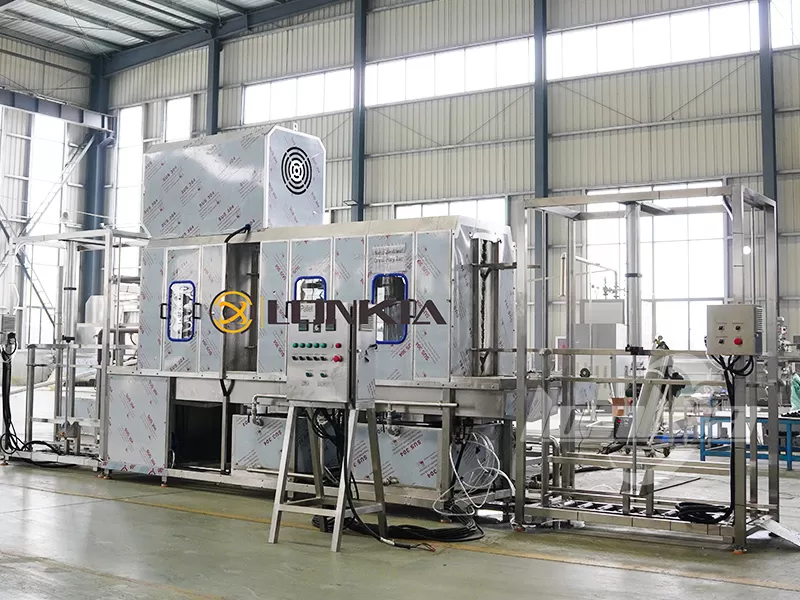
How to Determine the Appropriate Pallet Cleaning Machine Capacity?
When purchasing, it is recommended to provide the following information:
- Number of pallets to be cleaned per hour
- Specific pallet dimensions and structure
- Primary types of pallet contamination
- Requirements for cleaning effectiveness
- Whether post-cleaning drying is required
- Conveyor speed of the existing production line
This approach ensures that the appropriate equipment configuration is determined based on actual operating conditions, rather than simply selecting a higher capacity figure.
Conclusion
Pallet cleaning machine capacity is the result of the combined factors of conveyor speed, cleaning time, pallet specifications, and the degree of contamination. When selecting equipment, what truly matters is matching the machine's processing capacity to the actual production pace. Lonkia can provide tailored equipment solutions based on pallet parameters, target throughput, and cleaning requirements, helping customers achieve the most suitable pallet cleaning configuration.