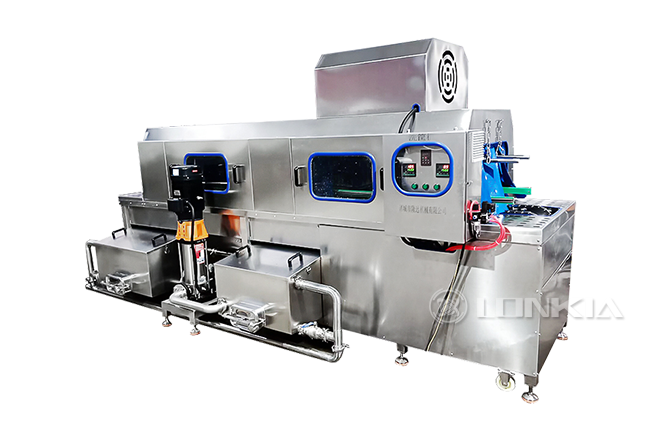
In baking production, baking trays come into repeated contact with dough, flour, sugar, and fats. After baking, these residues tend to adhere to the surface, edges, and grooves of the trays, and ordinary rinsing often fails to remove them thoroughly. For bakeries and food processing plants that need to reuse baking trays continuously, effectively handling stubborn grease and food residue is a key consideration when selecting a baking tray washing machine. LONKIA's baking cleaning solutions feature automated washing and drying processes tailored to trays with varying degrees of contamination.
Why Are Baking Trays Difficult to Clean?
Grease and food residues generated during the baking process can form a stubborn, adherent layer when exposed to high temperatures. Relying solely on low-pressure water jets or manual scrubbing not only prolongs the cleaning time but also leads to inconsistent cleaning results across different areas.
For baking trays with holes, grooves, or unique structures, residues may also accumulate in areas that are difficult to reach manually. Therefore, the baking tray cleaning machine must take into account spray coverage, cleaning pressure, water temperature, and the dwell time of the trays within the cleaning zone.
How Does an Industrial Tray Washer Remove Stubborn Residue?
1. High-Pressure Spray for Direct Cleaning
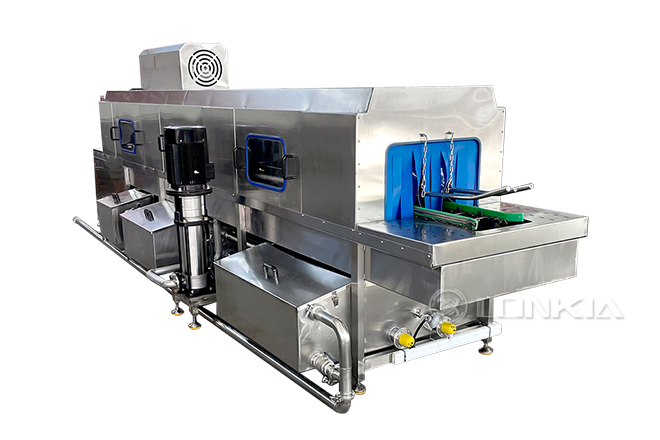
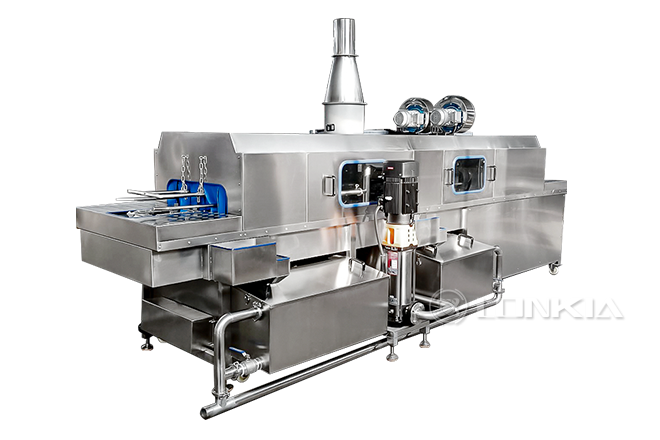
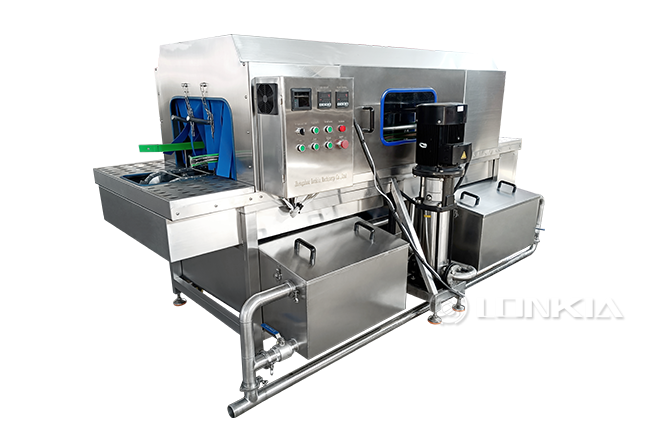
Industrial tray washers use a conveyor system to continuously feed trays into the washing zone, where multiple sets of nozzles spray the trays from different directions. High-pressure water jets directly target adhered grease, dough, and food residue, dislodging them from the tray surfaces.
The LONKIA baking tray cleaner employs a surround-style spray layout and separates the washing zone from the rinsing zone, ensuring that the water flow can cover trays of various shapes and structures. The washing water temperature can also be adjusted based on the actual tray material and degree of soiling.
2. Filtration Helps Maintain Cleaning Performance
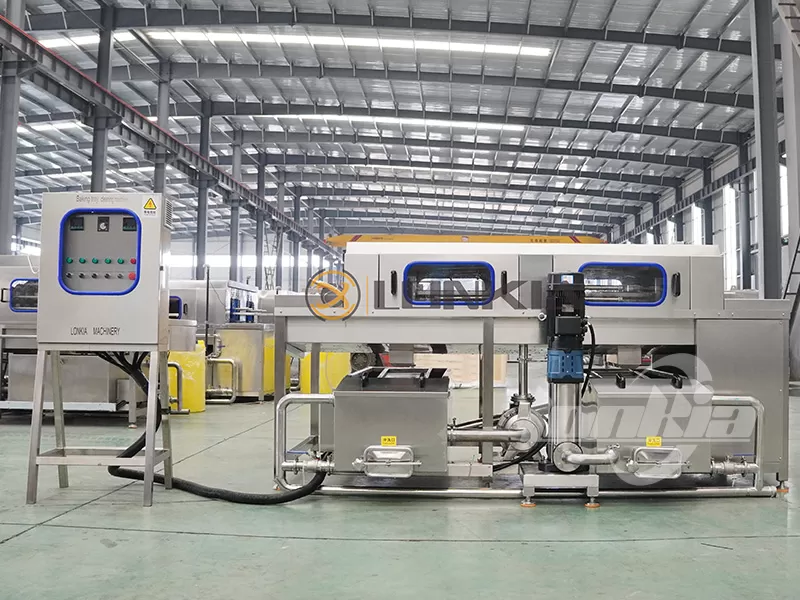
Large amounts of food debris are washed off and enter the washing water. Without an effective filtration design, this debris may re-contaminate the cleaning process. Therefore, the water tank and filtration system of the tray washing equipment are equally important.
The baking tray washing machine is equipped with an integrated filtration system that processes solid residues generated during the cleaning process, ensuring the recirculating cleaning system maintains a relatively stable operating condition.
3. Rinsing and Drying After Cleaning
For trays that re-enter the production process, simply removing grease does not mean the entire treatment process is complete. After the main wash, a rinse cycle is required to minimize the likelihood of cleaning solution and residues remaining on the tray surfaces.
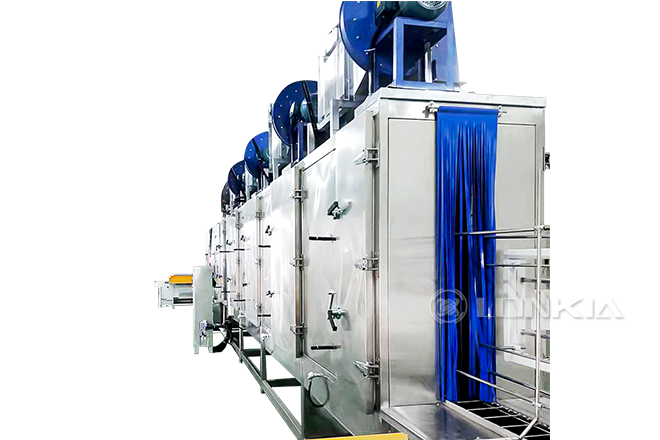
Once cleaning is complete, drying is equally important. LONKIA bakery solution offers configurable air circulation and forced-air drying systems designed to handle product carriers such as baking trays, molds, and turnover baskets, enabling them to return to the production process more quickly after cleaning.
What Should You Check Before Choosing a Baking Tray Washer?
Before purchasing a baking tray washing machine, it is recommended to first determine the following parameters:
- The length, width, and height of the baking trays
- The material and structure of the baking trays
- The number of trays to be washed per hour
- Whether the primary contaminants are grease, dough, or baking residues
- The required level of cleanliness
- Whether a separate rinse cycle is needed
- Whether drying is required after washing
- Whether integration with an existing production line is required
The LONKIA baking tray cleaner can be configured with a guidance system tailored to different tray specifications and offers automated washing, rinsing, and drying solutions. The equipment's processing capacity ranges from 100 to 2,000 trays per hour; the actual configuration should be determined based on tray specifications and the degree of contamination.
Conclusion
In baking production environments with stubborn grease and food residues, the real challenge lies in how to consistently and reliably process batch after batch of reusable baking trays. By properly configuring spray, filtration, rinsing, and drying systems, an industrial tray washer can transform the cleaning of baking trays from repetitive manual labor into a continuous, automated process. LONKIA can provide tailored cleaning solutions based on tray specifications, contamination levels, and production pace.