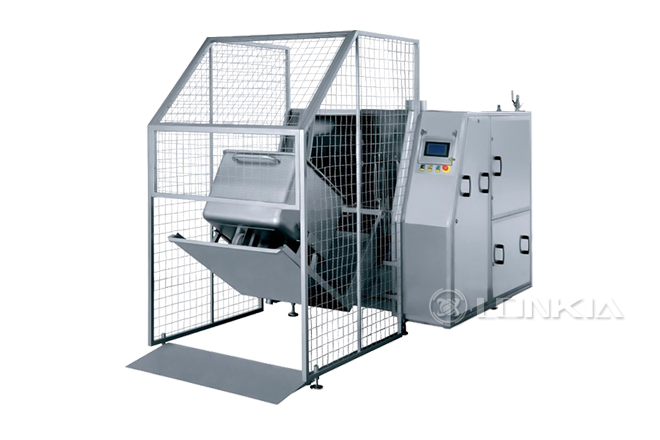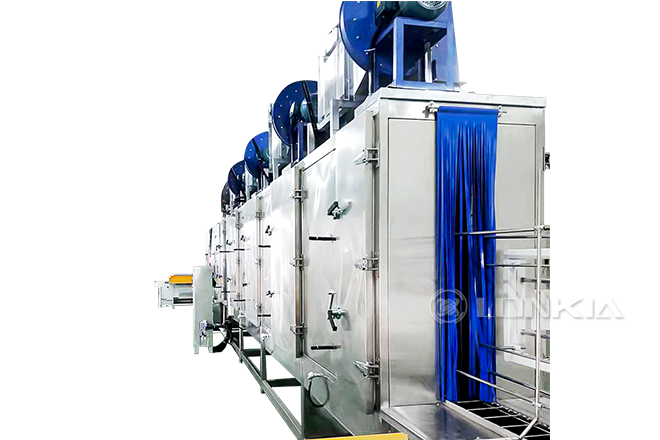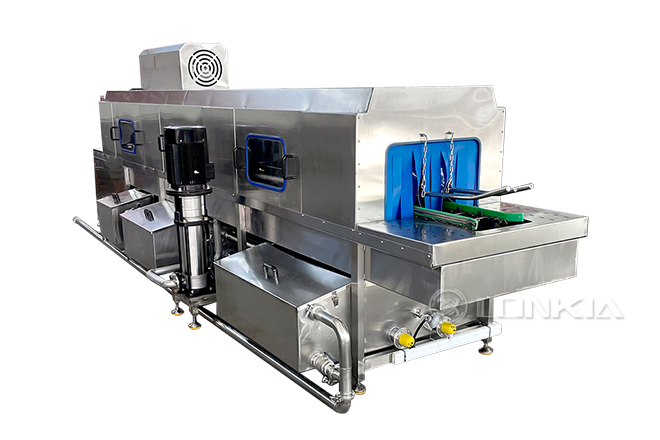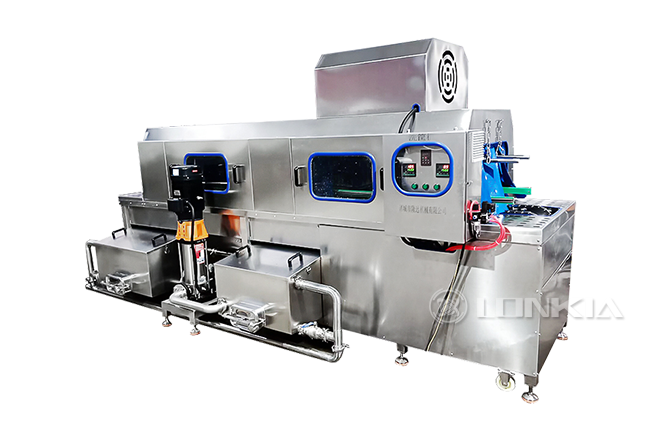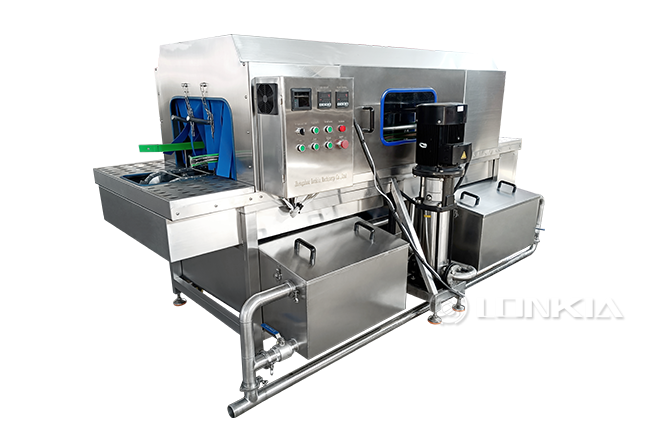
During poultry farming, slaughtering and processing, and the transportation of chicken cages, feces, feathers, and feed residue easily accumulate on the surfaces of the cages. Although most of the contaminants are removed after the primary wash, detergent residue and fine impurities may still affect the final cleanliness of the cages. Therefore, properly configuring the rinsing stage is a critical aspect of the process design for chicken crate washers.
For enterprises that require continuous processing of chicken cages, how to control water consumption while ensuring cleaning effectiveness is also a key consideration when selecting equipment.
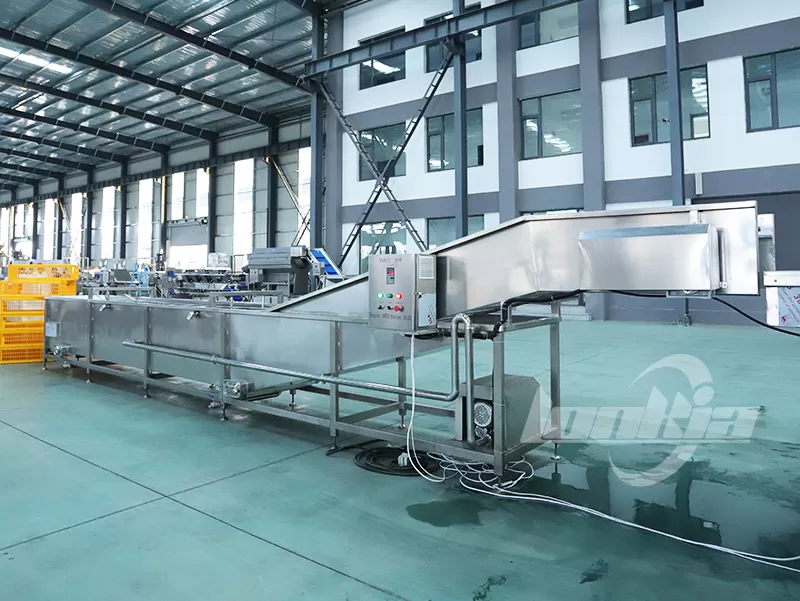
Why Do Chicken Crate Washers Require a Separate Rinsing Stage?
1. To Remove Residual Contaminants After the Main Wash
Chicken cage washing typically consists of three stages: pre-wash, main wash, and rinse. The pre-wash primarily flushes away loose contaminants, while the main wash removes more stubborn dirt through spraying, appropriate water pressure, and necessary detergents. After these two stages, fine impurities or detergent residues may remain on the surface of the chicken cages.
The rinse stage uses relatively clean water to further flush the cages, helping to remove these residues and ensure the cages meet the required cleanliness standards. For areas prone to dirt accumulation—such as mesh panels, joints, and the bottom—cleaning must be optimized through the arrangement of nozzles and spray angles.
2. Preventing Detergent Residues from Affecting Subsequent Use
If the cages are not thoroughly rinsed after the main wash, residual detergent may affect their subsequent use. Therefore, facilities should determine appropriate chicken crate washer rinsing conditions based on the detergent's instructions, the material of the cages, and hygiene requirements.
How Can Chicken Crate Washers Make Optimal Use of Rinsing Water?
1. Adopt a Phased Design Involving Pre-wash, Main Wash, and Rinse
Proper water flow organization can balance cleaning effectiveness with water efficiency. Chicken cages sequentially pass through the pre-wash, main wash, and rinse zones, with each stage performing distinct cleaning tasks, thereby avoiding the use of the same water quality for all processes.
In a recirculating water system, the relatively clean water from the rinse zone can be directed to the front end of the system according to the chicken crate washer's design, where it is used for stages such as pre-washing that have relatively lower water quality requirements. This approach not only maximizes the value of water reuse but also reduces the need for fresh water replenishment.
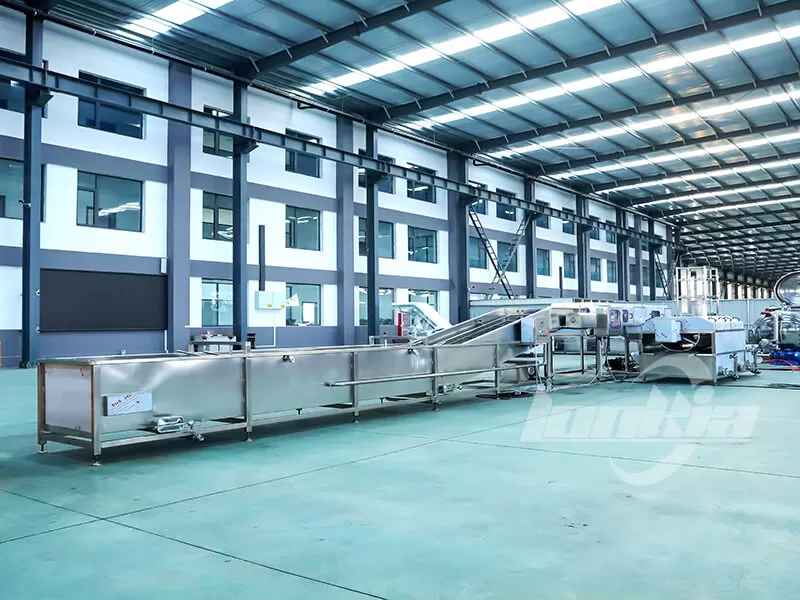
2. Timely Filtration, Top-Up, and Water Replacement Based on Water Quality
Recirculation does not mean that wash water can be reused indefinitely. As chicken cages continuously enter the system, feces, feathers, and suspended impurities may gradually accumulate in the water. Therefore, management must be carried out in conjunction with filtration devices, drainage methods, and water quality conditions.
When the recirculating water becomes heavily contaminated, filter components should be cleaned promptly, and water should be replenished or replaced as needed to prevent a decline in water quality from affecting subsequent cleaning effectiveness.
How to Choose the Right Chicken Cage Washer?
When purchasing a chicken crate washer, it is recommended to focus on the following aspects:
- Rinsing Effectiveness: Confirm that the nozzles can cover both the inner and outer surfaces of the chicken cages, as well as the mesh areas.
- Water Circulation Design: Understand the water flow direction in each cleaning zone, the filtration method, and the water replenishment and drainage mechanisms.
- Operating Parameters: Determine the conveyor speed and cleaning duration based on the size of the chicken cages, the degree of contamination, and the daily processing capacity.
- Follow-up Sanitation: If disinfection is required, confirm whether a separate disinfection process is needed; ordinary rinsing should not be considered equivalent to disinfection.
LONKIA can provide equipment configuration recommendations based on chicken cage specifications, cleaning requirements, and on-site production processes to help customers optimize their cleaning procedures.
Conclusion
A dedicated rinse stage helps remove residual dirt and detergent after the main wash, but the final result still depends on the overall cleaning process, water quality management, and equipment configuration. When selecting a chicken crate washer, factors such as spray coverage, recirculating water utilization, and subsequent sanitation requirements should be considered together, rather than focusing solely on the equipment's processing speed or water consumption.
By designing the pre-wash, main wash, and rinse processes appropriately, companies can better balance chicken cage cleaning quality with daily operating costs, thereby providing reliable assurance for subsequent transportation and production stages.