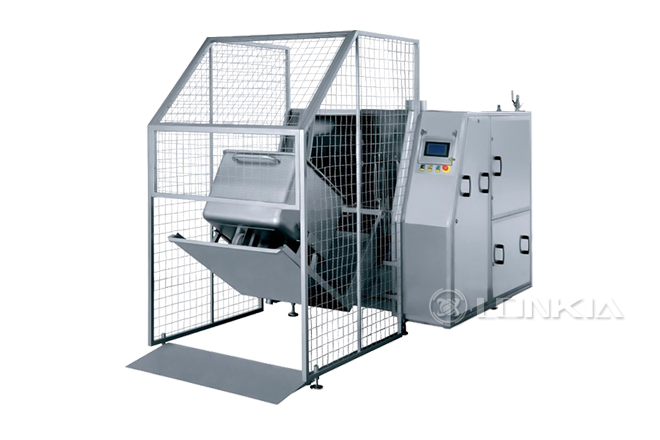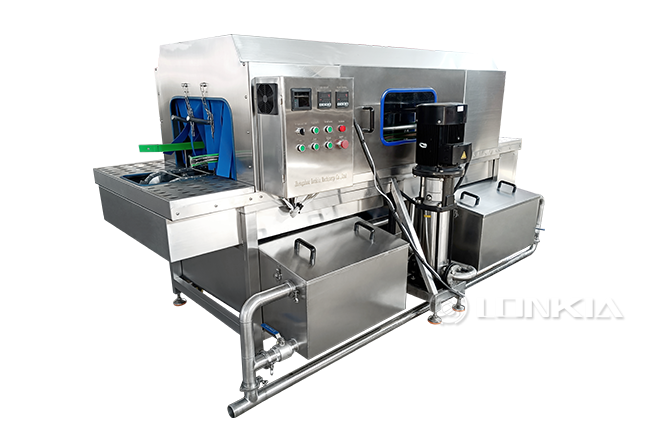
In food processing, plastic pallets are used to transport raw materials, semi-finished products, and finished goods. After repeated use, the pallet surfaces tend to accumulate oil stains, food residue, dust, and other contaminants. Relying on manual cleaning not only limits processing efficiency but also makes it difficult to maintain consistent cleaning results. Therefore, selecting the right automatic pallet washer requires a comprehensive evaluation of factors such as actual production capacity, pallet specifications, cleaning methods, and equipment design.
What Should Food Processing Plants Consider When Purchasing a Pallet Washer?
1. First, Confirm the Actual Cleaning Capacity
The automatic pallet washer's capacity should match the plant's pallet throughput. It is not enough to focus solely on the maximum processing speed provided by the manufacturer; one must also consider the actual efficiency during continuous operation and whether the equipment can synchronize with the upstream and downstream conveyor systems.
LONKIA pallet washers utilize an automatic conveyor system, and equipment parameters can be configured according to actual production needs. The processing capacity of existing standard models ranges from 200 to 800 pallets per hour. For production lines with higher throughput, custom solutions can be designed based on pallet dimensions, contamination levels, and production cycle times.
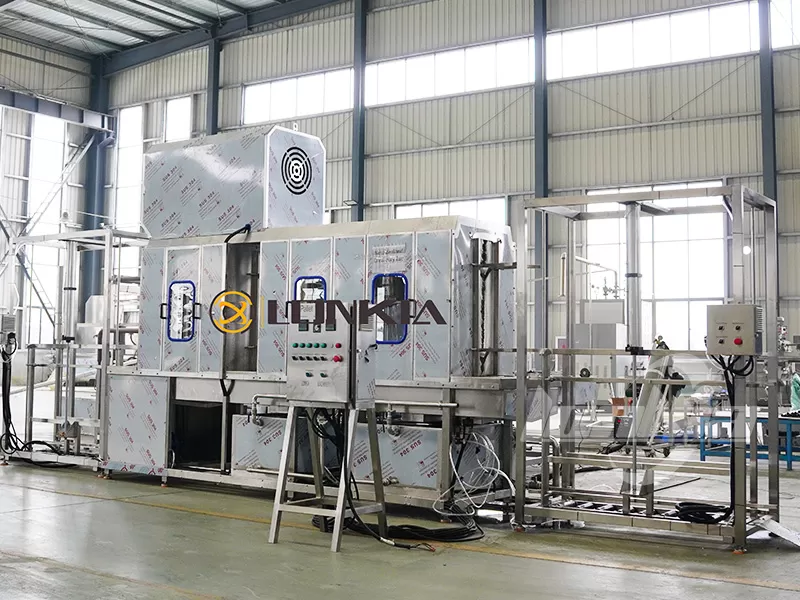
2. Confirm Pallet Dimensions and Material
Plastic pallets of different sizes and structures affect the conveying method, nozzle layout, and cleaning zones. Before purchasing, provide the pallet's length, width, height, and material information; in particular, confirm that the maximum pallet dimensions are compatible with the equipment's cleaning channel.
For facilities using multiple pallet specifications, confirm in advance whether the automatic pallet washer can adapt to different models by adjusting conveying and spray parameters.
The Cleaning System Determines Actual Performance
High-Pressure Spraying for Stubborn Residues
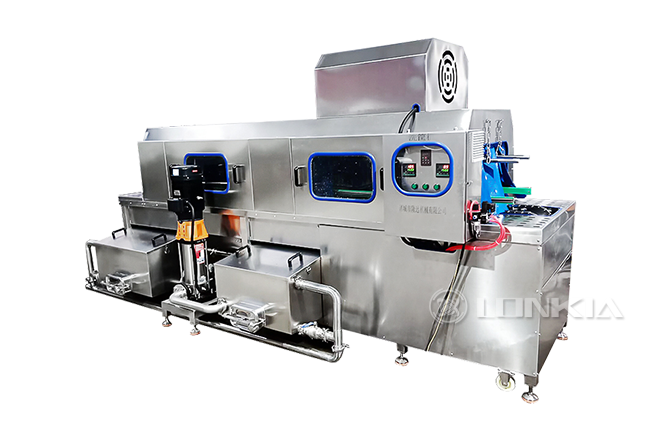
Contaminants on food trays are not limited to dust; they may also include grease, food residue, and adhering substances. Automatic pallet washers use high-pressure nozzles for pre-wash and main wash cycles, with multi-angle spraying to expand cleaning coverage. Depending on the degree of contamination, hot water or cleaning agents can be configured to enhance the removal of grease and stubborn residues.
Multi-Stage Cleaning Reduces Residue
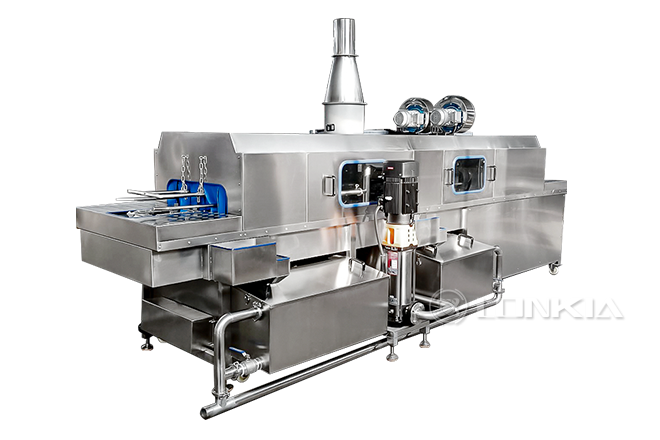
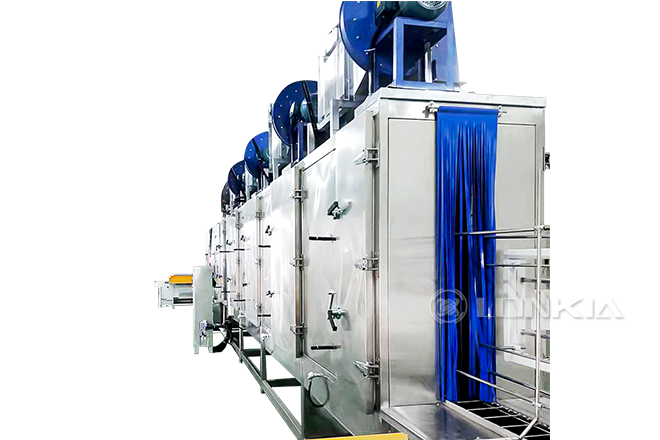
A complete cleaning process typically includes pre-wash, main wash, rinse, and drying. The pre-wash first removes larger impurities, the main wash further treats grease and residues, followed by a rinse with clean water to minimize detergent residue; if necessary, a drying step can be added to allow trays to move more quickly to the next process.
Equipment Materials Are Just as Important as Automation
Food processing environments involve prolonged exposure to water and detergents, so the materials used in the pallet cleaning equipment are a critical parameter to verify during procurement. SUS304 stainless steel is widely used in this type of food processing equipment. The main body of the LONKIA tray washer is constructed from SUS304 and features PLC-based automatic control, enabling continuous operation of the conveying, washing, and rinsing processes.
In addition, the water recirculation system, nozzles, filters, and conveyor system warrant close inspection. These components directly impact cleaning consistency and daily maintenance. When purchasing, it is best to request that the supplier provide complete technical specifications, equipment dimensions, compatible pallet sizes, and optional configurations, and then determine the optimal solution based on actual production conditions.
How to Determine the Right Solution for Your Needs?
No single set of specifications can suit all food processing plants. Before purchasing an automatic pallet washer, it is recommended to prepare four types of information: pallet dimensions, hourly washing capacity, primary contaminants, and the layout of the existing production line. Suppliers use this data to determine the spray pattern, conveyor speed, washing process, and equipment configuration, thereby reducing the risk of retrofitting later on.
LONKIA can provide customized washing solutions based on different pallet specifications and production line requirements, helping food processing companies establish a continuous and stable pallet washing process.