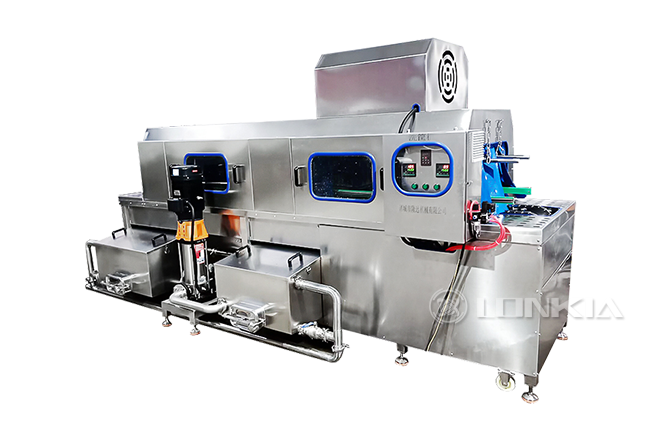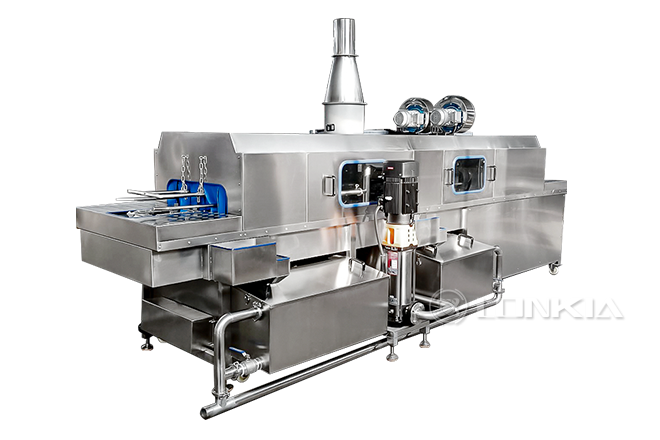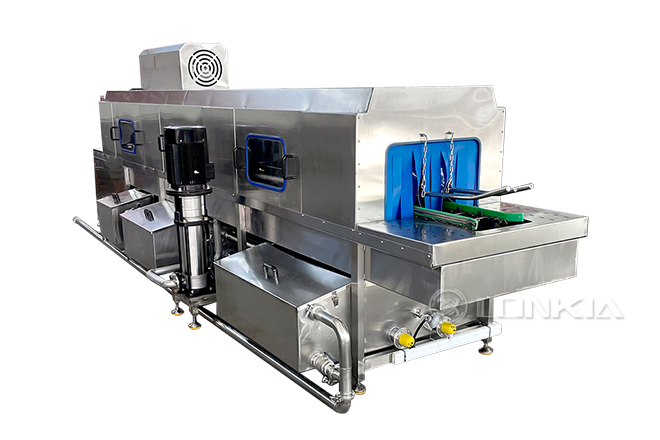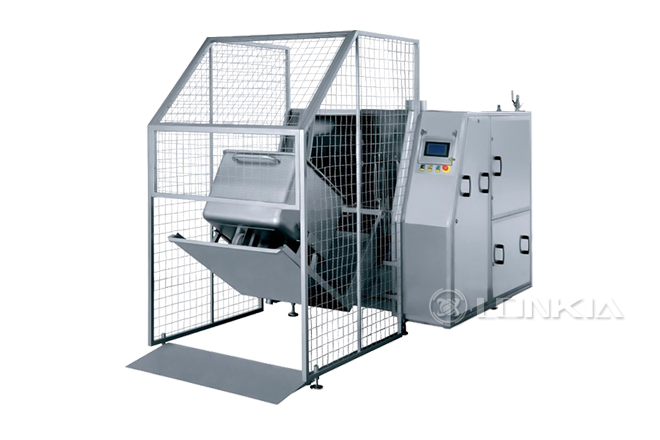
In food processing, beverage production, central kitchens, and cold-chain logistics, plastic pallets are frequently reused. Compared to ordinary dust, grease, food residues, and dirt lodged in the surface and crevices of pallets are much harder to remove through simple rinsing. The automated pallet washer transforms pallet cleaning from a manual process into a continuous, automated workflow through high-pressure spraying, multi-stage washing, filtered recirculation, and rapid drying. For businesses that need to keep pallets clean and improve turnover efficiency, this equipment provides a more reliable cleaning solution.
Why Are Grease and Food Residues Difficult to Remove?
Food residues can adhere to the surfaces, edges, and grooves of plastic pallets, while grease is highly adhesive and often difficult to remove completely with low-pressure water alone. If pallets aren't cleaned promptly, these residues can keep accumulating during subsequent handling.
Therefore, the key to effective pallet cleaning is not merely "rinsing with water," but ensuring that the water stream fully contacts the contaminated areas and uses appropriate temperature, pressure, and cleaning methods to dislodge residues from the surface.
How Does an Automated Pallet Washer Remove Grease and Residues?
1. Pre-Rinse Removes Loose Food Debris
The pallets first enter the pre-rinse area via an automatic conveyor, where high-pressure water jets quickly wash away food particles, dust, and other loose contaminants from the surface. This step significantly reduces the amount of solid residue entering the subsequent main wash area, preparing the pallets for a thorough cleaning.
2. High-Pressure Main Wash Targets Grease
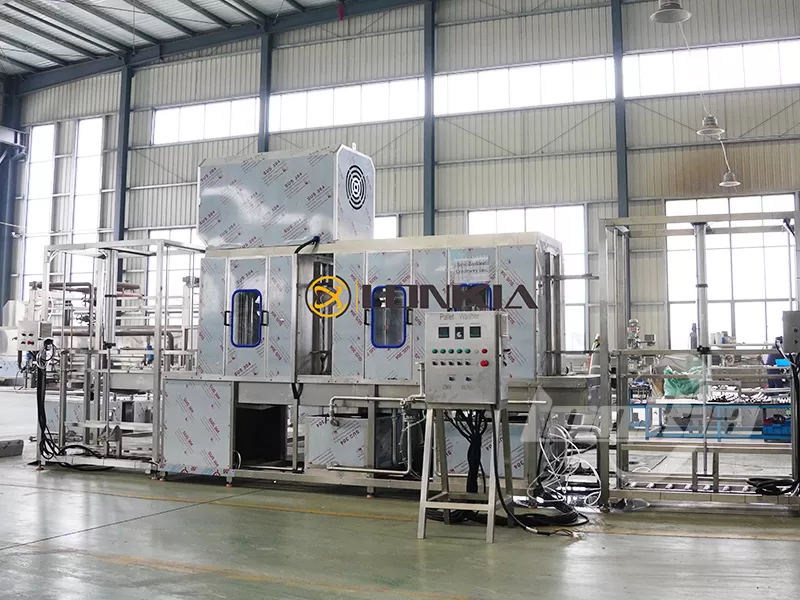
After the pre-rinse, the pallets enter the automated pallet washer's main wash area. The equipment uses high-pressure sprays and rotating nozzles to continuously rinse the trays from various angles; depending on the specific materials and degree of soiling, warm water and detergent can also be used to tackle stubborn grease and food residues.
This multi-angle spray configuration is particularly effective for the surfaces, edges, and grooves of plastic trays, ensuring that the water flow thoroughly contacts the areas requiring cleaning.
3. Clean Rinsing Removes Detergent Residues
After the main wash, the trays enter the industrial pallet washing machine rinsing zone, where clean recirculated water further removes residual detergent and contaminants, leaving the tray surfaces even cleaner. The multi-stage design also prevents already-removed contaminants from being carried over to the next cleaning stage.
What About Drying After Washing?
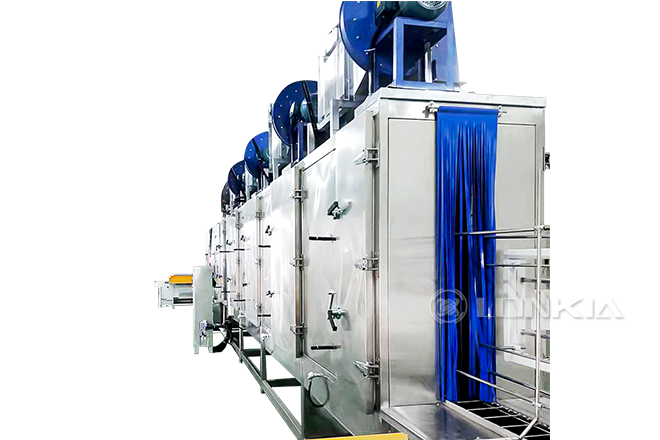
Completing the wash does not mean the entire process is finished. If a significant amount of moisture remains on the pallet surface, it can affect immediate subsequent use or storage. Therefore, the equipment can be configured with a rapid hot-air drying system to quickly remove moisture from the pallet surface.
For food processing production lines that require continuous pallet turnover, this step allows cleaned pallets to move on to the next stage of use more quickly.
Choose the Right Pallet Washing Solution
Actual cleaning effectiveness depends not only on the equipment itself but also on pallet size, degree of contamination, throughput, and cleaning mode. LONKIA can configure the washing, rinsing, and drying methods based on the customer's pallet specifications and production processes, ensuring the automated pallet washer better meets actual production needs.
If your plastic pallets are primarily contaminated with grease, food residue, dust, and other contaminants, choosing an automatic pallet washing solution that includes pre-wash, high-pressure main wash, rinse, and drying processes can more effectively address the cleaning challenges associated with reusable pallets.