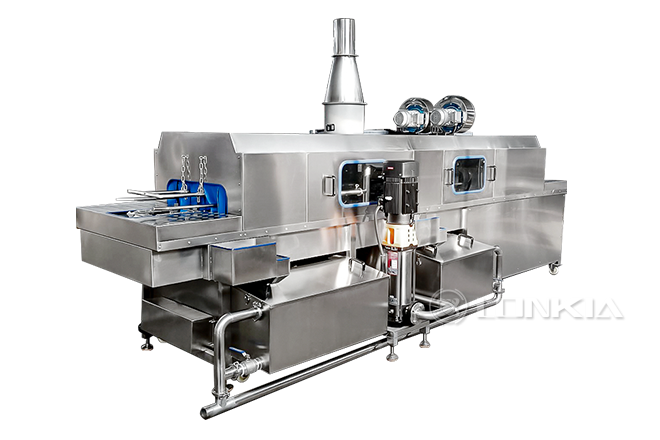
During food processing, trays require frequent handling and cleaning. If manual handling, depalletizing, and loading are still used, this not only affects the production cycle but also causes interruptions in tray supply. With the widespread adoption of automated production lines, more and more companies are turning their attention to tray washers equipped with automatic de-stacking systems, hoping to achieve continuous operation from tray depalletizing, conveying, and washing to stacking.
So, what practical problems can an automatic depalletizing system actually solve? And what equipment configurations should you focus on when purchasing?
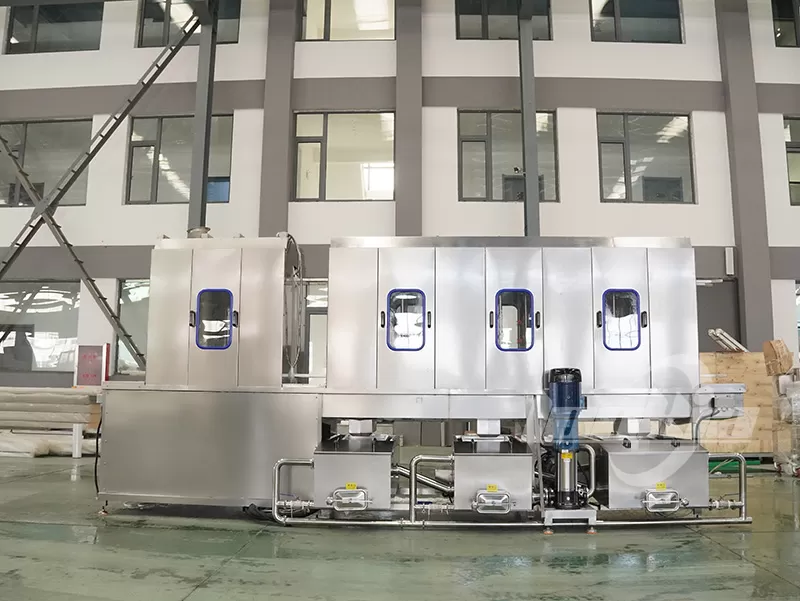
How Does the Automatic Depalletizing System Work in Conjunction with the Tray Washer?
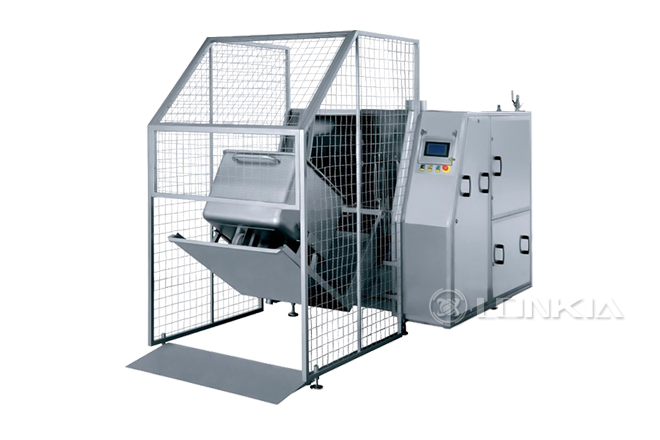
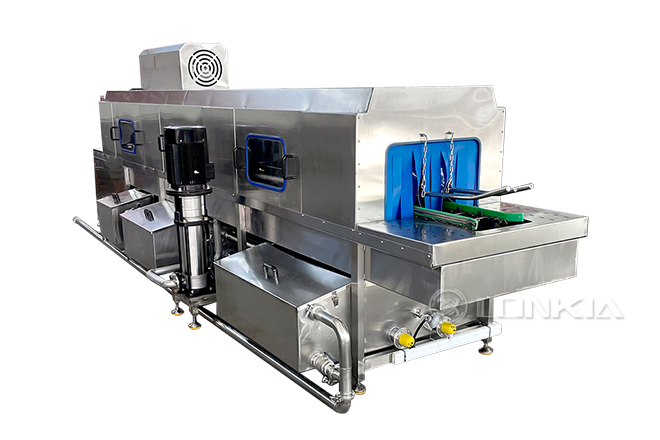
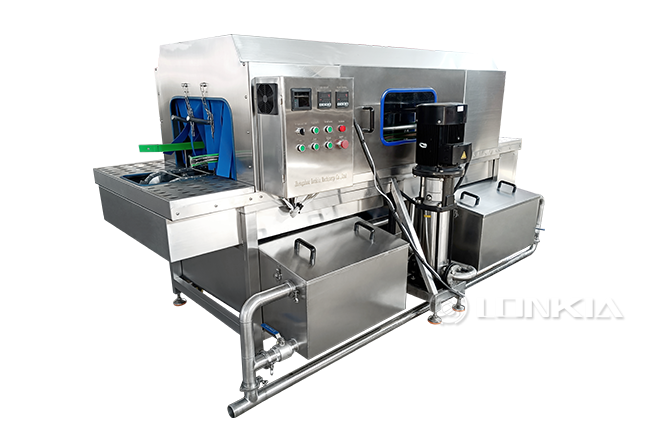
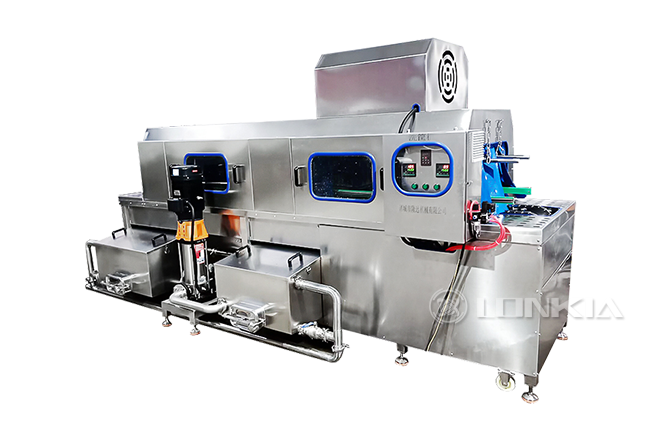
A complete automatic tray washing system typically includes an automatic depalletizing system, a conveyor system, a tray washer, an automatic stacker, and a control system.
The workflow is generally as follows:
- A full stack of trays enters the automatic destacking station;
- The de-stacking system separates the trays layer by layer and group by group according to the set cycle time;
- The conveyor system automatically feeds individual trays into the tray washer;
- The tray washing machine performs processes such as high-pressure spraying, hot water washing, and rinsing;
- After washing, the trays are automatically conveyed to the stacking equipment, where they are neatly stacked and held ready for reuse.
The entire process eliminates the need for frequent manual handling; the equipment maintains stable coordination, enabling continuous operation and improving production efficiency. The automatic de-stacking and stacking system can be customized according to different tray sizes, layer counts, and production cycles to meet the needs of various production lines.
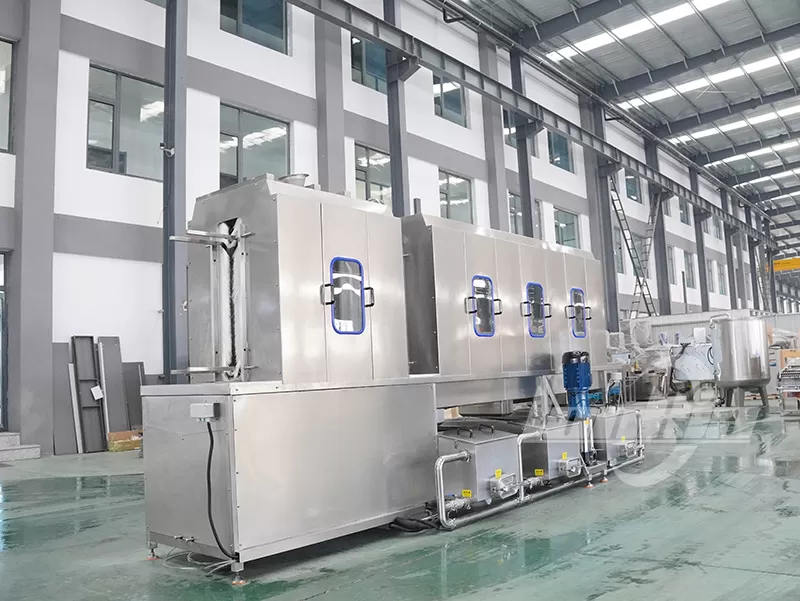
What Problems Can the Automatic De-stacking System Solve?
Ensuring a Continuous Feed to the Tray Washer
Many companies find that after purchasing a tray washer, while its cleaning capacity is sufficient, the speed of manual de-stacking cannot keep up, causing the equipment to wait for feed and affecting overall efficiency.
The automatic de-stacking system provides a continuous feed at a preset speed, ensuring the tray washer machine operates consistently and improving equipment utilization.
Reducing the Physical Strain of Manual Handling
Full stacks of trays are heavy, and frequent handling can increase physical strain on workers. The automatic depalletizing equipment automatically separates, positions, and conveys trays, reducing repetitive handling tasks and allowing staff to focus more on equipment inspections and production management.
Improved Tray Conveying Stability
Manual tray placement is prone to issues such as tilting, jamming, or inconsistent spacing. In contrast, an automatic de-stacking system integrated with the conveying system maintains consistent tray orientation, ensuring stable feeding into the tray washer and reducing downtime for adjustments.
What Should You Consider When Selecting a Tray Washer with a Depalletizing System?
When purchasing a complete system, you should not focus solely on the Tray Washer itself but also pay close attention to the following aspects:
1. Support for Different Tray Sizes
Tray sizes, materials, and heights vary across different companies. The equipment should support switching between multiple specifications and allow for custom design when necessary.
2. Matching De-stacking and Washing Cycle Times
The depalletizing speed should align with the tray washing machine's washing capacity to avoid insufficient feed at the front end or backlogs at the rear end, thereby improving the overall line efficiency.
3. Does it support automatic stacking?
If trays still require manual sorting after washing, this will also affect the production cycle time. Configuring an automatic stacking system enables continuous completion of washing, sorting, and output, facilitating subsequent transportation and storage.
4. Is the control system user-friendly?
Modern tray washers typically use PLC control and touchscreen operation, enabling parameter adjustment, fault alarms, and interlocked control, making the entire system more stable and reliable. Mature automatic de-stacking, conveying, and palletizing systems can further enhance the automation level and operational stability of the entire production line.
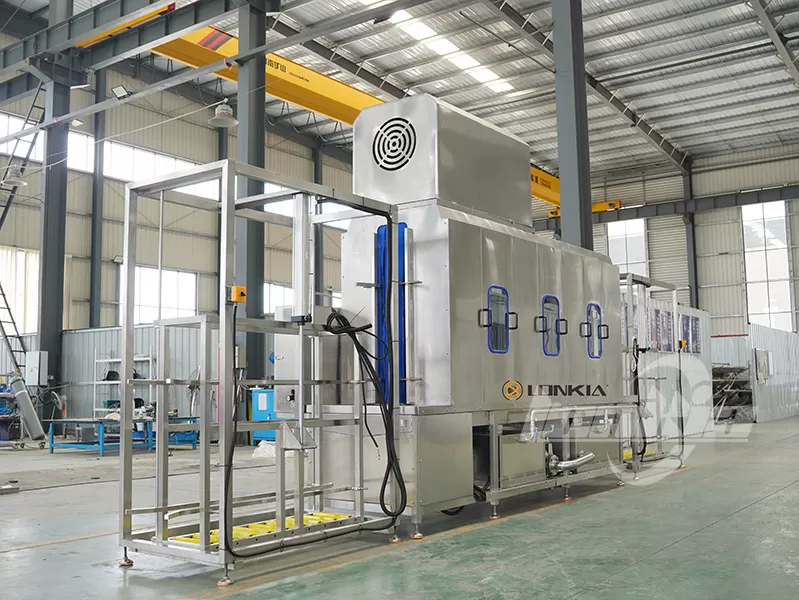
How to Choose the Right Automatic Tray Washing Solution?
Different companies vary in terms of tray dimensions, daily output, production layout, and automation requirements. Therefore, a tray washer should not be selected based solely on standard models but rather through comprehensive planning that integrates actual production processes.
Based on a customer's tray specifications, cleaning requirements, and production line layout, Lonkia can provide a comprehensive solution that integrates automatic de-stacking, the tray washer, a conveying system, and automatic stacking. This ensures efficient coordination among the equipment, helps companies improve tray turnover efficiency, and guarantees the long-term, stable operation of the entire washing line.