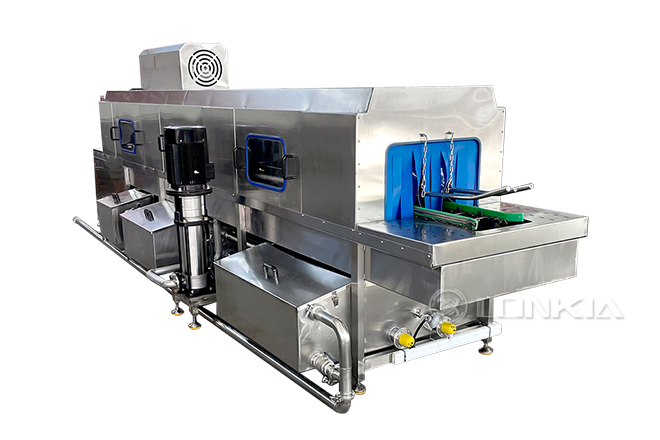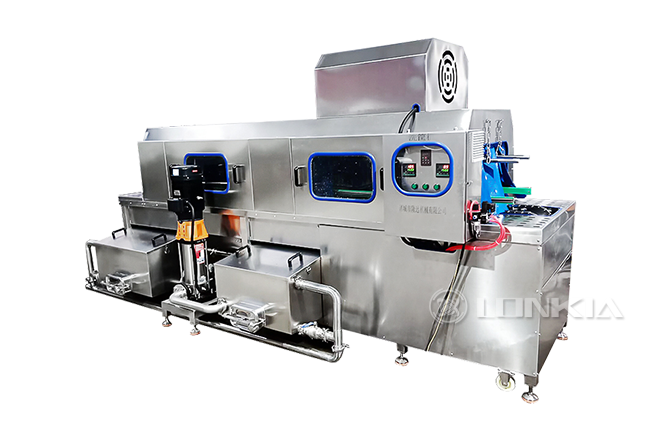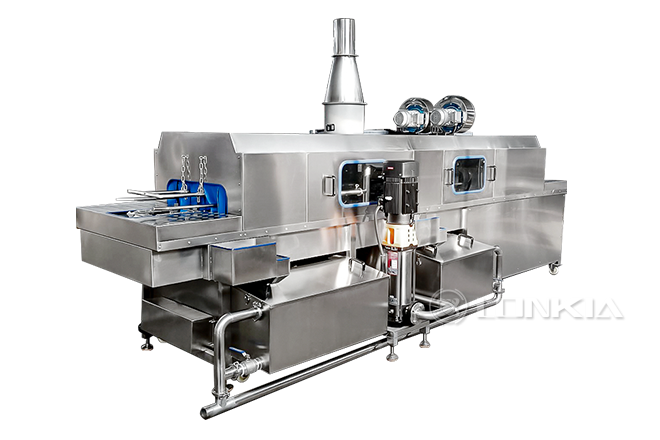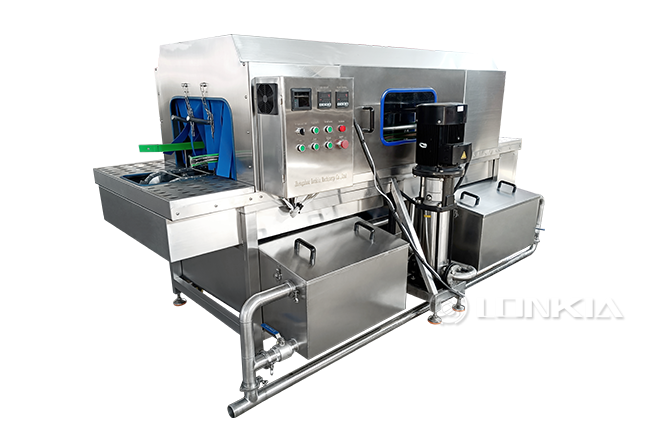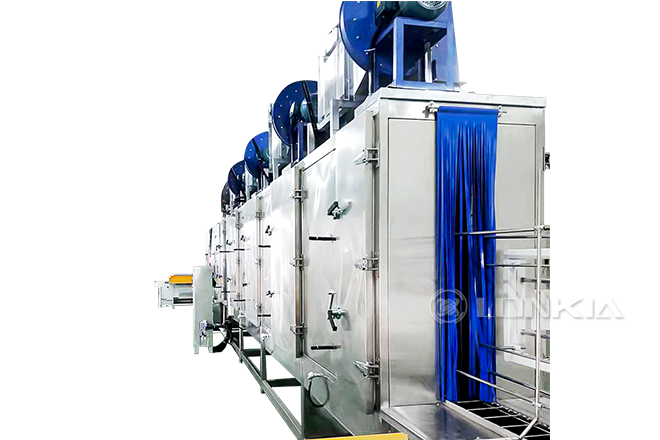
In the food processing industry, trays play a vital role in the transportation of raw materials, product processing, and the handling of finished goods. As production processes impose increasingly stringent requirements for hygiene standards and cleaning efficiency, selecting the right industrial tray washer has become a key consideration for many food companies when purchasing equipment. Factors such as tray size, contamination levels, and production needs all influence equipment configuration; therefore, understanding key technical parameters before ordering a tray washer can help customers choose a cleaning solution that best suits their needs.
Tray Dimensions and Compatibility Range
Tray dimensions are the first parameter to confirm when selecting an industrial tray washer. The specifications of trays used by different food processing companies vary, including plastic trays, stainless steel trays, baking trays, and food transport trays.
Before purchasing, customers need to provide information on the trays' length, width, height, and weight to ensure that the conveyor system, guide rail width, and spray coverage area meet actual operational requirements. Lonkia tray washers can be structurally adjusted based on the types of trays used by customers, allowing the equipment to better adapt to different production processes.
Washing Capacity: Determining Equipment Specifications Based on Daily Tray Usage
Washing capacity is one of the key factors influencing equipment selection. Customers typically need to consider how many trays the equipment can process per hour and whether it can keep pace with production rhythms during continuous operation.
The processing capacity of industrial pallet washers is primarily influenced by conveyor speed, the length of the washing zone, the spray system configuration, and the pallet arrangement. Some machines use continuous conveying to wash pallets, allowing them to sequentially pass through different washing zones to achieve consistent processing.
When inquiring about tray washing equipment, customers should specify the daily pallet throughput, operating hours, and future production capacity requirements. This information helps manufacturers provide more accurate equipment solutions.
Cleaning System Configuration Affects Final Cleaning Results
Industrial pallet washers typically consist of multiple functional zones, including pre-wash, high-pressure spray wash, rinse, and drying sections. Each zone serves a distinct purpose:
- The pre-wash zone removes surface residues;
- The high-pressure spray zone uses water jets to remove grease and food debris;
- The rinse zone further cleans the pallet surfaces;
- The drying system helps reduce residual moisture on the pallet surfaces.
The number of nozzles, their installation angles, water pressure, and cleaning temperature all directly affect cleaning performance. Therefore, when selecting an industrial tray washer, it is essential to focus not only on the external dimensions but also on understanding the internal cleaning structure design.
Equipment Materials: A Key Consideration in Food Processing Environments
Food processing equipment is typically subjected to prolonged contact with water, cleaning solutions, and food residues; therefore, the materials used in the equipment are a critical factor during procurement.
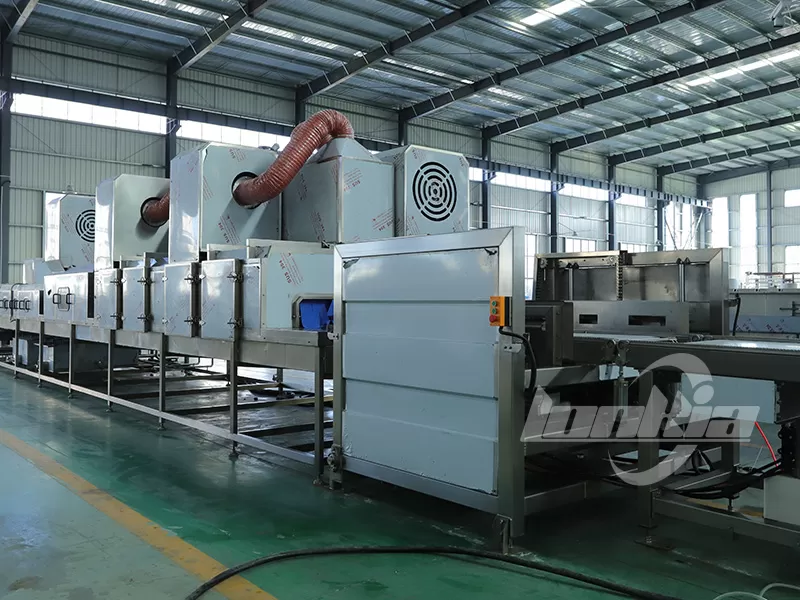
High-quality tray washers are typically manufactured from food-grade stainless steel, including the frame, water tank, washing zones, and conveyor system. A stainless steel structure not only meets the requirements of food processing environments but also facilitates daily cleaning and maintenance of the equipment.
Lonkia specializes in the manufacture of food processing equipment. In the design of tray washers, the company prioritizes structural stability and operational convenience, providing reliable cleaning equipment solutions for food enterprises.
Conveyor Speed and Automated Control
The conveyor system determines how long trays remain inside the container cleaning machine. An appropriate conveyor speed ensures that trays pass through each cleaning zone thoroughly while maintaining a steady production pace.
Industrial tray washers are typically equipped with control systems that allow operators to adjust operating parameters—including conveyor speed, cleaning duration, and machine status—to meet specific cleaning requirements, making it easier for operators to manage the equipment.
What Information Should You Prepare Before Ordering an Industrial Tray Washer?
To obtain an accurate quote and a suitable solution, customers are advised to prepare the following information in advance when inquiring about the equipment:
- Tray dimensions and material;
- Number of trays to be washed per hour;
- Primary types of contamination on the trays;
- Layout of the existing production line;
- Whether integration with other equipment is required;
- Voltage and installation conditions.
These parameters help manufacturers quickly understand customer needs and design a tray washing solution that better aligns with actual production conditions.
Summary
Selecting an industrial tray washer requires careful consideration of tray specifications, cleaning capacity, cleaning systems, equipment materials, and production requirements. Correct parameter matching ensures long-term, stable operation of the equipment and meets the cleaning requirements of the food processing process.
Before purchasing tray washing equipment, thoroughly understanding key technical parameters can help companies minimize selection errors and maximize the equipment's value. Lonkia offers professional tray washing equipment solutions that can be customized according to customers' specific application needs, providing food processing companies with stable and reliable cleaning solutions.