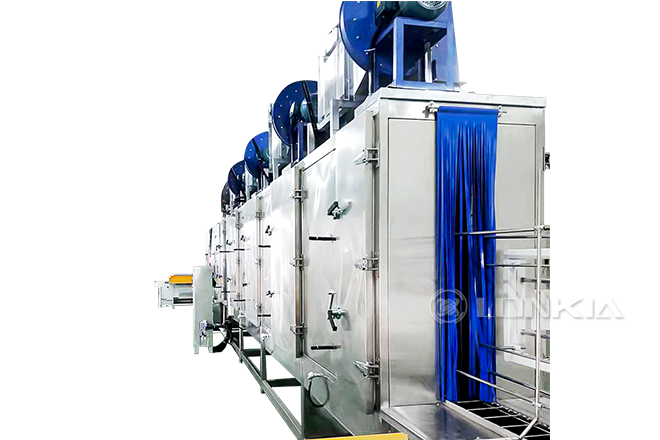
For factories that use buckets to transport raw materials, food, or other goods, what truly affects cleaning effectiveness is not just the water pressure, but whether the water flow can fully reach areas prone to residue buildup—such as the bucket walls, bottom, and inner edges. Therefore, when selecting a bucket wash machine, special attention should be paid to the layout of the high-pressure spray system, the spray angles, the nozzle positions, and how the buckets move through the equipment.
Why Does the High-Pressure Spray Layout Determine Cleaning Effectiveness?
Unidirectional Spraying Can Create Cleaning Dead Zones
If nozzles spray water from only one direction, certain areas of the bucket may remain in a blind spot. For example, food particles, grease, or sticky materials may remain in the recesses of the bucket bottom, along the inner rim, and near the bucket opening.
Therefore, a practical bucket washing machine cannot rely solely on high water pressure; it must ensure that the water stream contacts the container's surface from multiple directions.
Circular Nozzles Cover a Larger Cleaning Area
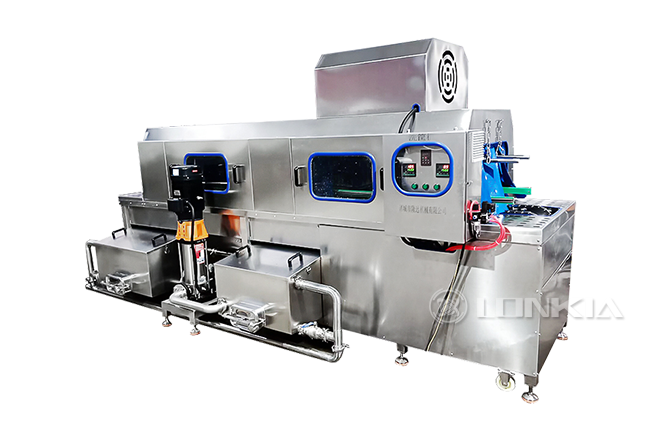
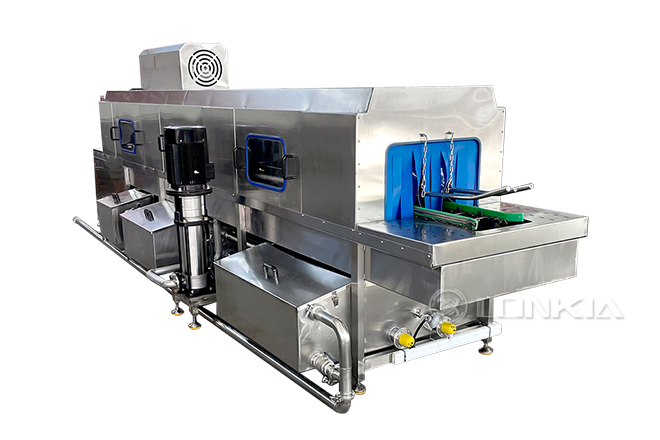
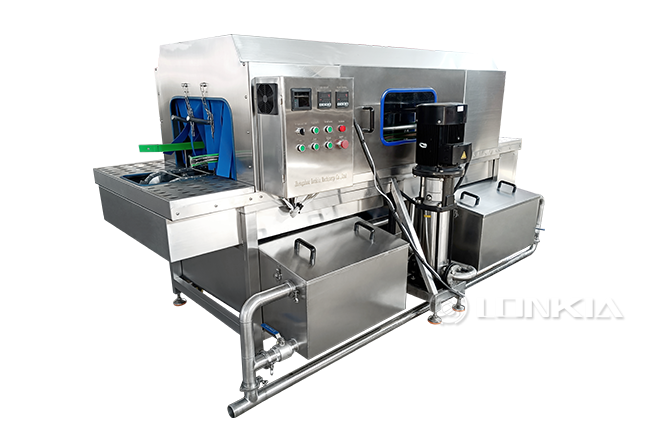
The LONKIA bucket wash machine features a circular high-pressure nozzle layout with adjustable spray angles, allowing the water flow to cover different parts of the bucket. The bottom nozzles can also swing over a wide angle, ensuring a more thorough rinse of the bucket's base.
The value of this design lies not in simply increasing water pressure, but in improving the contact area between the water flow and the bucket's surface.
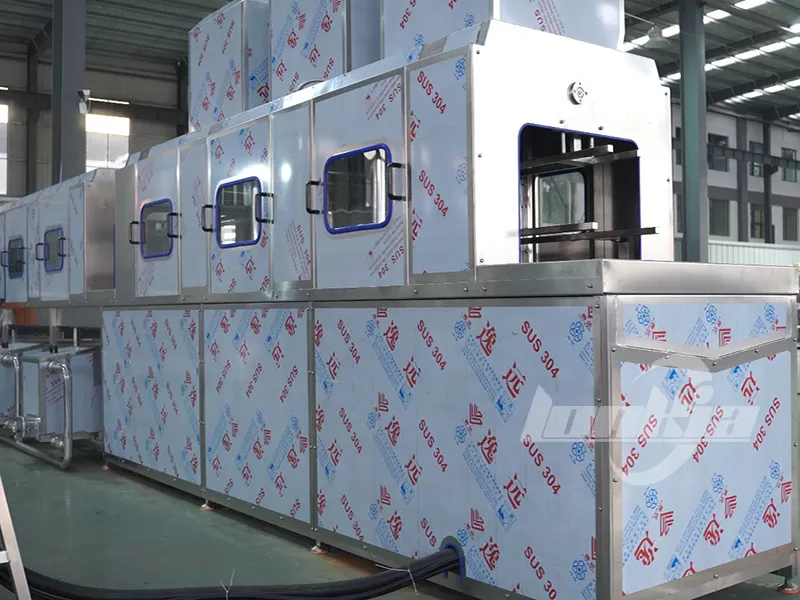
Can the Bucket Bottom and Inner Walls Be Cleaned Thoroughly?
Bottom Nozzles Solve the Challenge of Cleaning the Bucket Bottom
The bucket bottom is often overlooked during manual cleaning, especially after it has held sauces, food ingredients, or other sticky materials, as residues may adhere to the bottom.
The swiveling bottom nozzles can change the direction of water flow, allowing the high-pressure stream to work more thoroughly on the bucket bottom and surrounding areas, reducing cleaning blind spots caused by fixed-angle spraying.
The Cleaning Path Must Match the Drum Dimensions
Even with a well-designed nozzle layout, unstable drum positioning during conveyance can compromise spray coverage. Therefore, the bucket wash machine is equipped with adjustable guide rods that allow the cleaning path to be adjusted according to the drum's width and height, ensuring the container maintains a relatively stable position as it passes through the spray zone.
Besides Water Pressure, What Other Parameters Need to Be Considered?
High-pressure spraying is not the sole determinant of cleaning effectiveness. When selecting a model, configuration must also take into account the bucket's material, degree of contamination, dimensions, conveyor speed, and cleaning water temperature.
LONKIA bucket wash machine supports adjustable cleaning water temperature, allowing you to select appropriate cleaning conditions based on actual requirements for containers made of different materials, thereby preventing unnecessary damage to containers that cannot withstand high temperatures.
Additionally, the cleaning and rinsing zones are designed as separate sections, enabling each stage to perform distinct processing tasks and helping to maintain cleanliness during the subsequent rinsing process.
How to Determine if a Bucket Wash Machine's Spray System Is Right for You?
Before purchasing, we recommend providing the equipment manufacturer with the following information:
- Bucket height, diameter, or width
- Bucket material and structure
- Primary residues inside the buckets
- Number of buckets to be washed per hour
- Whether the bucket bottom and inner walls require special attention
- Whether hot water washing is required
- Whether drying is required after washing
If your buckets have unusual shapes or dimensions, it is especially important to confirm the nozzle layout and flow paths using actual bucket samples or detailed dimensions. LONKIA's bucket washing equipment can be adapted to different container sizes, with a processing capacity ranging from 100 to 2,000 buckets per hour.
Conclusion
Whether a high-pressure spray system can clean every area depends not simply on increasing water pressure, but on the coordination of nozzle layout, spray angles, bottom coverage, bucket positioning, and cleaning parameters. For facilities seeking to minimize cleaning blind spots and achieve consistent cleaning results, it is essential to focus on the equipment's actual spray configuration rather than merely comparing pressure or throughput specifications.
Before selecting a suitable bucket wash machine, providing information on the actual bucket types, dimensions, and contamination levels can help manufacturers configure the cleaning channels and spray systems more accurately, ensuring the equipment truly meets your production needs.