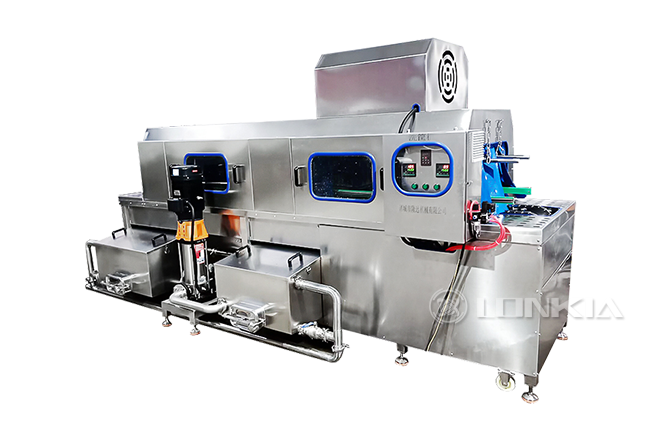
In industries such as food processing, cold-chain logistics, central kitchens, and meat processing, the efficiency of pallet washing directly impacts production pace. When purchasing pallet washing machines, one of the primary concerns for many companies is: exactly how many pallets can the equipment wash per hour? What are the differences between various capacity levels?
In fact, pallet washing speed not only affects production efficiency but also impacts staffing arrangements, hygiene standards, and the operational stability of the entire production line. Therefore, selecting pallet washing machines with the appropriate processing capacity is crucial for businesses.
What is the Cleaning Capacity of Pallet Washing Machines?
Currently, pallet washing machines on the market typically have a processing capacity ranging from 50 to 300 pallets per hour, depending on the equipment structure, spray system, and level of automation. Some high-speed automated machines can even achieve higher throughput.
For most food processing plants, a processing capacity of 100–200 pallets per hour is sufficient to meet daily continuous production needs. However, high-turnover logistics centers or large-scale processing plants tend to prefer continuous automatic conveyor washing systems to ensure uninterrupted production.
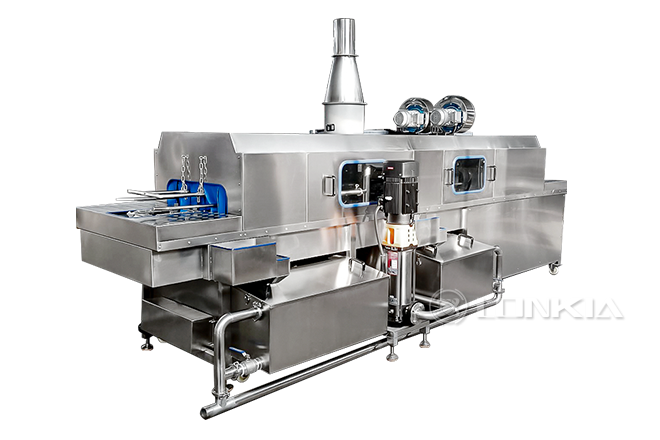
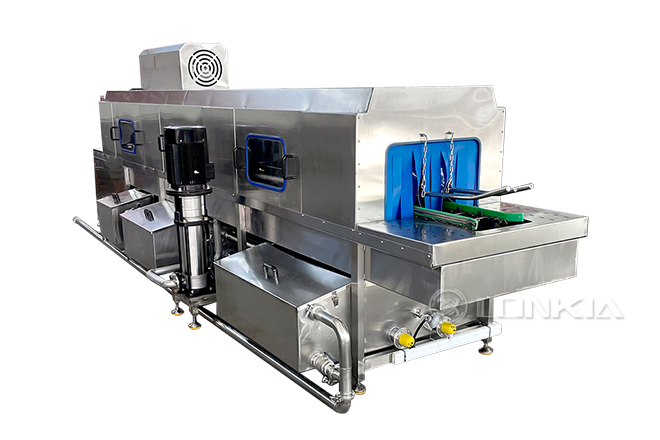
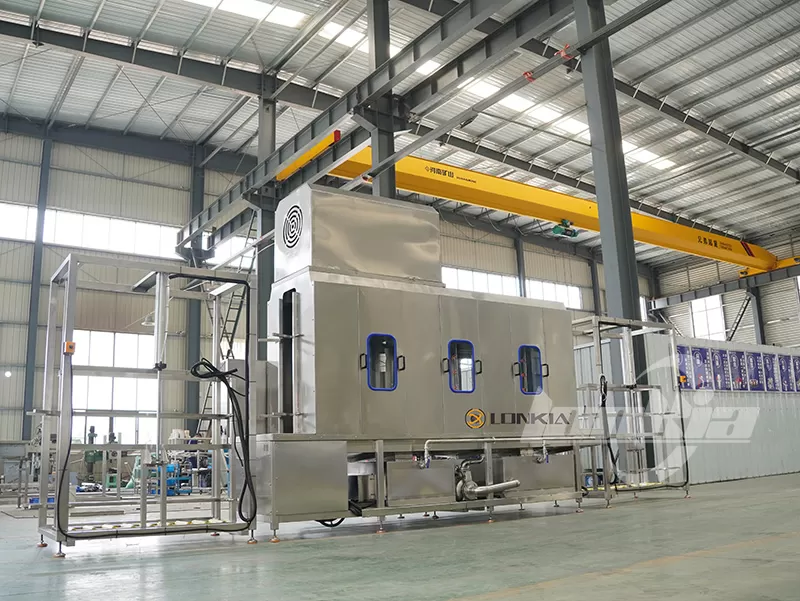
Lonkia pallet washer machines utilize a continuous conveyor structure and a multi-angle high-pressure spray system, enabling them to maintain stable throughput while ensuring effective cleaning, making them particularly suitable for long-term continuous operation.
What Factors Affect Pallet Washing Speed?
1. Degree of Pallet Contamination
If the pallet surface is only covered with dust or ordinary stains, the equipment will operate faster; however, pallets with heavy oil, blood, or food residue require longer cleaning times and higher spray pressure.
Consequently, pallet cleaning equipment configurations vary significantly across different industries. For example, the meat and seafood industries typically incorporate high-temperature hot water washing and enhanced spray systems.
2. Cleaning Process Design
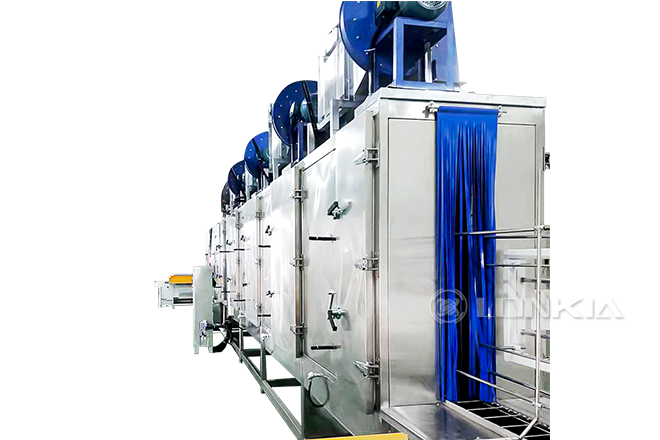
Modern pallet washing machines typically employ a multi-stage cleaning structure, including pre-wash, main wash, rinse, and drying stages. Although three- or even four-stage cleaning processes add steps to the workflow, they significantly enhance hygiene standards.
For companies requiring export compliance or adherence to HACCP standards, a more comprehensive cleaning process is often more important than simply pursuing speed.
3. Level of Automation
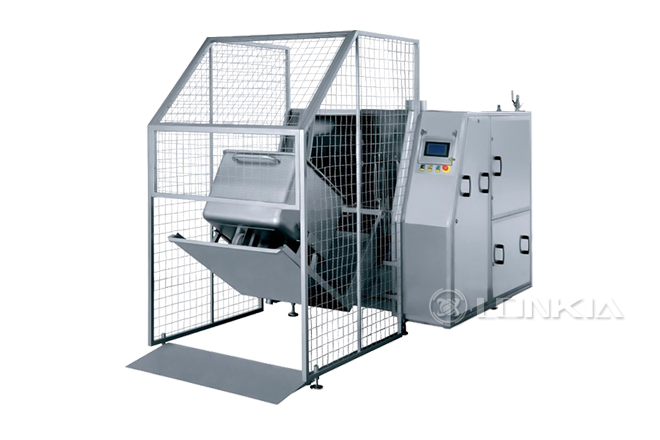
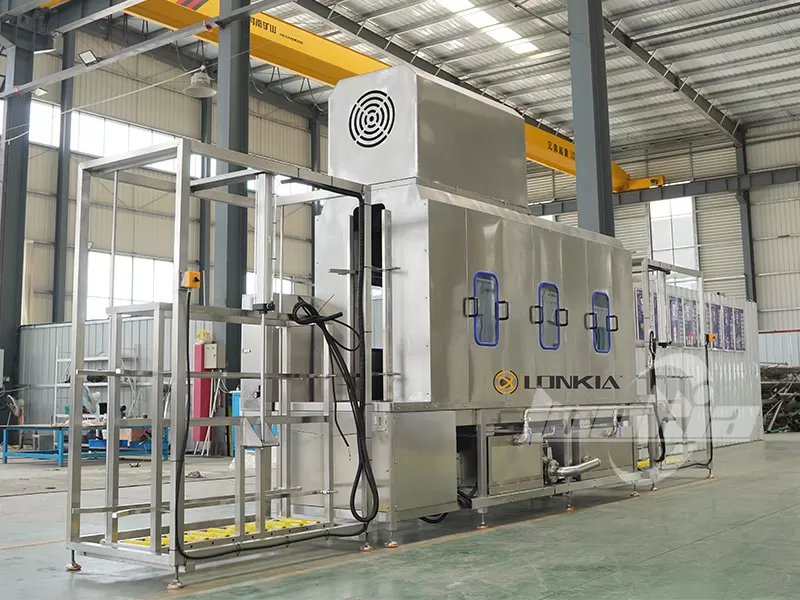
Automated loading, conveying, and unloading systems significantly boost overall efficiency. Compared to manual pallet handling, automated systems reduce waiting times and allow pallet washing machines to operate continuously.
Additionally, PLC-based intelligent control systems can automatically adjust operating speeds based on the number of pallets, further enhancing overall production efficiency.
How to Choose Pallet Washer Machines Suitable for Your Production Capacity?
Before selecting pallet cleaning equipment, businesses need to clarify several key questions:
- How many pallets need to be washed daily?
- How many need to be processed per hour during peak periods?
- Are the pallet sizes uniform?
- Is an automatic drying function required?
- Does the system need to integrate with existing conveyor lines?
Many customers focus solely on pallet washing machine price while overlooking the issue of capacity matching. If the equipment's processing capacity is insufficient, it can easily lead to backlogs downstream; conversely, over-specifying the equipment will increase unnecessary procurement costs.
Lonkia designs solutions based on the customer's pallet dimensions, production cycle, and on-site layout to help them select pallet washing machines that better suit their actual operating conditions, thereby improving the overall line efficiency.
Why are More and More Companies Adopting Pallet Washer Machines?
Compared to traditional manual cleaning, automatic pallet washing machines not only increase processing speed but also ensure consistent cleaning results. High-pressure spraying, hot water washing, and automatic drying systems effectively reduce residual stains and the risk of secondary contamination.
As food safety standards continue to rise, an increasing number of factories are prioritizing pallet hygiene management. Automated pallet washing equipment is gradually becoming an essential component of modern factories seeking to enhance standardized production.