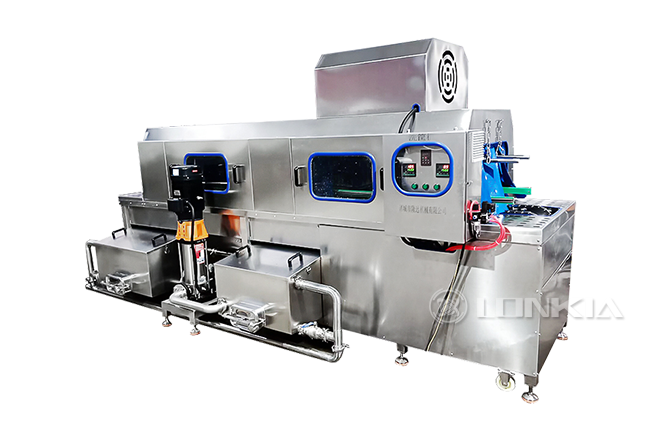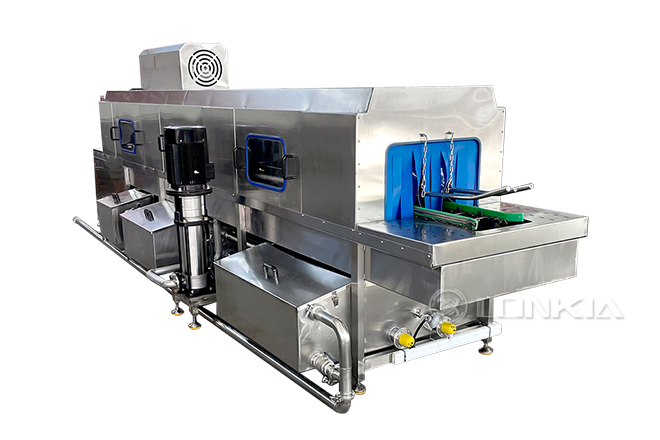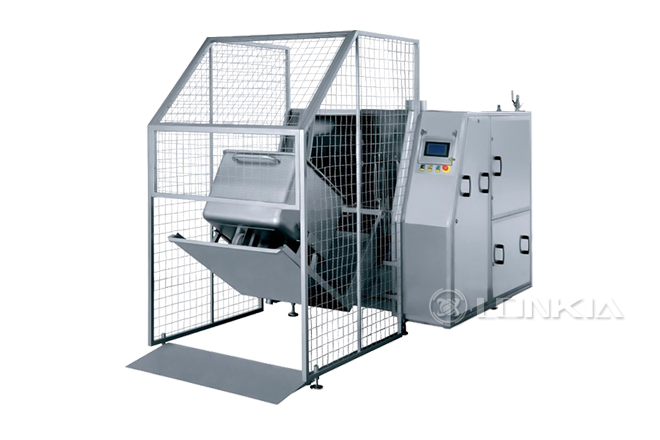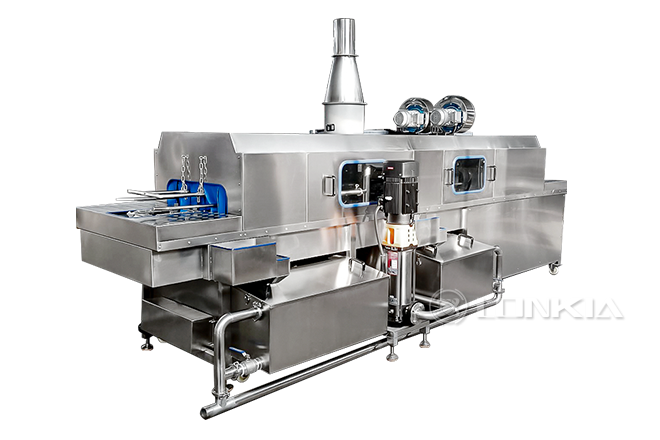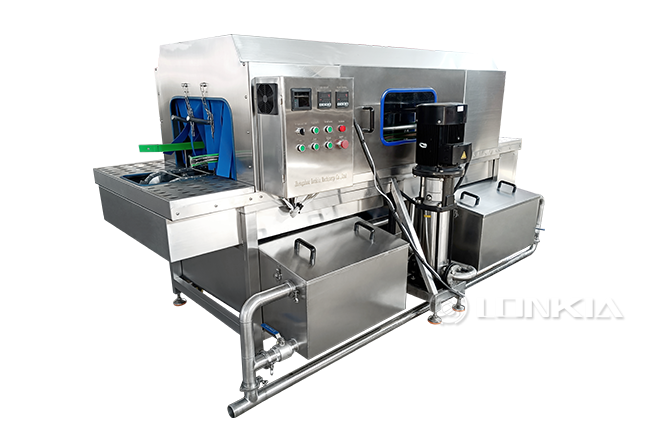
When purchasing a tray washer machine, many customers notice that prices vary significantly even among similar models. The primary reason for this disparity often lies in "customization requirements." For the food processing, central kitchen, or baking industries, standard equipment rarely aligns perfectly with actual production needs, making custom tray washer machines the preferred choice.
So, what factors actually determine the price of a customized tray washer machine? How can you achieve better value for money while staying within your budget? This article will help you understand the process systematically.
Why Do Tray Washer Machines Need to Be Customized?
Tray sizes, contamination levels, and production capacity requirements vary significantly across different facilities, so the equipment must be structurally flexible. For example:
- Non-standard tray sizes
- Different types of grease, starch, or residue
- Washing cycles that differ from production lines
Modern tray washing equipment typically supports structural adjustments, such as customizable conveyor width, spray zones, and cleaning cycles, to match actual production needs.
👉 This is the first factor contributing to price variations.
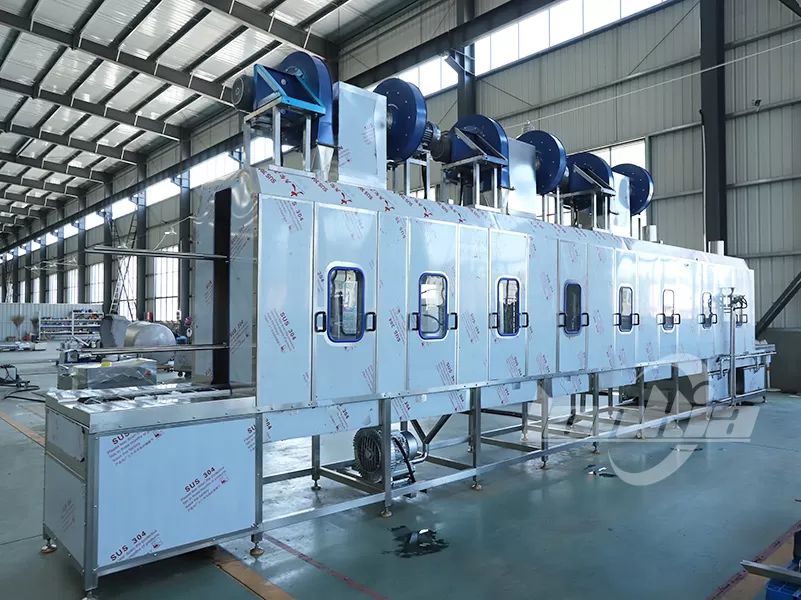
Core Factors Affecting Customization Costs
1. Production Capacity and Structural Design
Higher production capacity leads to more complex equipment structures. For example:
- Multi-channel cleaning configurations
- Longer cleaning zones and conveyor systems
- Higher-power pumps and circulation systems
Increased capacity means corresponding increases in equipment size, energy consumption, and configuration, which directly impact the quote.
2. Cleaning Process Configuration
A complete tray washer machine typically includes:
- Pre-wash system
- Main high-pressure spray wash
- Rinse system
- Air-drying or drying module
If the customer adds:
- Multi-stage filtration
- Enhanced spray system
- Automatic chemical dosing system
These will all increase the overall cost but also improve cleaning effectiveness and stability.
3. Materials and Manufacturing Standards
Tray washers are typically manufactured from food-grade stainless steel, such as:
- SUS304 (standard food grade)
- SUS316 (higher corrosion resistance)
Higher-grade materials come at a higher price but offer longer equipment lifespan and greater stability.
4. Automation and Control Systems
Modern equipment generally employs PLC control systems to enable:
- Parameter visualization
- Automated operation
- Real-time monitoring
Compared to traditional control methods, intelligent systems are more expensive but offer more stable operation and require less manual intervention.
5. Water Circulation and Energy-Efficient Design
High-end tray washing machines are typically equipped with:
- Closed-loop water circulation systems
- Multi-stage filtration systems
- Automatic temperature control
These features can significantly reduce long-term operating costs and are also key factors influencing price.
6. Degree of Customization
The more complex the customization requirements, the higher the price. Examples include:
- Non-standard tray dimensions
- Compatibility with multiple tray types
- Integration with existing production lines
- Specialized cleaning processes (heavy grease, high temperatures)
Customization entails additional design and manufacturing costs, which are the primary source of price variations.
How to Control Customization Costs?
1. Clarify Actual Requirements
Avoid over-specification, such as excessively high capacity or redundant features.
2. Prioritize Core Functions
Focus investment on:
- Cleaning performance
- Stability
- Water circulation system
rather than unnecessary add-ons.
3. Choose Scalable Solutions
Prioritize structural designs that support future upgrades to avoid duplicate investments.
Is Investing in a Custom Tray Washer Worth It?
In the long term, the answer is yes.
An automated tray washer machine can:
- Reduce labor costs
- Improve cleaning consistency
- Lower water and electricity consumption
- Boost production efficiency
Industry case studies show that properly configured equipment typically achieves a return on investment within 1–2 years.
Conclusion
The price of a custom tray washer machine is not simply the cost of the equipment itself, but rather a comprehensive result determined by production capacity, configuration, materials, automation, and the degree of customization.
For companies seeking stable production and long-term returns, choosing a food industry tray washer that truly meets their needs is more important than simply pursuing the lowest price.
As a professional cleaning equipment manufacturer, Lonkia can provide tailored solutions based on customers' tray dimensions, production capacity requirements, and process flows, helping customers achieve efficient cleaning and stable operation while controlling costs.