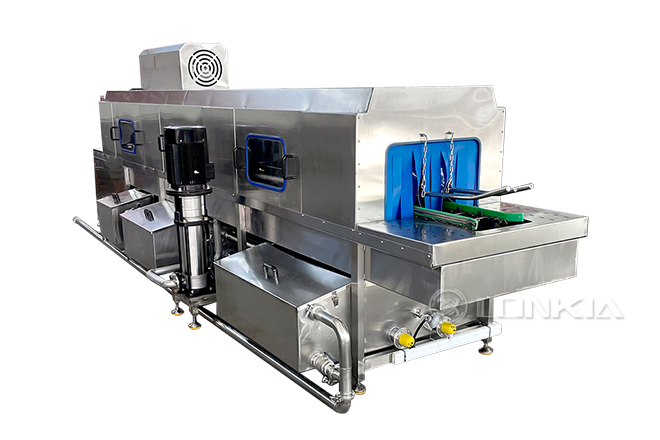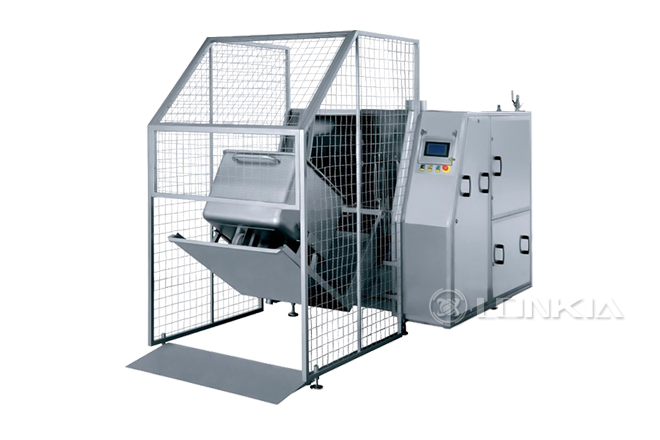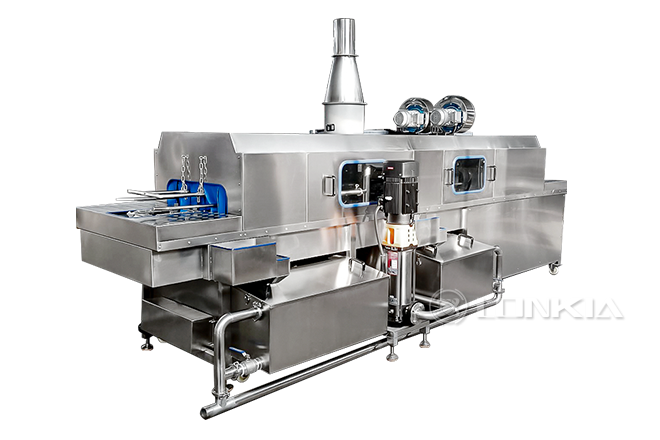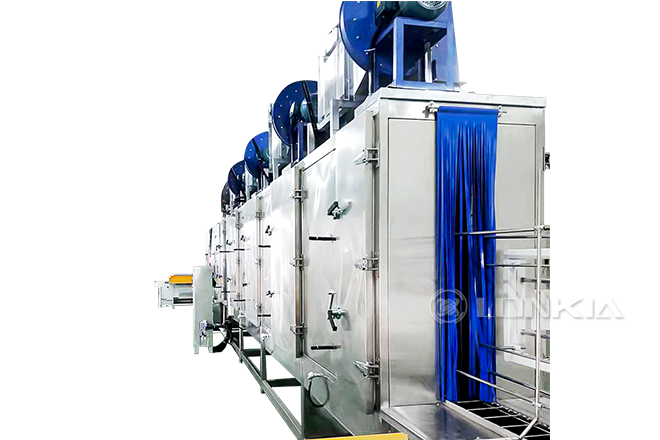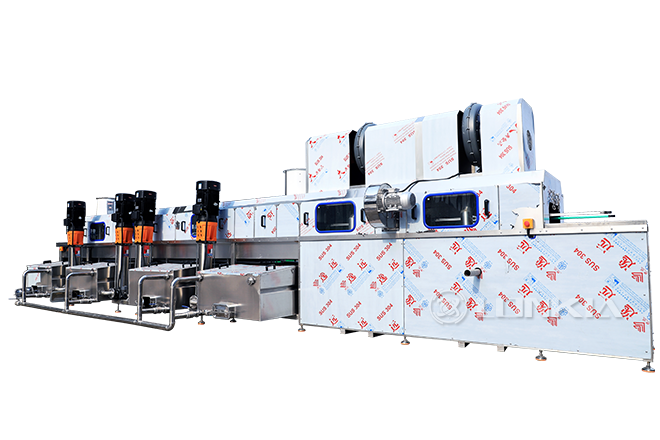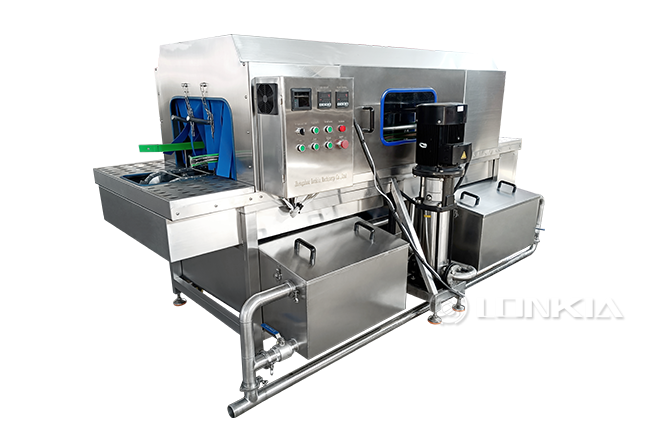
For companies planning to purchase a crate cleaning machine, in addition to considering cleaning effectiveness, production capacity, and price, there is another frequently asked question: Is this machine complicated to operate? Does it require specialized technical personnel?
In fact, a well-designed crate cleaning machine is designed to simplify operation, ensure stable performance, and minimize training costs. For food processing companies, the easier the equipment is to operate, the more it helps maintain production continuity and reduce the risk of downtime caused by human error. Currently, mainstream automated plastic crates washing machines generally feature PLC control, automatic conveyance, and multi-stage spray designs, making daily use more intuitive and convenient.
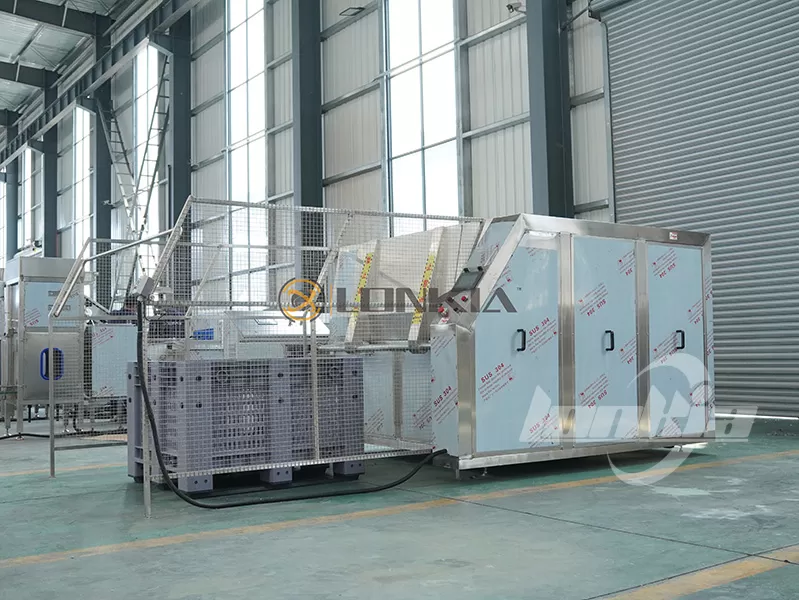
Automated operation makes daily use easier
Today, most crate cleaning machines utilize PLC intelligent control systems with clear and intuitive user interfaces. Operators need only perform basic tasks—such as starting the equipment, selecting parameters, and stopping the machine—according to production needs; the entire cleaning process is completed automatically by the equipment. Multiple stages—including high-pressure spraying, conveying, and rinsing—run continuously without the need for frequent manual intervention. Many machines also support one-touch start and automatic operation modes, making daily operations even more convenient.
For food processing companies, this automated design not only improves work efficiency but also reduces variations in cleaning quality caused by differences in operator techniques.
A single operator can handle daily operations
For the vast majority of food processing plants, daily operating procedures are not complicated, and a single operator can handle daily operations. The daily operations of a crate cleaning machine generally include the following steps:
- Check that the water supply, power supply, and drainage systems are functioning normally;
- Set operating parameters such as washing temperature and conveyor speed according to production needs;
- Continuously load reusable baskets into the conveyor inlet;
- The crate washing equipment automatically completes processes such as spray washing and rinsing;
- Shutting down the equipment after cleaning and performing a simple cleanup of the filtration system.
The entire crate washing process is highly standardized, and new employees can become familiar with the operating procedures after brief training. Standardized operation also ensures the equipment's long-term, stable performance.
What crate washer design features make it easier to use?
A truly excellent crate cleaning machine focuses not only on cleaning performance but also on the user experience.
For example, the PLC intelligent control system centrally manages all operating parameters, reducing the need for manual adjustments; the conveyor chain operates automatically, preventing efficiency losses caused by manual handling; multi-angle high-pressure nozzles cover every part of the crates, reducing the need for manual re-cleaning; the filtration system promptly intercepts impurities, lowering the workload for daily maintenance. These crate washer designs collectively enhance the equipment's stability and ease of use.
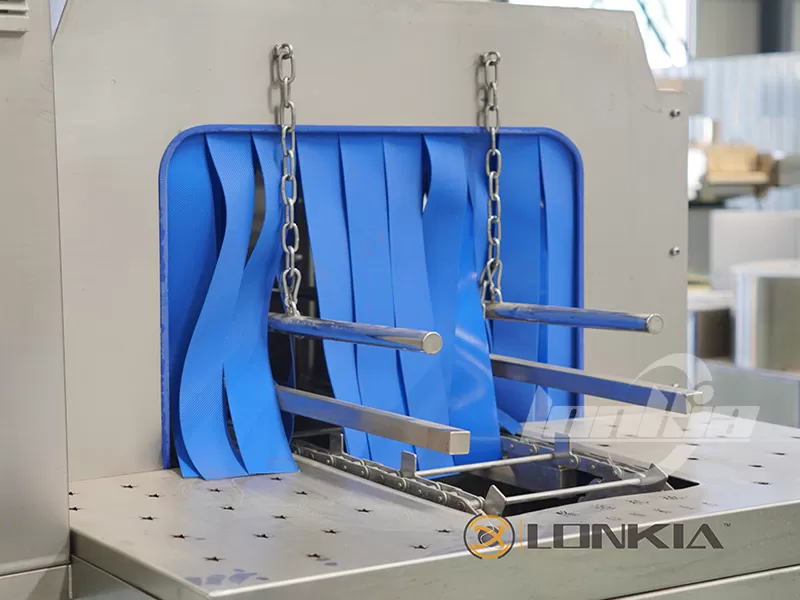
Employee training typically does not take long
For companies using automated cleaning equipment for the first time, the training period is also an important consideration during the procurement process.
Since the control logic of the crate cleaning machine is relatively simple, new employees can usually master basic operations—including equipment startup, temperature settings, conveyor speed adjustments, and routine inspections—after brief training. Compared to manual cleaning processes that require extensive experience, automated equipment facilitates standardized operations, thereby minimizing the impact of staff turnover on production.
Industrial crate washer like that provided by Lonkia typically comes with detailed operating instructions upon delivery, along with remote technical guidance to help customers complete equipment commissioning and begin production more quickly.
Is daily maintenance complicated?
Many procurement professionals believe that maintaining automated equipment is difficult, but this is not actually the case.
During normal production, maintenance primarily involves periodic inspection and cleaning of filters, nozzles, water tanks, and conveyor components. Keeping the nozzles unclogged, promptly removing impurities from the filters, and checking the operational status of the water pump and conveyor system are usually sufficient to ensure the equipment consistently delivers good cleaning results. Compared to complex repairs, preventive maintenance is simpler and easier to perform.
Conclusion
For businesses, an easy-to-operate crate cleaning machine not only reduces training costs but also minimizes human error and improves production stability. When purchasing equipment, in addition to considering production capacity and configuration, it is also recommended to focus on the control system, human-machine interface, ease of maintenance, and after-sales technical support.
In designing crate cleaning equipment, Lonkia consistently adheres to the principles of ease of operation, stable performance, and convenient maintenance. By optimizing equipment structure based on customers' actual production needs, Lonkia ensures that operators can quickly become proficient while guaranteeing long-term, stable operation, thereby providing food processing companies with more efficient and reliable cleaning solutions.