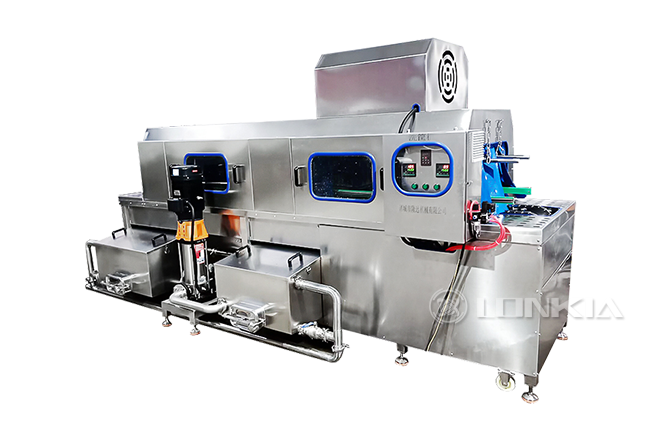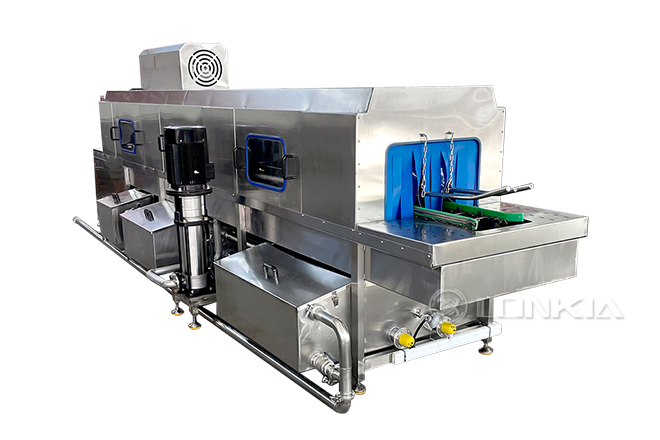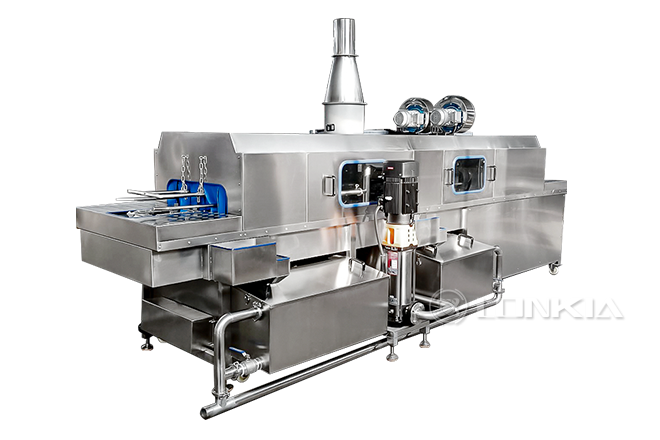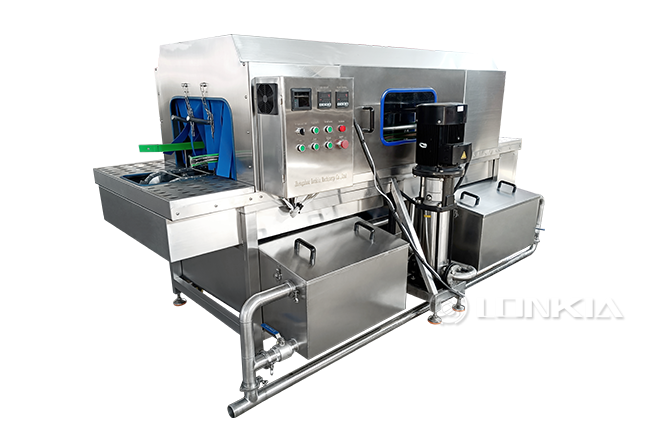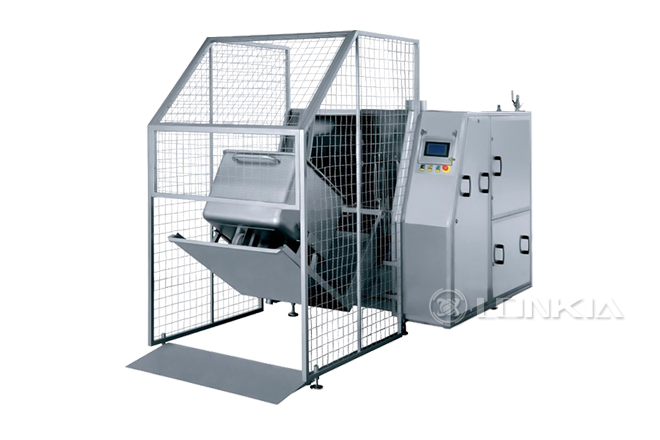
In food processing, transport carts play a vital role in moving raw materials, semi-finished products, and finished goods. If the cleaning process is still performed manually, it not only disrupts the production rhythm but also tends to become a bottleneck in the efficiency of the entire production line. Therefore, an increasing number of companies are seeking to integrate trolley washers into their existing production lines without major workshop renovations, in order to achieve a more stable and efficient automated cleaning process. A well-designed integration solution can reduce manual handling, improve equipment utilization, and ensure that the cleaning process stays in sync with the production rhythm.
Define the Production Process and Determine the Optimal Installation Location
Before planning the installation location, it is essential to analyze the trolleys' movement routes during the production process, such as raw material transport, processing transfers, finished product transport, and empty trolley return.
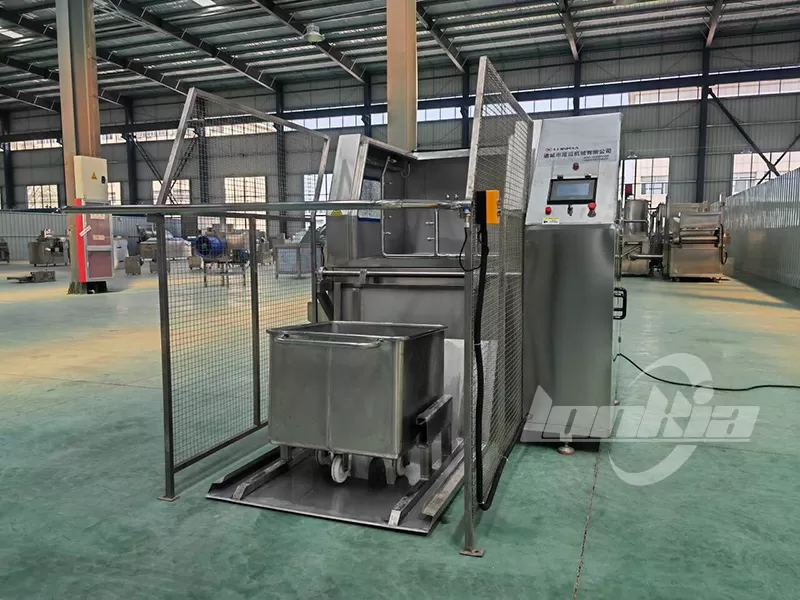
Typically, it is more suitable to install the trolley washer in the trolley return area, allowing trolleys awaiting cleaning to enter the equipment directly and return to the production area for continued use once cleaning is complete. This layout reduces repetitive handling, prevents cleaned trolleys from re-entering contaminated areas, and facilitates integration with existing logistics routes. Some units support standalone operation and can also be integrated with automated conveyor systems based on production workflows to enhance overall operational continuity.
Matching Equipment Capacity to Production Rhythm
Many companies focus more on cleaning speed when purchasing a trolley washer, yet overlook the need to match it to the production rhythm.
If the rate at which trolleys are generated exceeds the equipment's cleaning capacity, it can easily lead to a backlog of trolleys; conversely, if the trolley washer's capacity is too high, it may result in unnecessary investment. Therefore, when selecting a model, one should comprehensively consider the number of trolleys per hour, the duration of a single cleaning cycle, continuous operation capacity, and equipment wait times to ensure the cleaning system can reliably align with the production rhythm.
Lonkia can provide solutions in various specifications based on the customer's trolley dimensions, cleaning frequency, and production requirements, ensuring the equipment is better suited to actual applications rather than simply pursuing higher processing capacity.
Focus on Interface Configuration to Ensure Stable Integration
To reduce future retrofitting costs, the design of equipment interfaces is equally important.
A trolley washing machine suitable for production line integration typically requires the following configurations to be confirmed in advance:
- Whether the direction of trolley entry and exit aligns with the workshop's logistics routes;
- Are the locations of water supply, drainage, power, and steam connections convenient for connection?
- Does the system support hot water washing and a recirculating water system?
- Are interfaces for automatic conveyance or PLC control provided?
- Can the washing program be adjusted to accommodate trolleys of different specifications?
Equipment with a modular design can adapt more flexibly to different factory layouts and facilitates future upgrades to automatic conveyance or the addition of functional modules.
The Washing System Determines Production Continuity
Integrating equipment into a production line involves more than just installation; it is crucial to ensure long-term, stable operation.
A high-pressure, multi-angle spray system covers the bottom, sides, and interior of the trolleys, minimizing cleaning blind spots; a recirculating filtration system ensures consistent cleaning performance; an automatic tilting mechanism helps drain accumulated water, reducing manual handling time; and PLC program control allows for selecting appropriate cleaning modes based on varying levels of soiling, thereby improving the operational stability of the entire production line.
Choose a Manufacturer with Customization Capabilities
There are significant differences in the specifications of trolleys, workshop layouts, and production processes across different food processing plants; therefore, standard equipment may not meet all application requirements.
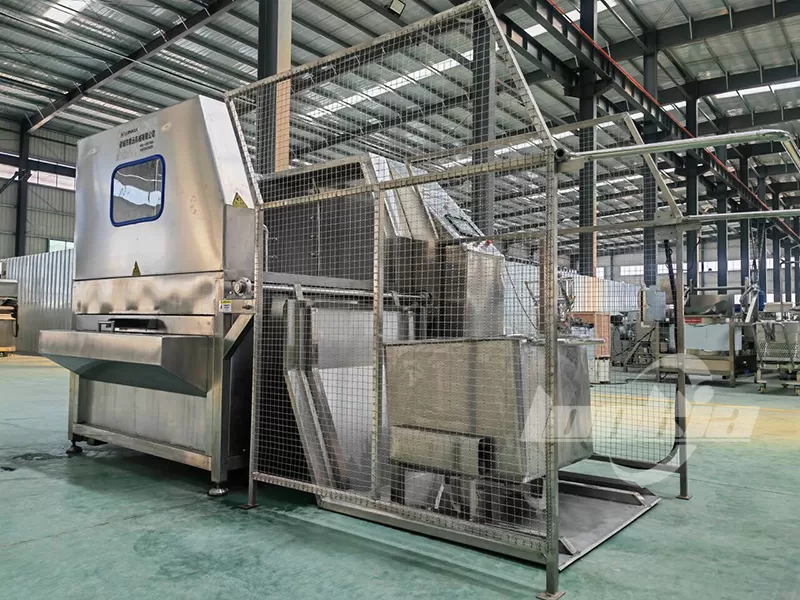
Manufacturers with customization capabilities can optimize designs based on trolley dimensions, material flow directions, heating methods, and control requirements, enabling the trolley washer to integrate more seamlessly into existing production lines. Lonkia specializes in food processing cleaning equipment and can provide tailored equipment solutions based on customers' actual operating conditions, helping enterprises achieve smoother production transitions while ensuring cleaning quality.