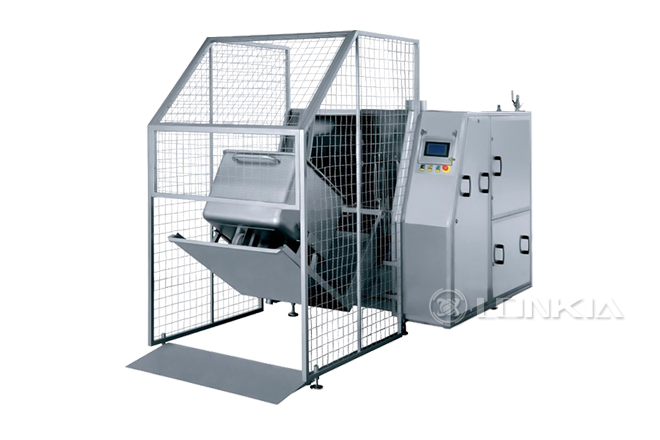
During meat and poultry processing, plastic transport crates come into repeated contact with meat, blood, fat, and other organic residues. When selecting a poultry crate washer, in addition to considering processing capacity, it is also necessary to take into account the crate's dimensions (length, width, and height), mesh size, and structural features such as the base and reinforcing ribs. Different crate structures require corresponding adjustments to the equipment's conveyor system, nozzle layout, and cleaning parameters.
Why Does the Crate Structure Affect Cleaning Effectiveness?
1. Crate Dimensions Determine the Conveying and Spray Coverage
The dimensions of the crates used in different processing plants are not entirely uniform. The length, width, and height of the crates directly affect their operational behavior once they enter the poultry crate washer. If the crate dimensions do not match the equipment's passageway, issues such as unstable conveying or insufficient spray coverage in certain areas may arise.
Therefore, when configuring a poultry crate washer, the exact dimensions of the crates should be provided in advance. LONKIA can design the conveyor structure and cleaning zones to match the actual crate specifications.
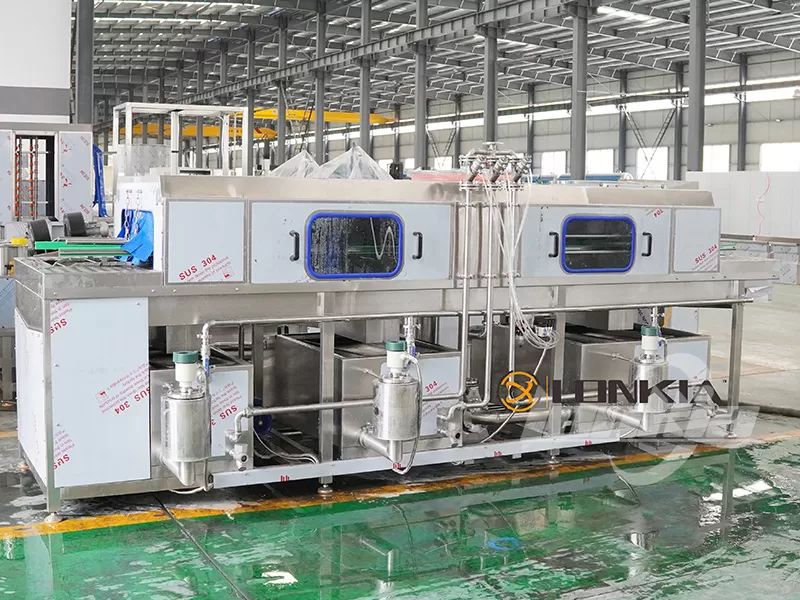
2. Mesh Size Affects Contaminant Removal
Meat processing crates typically feature an open-mesh structure, allowing water to flow into the interior of the crate; however, different mesh sizes alter the way water flows through the crate. Deeper mesh openings, dense reinforcing ribs, or complex bottom structures may create areas where meat scraps and fat are prone to accumulate.
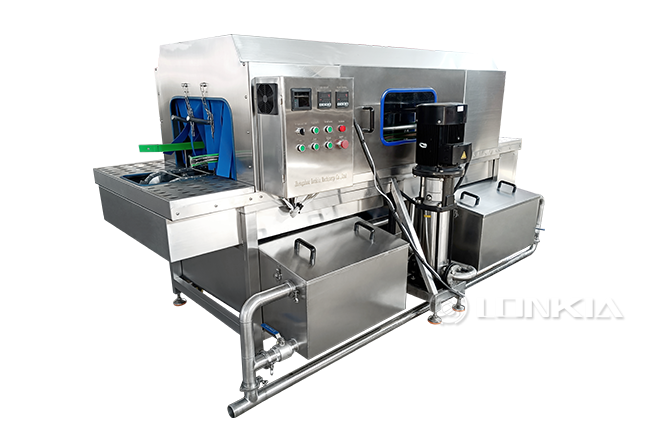
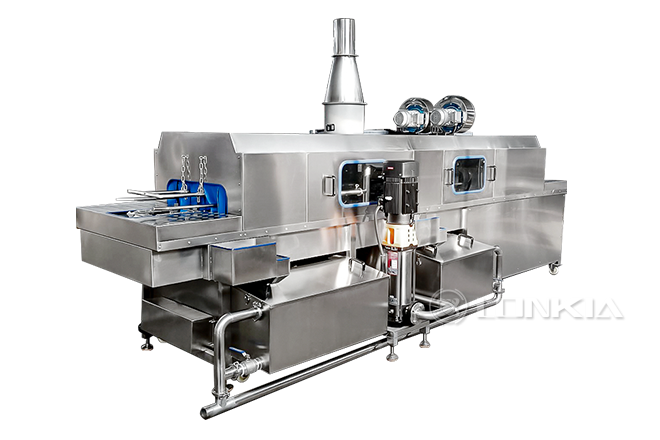
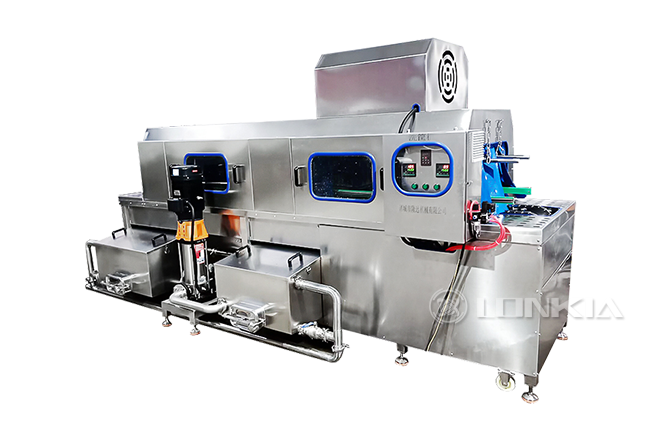
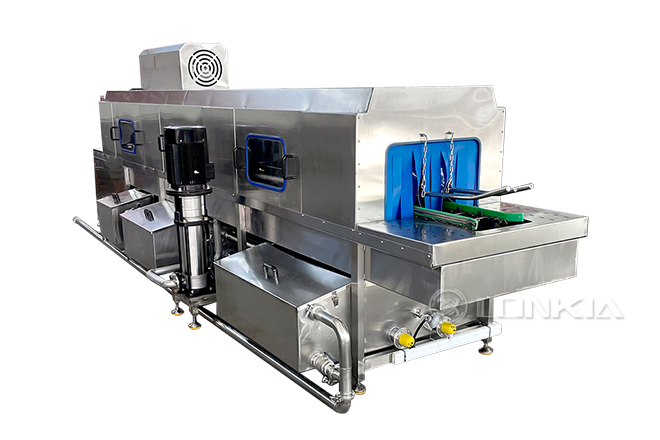
The chicken crate washer uses multiple spray systems and strategically placed nozzles to rinse the crates from various angles, ensuring that the water flow covers the outer surfaces, interior, and hard-to-clean areas.
Which Crate Structures Require Special Attention?
Bottoms and Reinforcing Ribs
The bottom of a crate is typically a location prone to residue buildup. This is especially true for plastic crates with numerous reinforcing ribs, where simple, unidirectional spraying may fail to adequately cover the bottom area. Therefore, the equipment design must adjust nozzle angles and cleaning methods based on the crate's bottom structure.
Handles and Corners
The handles, rims, and corners of baskets can also create cleaning blind spots. Multi-angle high-pressure spraying can reduce residue in these areas and improve overall cleaning consistency.
How to Select the Right Poultry Crate Washer Based on Crate Specifications?
Before purchasing, it is recommended to provide the manufacturer with the basket dimensions, material, structural images, the number of baskets to be washed per hour, and the types of primary contaminants. This information helps determine the conveyor system, wash section configuration, spray layout, and operating speed.
For meat processing plants requiring continuous processing, the poultry crate washer can also be integrated with pre-soaking, main washing, rinsing, and post-processing steps to form a continuous turnover basket washing process.
Selecting the right equipment is not simply a matter of comparing machine dimensions or prices; rather, it involves ensuring that the crate structure, cleaning method, and production cycle are well-matched. If you provide the dimensions, images, and target throughput of your crates, LONKIA can recommend the most suitable poultry crate washer configuration based on this information.