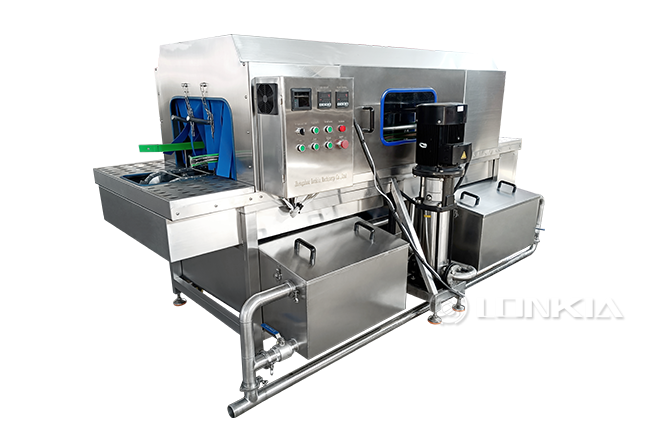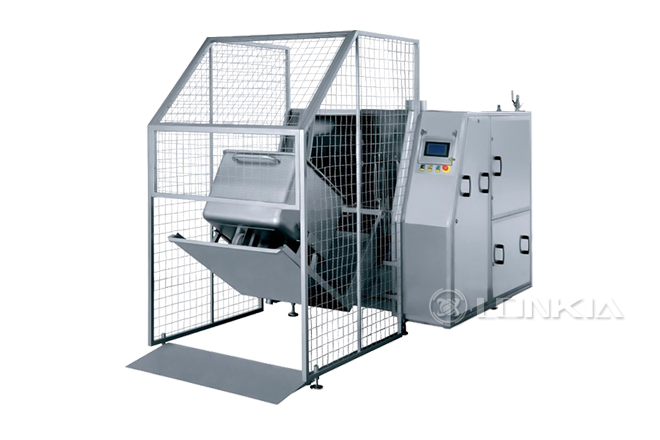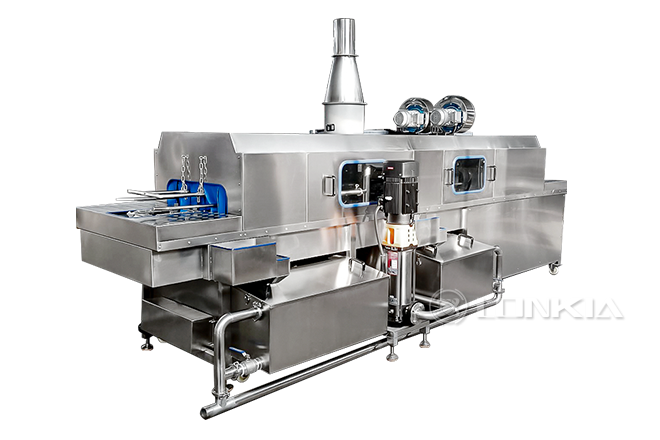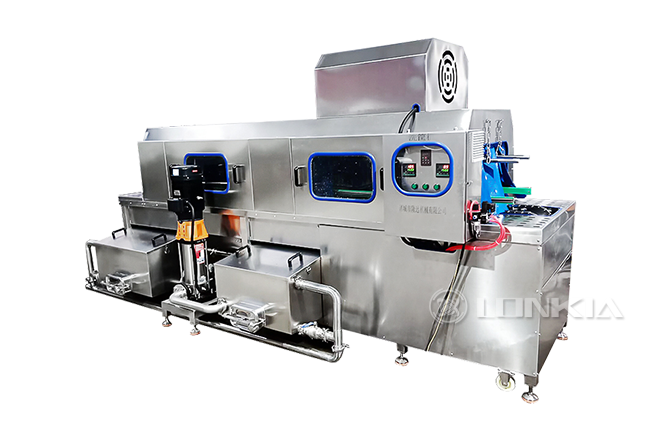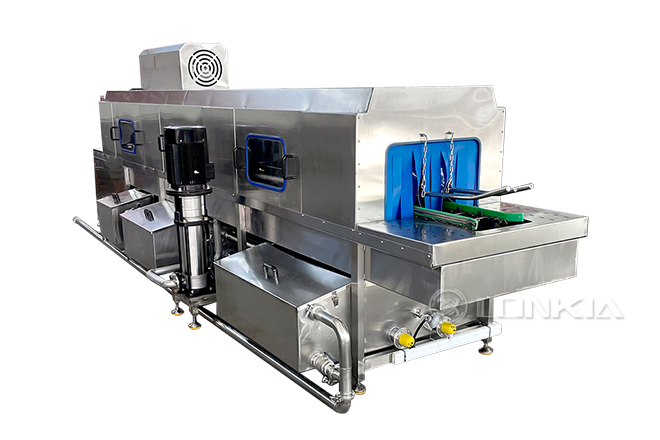
Within the food packaging industry, wide-mouth glass bottles are extensively utilised for products such as honey, sauces, jams, and pickled goods. However, the wide-mouth design is prone to retaining grease, particles, and label adhesive residue. Traditional manual cleaning proves inefficient and inconsistent. Consequently, a professional glass bottle washer becomes essential equipment for ensuring production hygiene and efficiency. This article addresses the pain points and solutions for wide-mouth bottle cleaning, based on actual customer requirements.
Why is wide-mouth bottle cleaning more challenging?
Compared to standard narrow-mouth bottles, wide-mouth bottles feature a more complex internal structure:
- Larger opening diameter, prone to residue accumulation
- Difficult-to-clean threads or grooves
- Residual grease contamination is challenging to remove
- Manual scrubbing is inefficient and lacks standardisation
Food enterprises frequently encounter issues such as label residue, water stains affecting subsequent sterilisation, and poor compatibility with different bottle types.
Inadequate cleaning directly compromises filling quality and product safety.
How do professional glass bottle washers address these challenges?
Tailored to wide-mouth bottles, modern glass bottle washing machines typically employ multi-stage cleaning processes:
1. High-pressure pre-wash removes surface contaminants
High-pressure sprays rapidly dislodge sand, label residue, and particulates, enhancing subsequent cleaning efficiency.
2. Hot water + detergent recirculation for deep cleaning
Circulating 60–80°C hot water with detergent effectively breaks down grease and adhered residues.
3. Comprehensive internal/external spray design
Angled nozzles penetrate bottle necks and threaded areas to eliminate dead-zone residue, particularly suited for wide-mouth bottles ≥80mm diameter.
4. Hot air drying prevents secondary contamination
High-temperature hot air rapidly dries containers, minimising water droplet residue to ensure they enter the filling stage in a dry state.
This process achieves integrated treatment encompassing 'cleaning – sterilisation conditions – drying'.
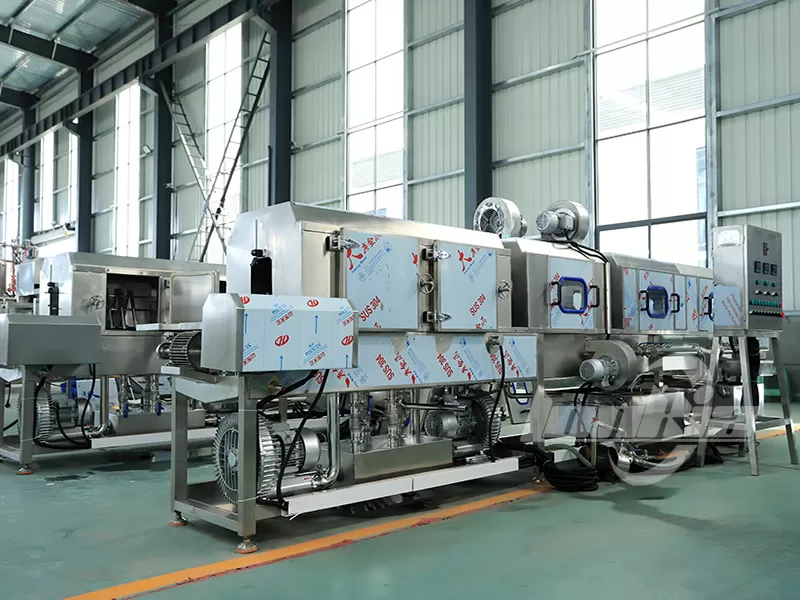
How does the equipment's structural design ensure stable operation?
Superior cleaning performance relies not only on process technology but also on structural design.
- Anti-overturn bottle conveying system: Positioning baffles and adjustable-spacing chain plates ensure stable conveyance of varied container shapes, minimising breakage risk.
- Multi-bottle compatibility: Adjustable mechanisms accommodate diverse glass bottle dimensions and forms without frequent component replacement.
- Food-grade materials and control systems: Glass bottle washer typically features stainless steel construction with PLC control interfaces, offering intuitive operation and straightforward maintenance.
Lonkia provides customisable configurations to suit production requirements and diverse packaging specifications.
Which food production processes are suitable for bottle washing machines?
A high-performance glass bottle washer can cover multiple applications:
- Honey bottles
- Jam and condiment containers
- Canning glass jars
- Dairy product containers
- Packaging for bean products or pickled foods
Through combined processes such as spraying, rinsing, and drying, the equipment meets food production requirements for hygiene and consistency.
What key points should be considered when selecting suitable equipment?
Enterprises should prioritise evaluating:
- Whether specifically engineered for wide-mouth bottles
- Whether cleaning encompasses threaded bottle necks
- Whether drying functionality is incorporated
- Whether compatibility with multiple container specifications exists
- Whether operation and maintenance are straightforward
Specialist manufacturers typically offer bespoke solutions to align with actual production line requirements.
Conclusion
For food packaging enterprises, the cleaning stage directly determines product safety and brand reputation. An efficient and reliable glass bottle washer not only resolves the challenge of cleaning wide-mouth bottles but also significantly enhances production efficiency and quality consistency.
Should your production line involve packaging jams, honey, or condiments, selecting specialised equipment represents a crucial step towards achieving high-standard manufacturing.