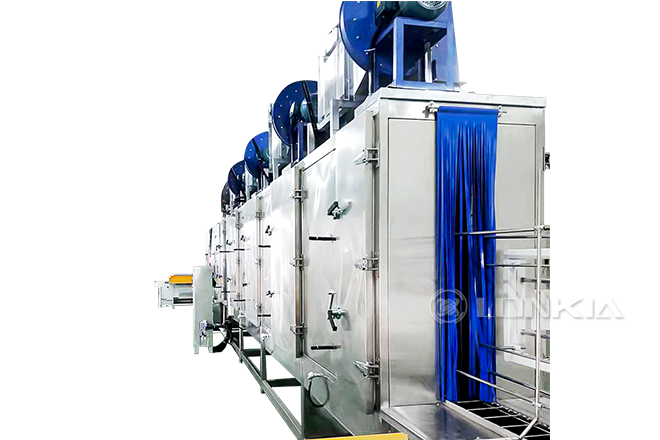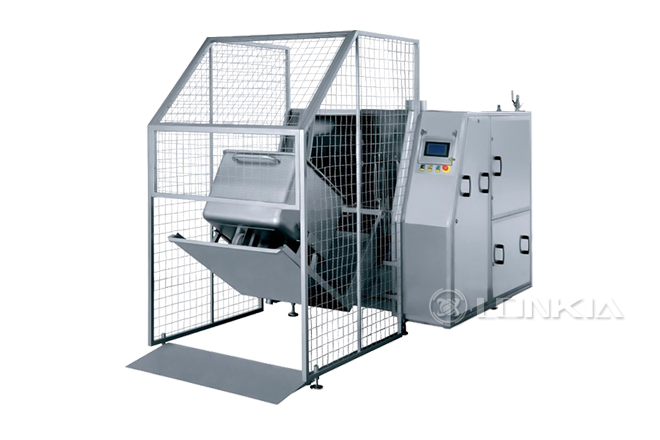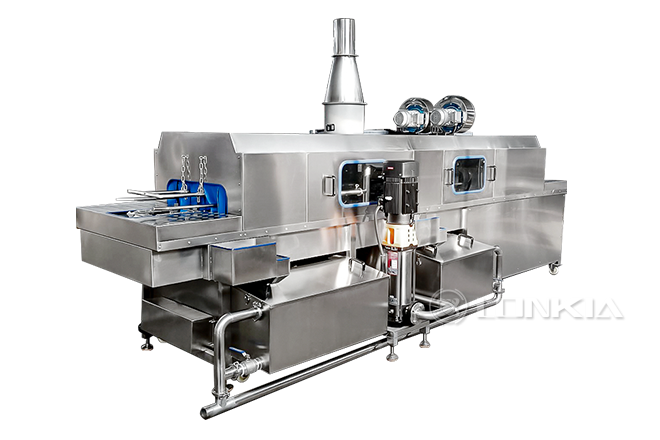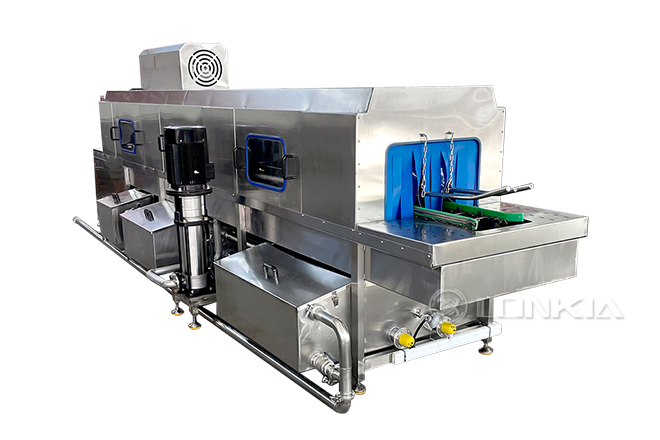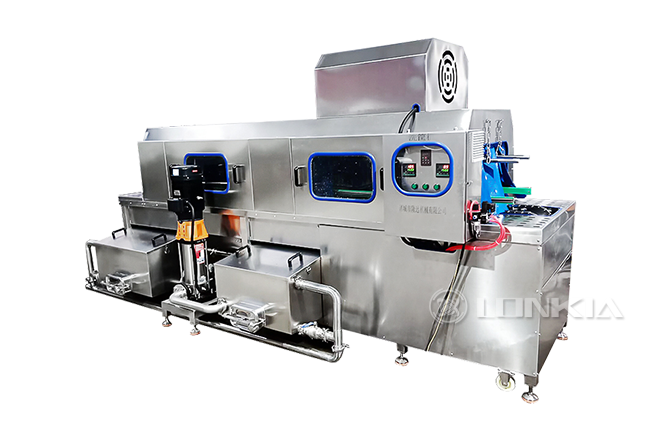
Container washing machines are indispensable equipment in modern production lines, particularly in food processing, logistics, and warehousing industries, where they handle the cleaning and disinfection of pallet boxes, plastic containers, and similar items. Ensuring long-term, efficient, and stable operation requires proper maintenance, which not only enhances cleaning effectiveness but also reduces downtime, extends machine lifespan, and saves costs for businesses. This article will explain the core aspects you, as an operator, should focus on during daily maintenance from a practical operational perspective.
Daily Cleaning and Inspection: The Foundation for Effective Cleaning
The cleaning capability of a container washing machine primarily relies on its spray system, water pump, and conveyor mechanism. Before starting and after finishing each shift, operators should inspect the following:
- Spray Nozzle Cleanliness: Clogged nozzles cause uneven water flow and reduced cleaning effectiveness. Inspect daily and use a soft brush to remove deposits.
- Screens and Pump Filters: Scale buildup on screens restricts water flow and reduces cleaning pressure. Inspect and remove debris at the end of each shift.
- Temperature and Water Level: Water temperature fluctuations during cleaning phases impact decontamination effectiveness, particularly for heavily soiled containers. Temperatures below preset levels compromise sterilization efficacy.
These daily checks ensure the container washing machine delivers stable and consistent performance throughout each cleaning cycle.
Conveyor System Maintenance: Preventing Production Line Blockages
Most container washers employ conveyor chains or roller systems to transport containers. Even simple conveyor mechanisms require regular maintenance:
- Check Chain or Belt Tension: Excessive slack may cause unstable conveyance and affect cycle times; excessive tightness increases wear.
- Lubricate Moving Parts: Regularly lubricate bearings and moving chains with food-grade grease per the equipment manual to prevent noise and jamming.
Performing these maintenance tasks not only reduces unexpected downtime but also ensures long-term stable operation of the equipment.
Water System and Heating Equipment Maintenance
The cleaning effectiveness of a container washing machine largely depends on water pressure and temperature control. Key items requiring attention include:
- Water Pump Pressure Testing: Aging pumps may cause insufficient pressure, compromising spray effectiveness. Regularly test and replace worn pumps per manufacturer recommendations.
- Heating Element Inspection: For models with heating functions, periodically verify thermostat and heating element functionality to prevent cleaning quality issues from temperature anomalies.
- Water Quality and Circulation System: Impurity buildup in washwater reduces circulation efficiency. Replace washwater promptly based on cleaning frequency.
Proper water system maintenance enhances the container washer's ability to handle stubborn stains and complex contaminants.
Periodic Maintenance and Preventive Care
Beyond daily cleaning, establish a scheduled maintenance plan:
- Weekly Deep Maintenance Inspection: Clean internal components, calibrate nozzle angles, and inspect electrical connections.
- Regular Control System Testing: Verify PLC or touchscreen interfaces function normally to detect system faults early.
- Calibrate Equipment Per Manufacturer Recommendations: Includes temperature sensors, water pressure thresholds, etc., to ensure long-term stable operation.
These periodic maintenance tasks significantly reduce equipment failure risks and improve utilization rates.
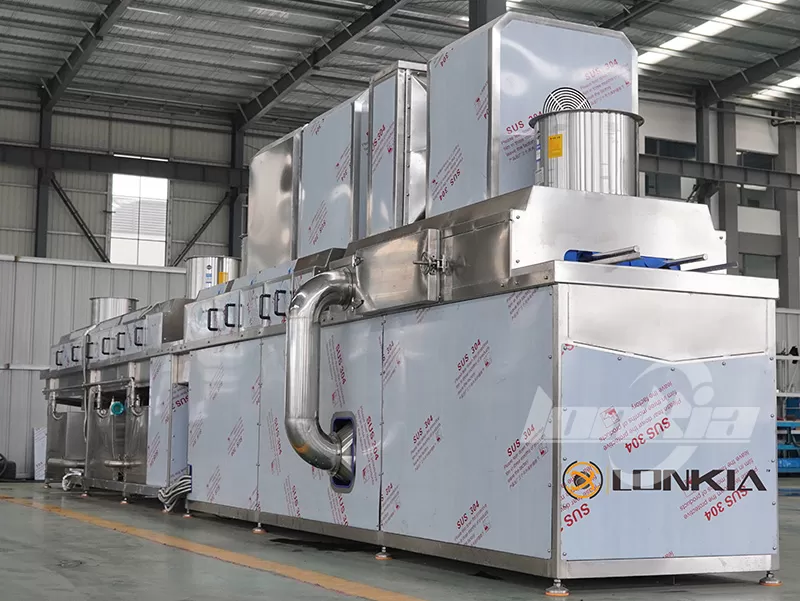
Tangible Value of Maintenance
The value of properly maintaining container washing machines is evident:
- Enhanced Cleaning Consistency and Quality: Reduces missed spots and residue in hard-to-reach areas, elevating cleanliness standards.
- Lower Risk of Unexpected Downtime: Identifies potential issues early, preventing sudden production line interruptions.
- Extended Equipment Lifespan: Minimizes component wear and tear, reducing repair costs.
Therefore, whether you are an operator new to container cleaning machines or a manager seeking to boost production efficiency, establishing and executing a comprehensive maintenance protocol is key to improving productivity and equipment reliability.
Conclusion
As a critical component of production lines, container washing machine maintenance demands unwavering attention. By implementing the inspection, cleaning, lubrication, and periodic maintenance outlined herein, operators can ensure equipment operates efficiently and reliably at all times.
If you are considering further enhancing equipment performance or seeking specific maintenance tools and checklists, contact Lonkia for customized technical support and maintenance solutions.