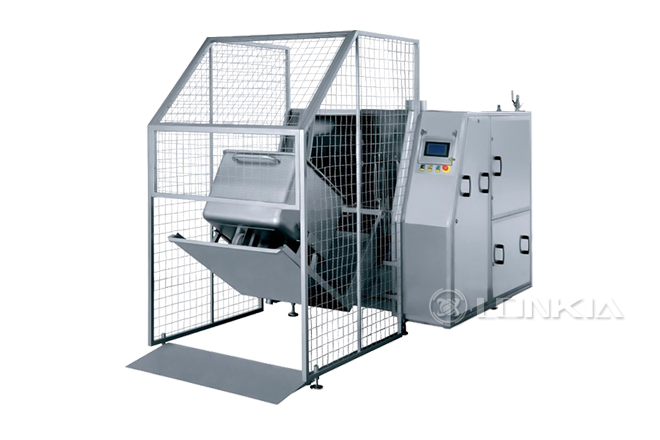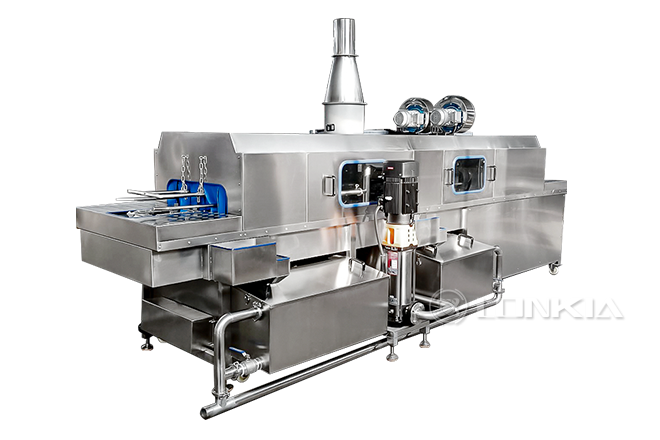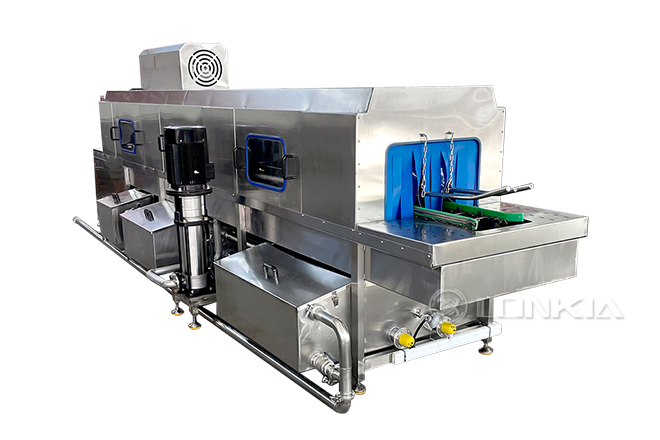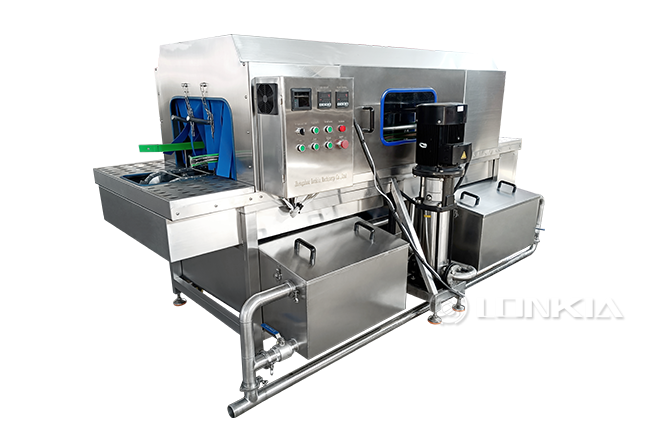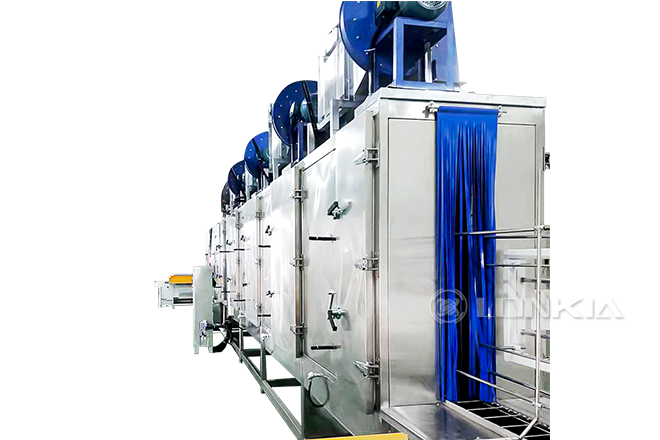
In modern food processing, agriculture, logistics, and other industries, automated container cleaning machines have become essential equipment for enhancing production efficiency and hygiene safety. While automatic washers offer greater labor savings and consistency compared to manual cleaning, operational or performance challenges may still arise during actual use. This article focuses on addressing real customer pain points, prioritizing problem-solving to help you quickly identify and resolve common malfunctions.
1. Insufficient Spray Water Pressure Leading to Suboptimal Cleaning Results
Symptoms: Residual stains remain on container surfaces, or corners are uncleaned.
Possible Causes: Clogged nozzles, inadequate pump pressure, or water pump failure.
Solutions:
- Regularly inspect and clean nozzles to ensure no food residue or mineral buildup obstructs them.
- Check if foreign objects block the water pump inlet filter and clean the filter.
- Verify pump operational status and power supply stability.
Principle Analysis: The high-pressure spray system is central to the cleaning power of container cleaning machines. Optimal water pressure and spray angles ensure thorough removal of contaminants. Superior machine designs incorporate multi-angle high-pressure nozzles to cover every surface of the container.
2. Wastewater Accumulation Due to Water Circulation System Malfunction
Symptoms: Wastewater backflow or deteriorating water quality during operation.
Possible Causes: Blocked circulation filtration system, uncleaned filters, or degraded circulation pump performance.
Solutions:
- Regularly clean the circulation system's filters and sedimentation zones to prevent prolonged solid particle buildup.
- Periodically replace circulating water or perform cleaning and sterilization during downtime.
- Inspect circulation pump status; seek professional maintenance or component replacement as needed.
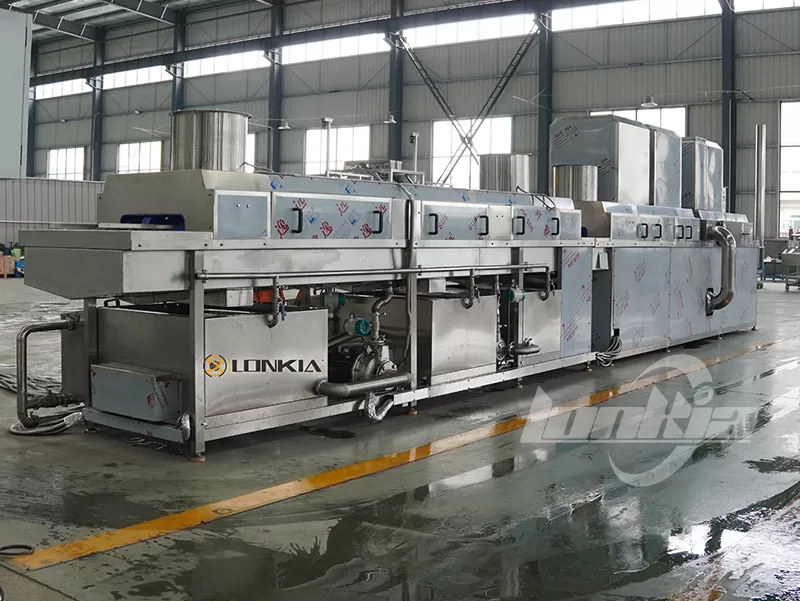
Principle Analysis: Automatic container washers typically employ recirculating water systems. Water first passes through screening and sedimentation to remove large particles, then is sprayed for cleaning. If circulation is obstructed, wastewater cannot be effectively filtered, compromising cleaning quality.
3. Residual Odors or Microorganisms in Containers
Symptoms: Containers retain odors or test positive for microorganisms after cleaning.
Possible Causes: Insufficient cleaning temperature or improper disinfection process settings.
Solutions:
- Check and appropriately increase cleaning water temperature and heating duration, especially when handling grease or protein residues.
- Add disinfection steps (e.g., using suitable food-grade disinfectants, increasing spray pressure, or incorporating hot water rinses).
- Incorporate a dedicated disinfection stage within the cleaning process to enhance compliance with hygiene standards.
Principle Analysis: Food residues and protein-based contaminants readily become breeding grounds for bacteria. Using high-pressure hot water spraying combined with proper detergents, disinfectants, and sufficient cleaning time is crucial for improving container sanitation.
4. PLC Control Panel Malfunction or Slow Response
Symptoms: Touchscreen or PLC control panel exhibits sluggish response, error prompts, or inability to initiate programs.
Possible Causes: Control system software anomalies, power fluctuations, or loose wiring connections.
Solutions:
- Restart the machine control system to determine if the issue is a temporary software lag.
- Verify a stable power supply to prevent current fluctuations from affecting the PLC.
- Have technical service inspect wiring for loose connections and confirm stable operation of control modules.
Principle Analysis: Modern container washing machines rely on PLCs and control systems for precise management of cleaning processes, spray durations, speeds, and other parameters. System malfunctions may disrupt the entire cleaning process, making a stable power supply and regular software maintenance essential upkeep procedures.
5. Conveyor Chain Stuttering or Container Transport Issues
Symptoms: Containers move erratically or become stuck within the cleaning line.
Possible Causes: Improperly adjusted conveyor chain, insufficient lubrication, or foreign object obstruction.
Solutions:
- Verify the conveyor chain is installed level and securely, and lubricate it regularly per the manual.
- Clear the conveying path to ensure no debris obstructs operation.
- If necessary, adjust the conveying speed to match the cleaning cycle to reduce stalling.
Principle Analysis: The conveyor chain is a critical component that transports containers from the front end into the cleaning zone and carries them out the rear. Maintaining its proper lubrication and unobstructed operation ensures the entire container cleaning process runs smoothly.
Summary
Although container washing machines are designed for automated cleaning and high efficiency, daily maintenance, operational monitoring, and upkeep remain essential during actual use. Understanding the machine's workflow and core structural features, promptly identifying issues, and troubleshooting step-by-step can effectively extend equipment lifespan and enhance production efficiency.
If you are evaluating or procuring cleaning equipment, Lonkia's container cleaning machine features a stable multi-stage cleaning design, a modular control system, and customizable solutions based on container dimensions. It is ideal for enterprises seeking efficient, controllable cleaning results. We welcome further inquiries.