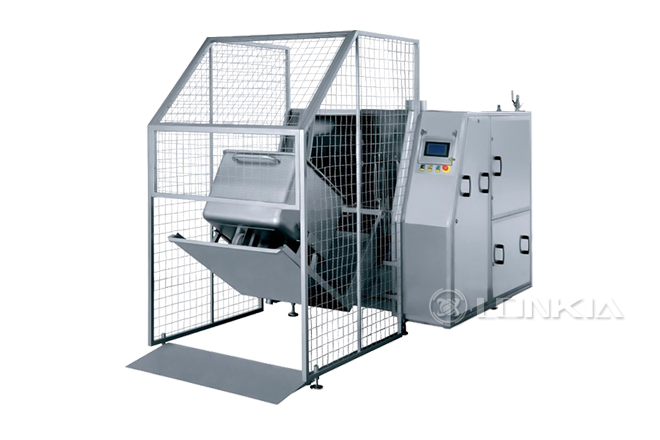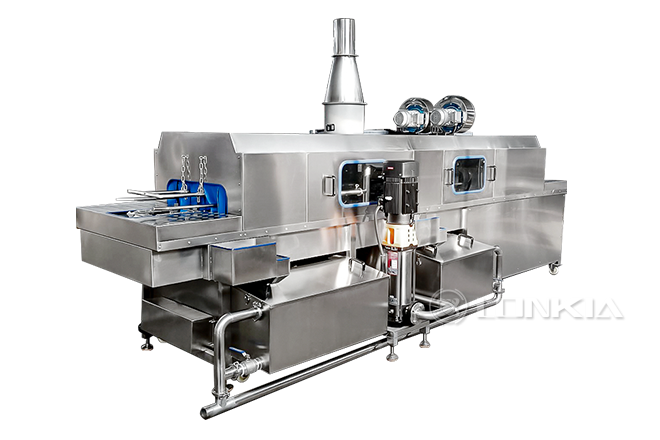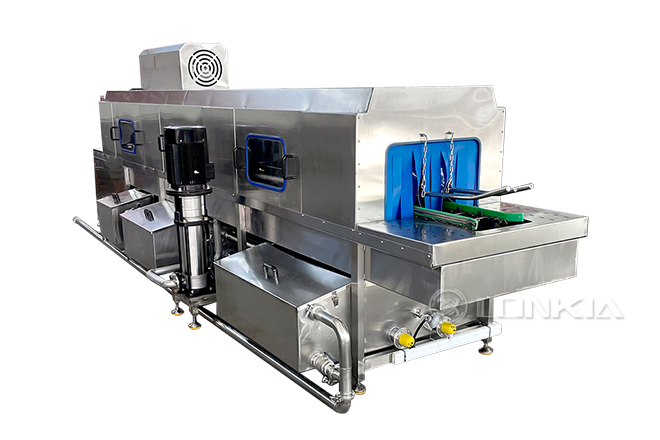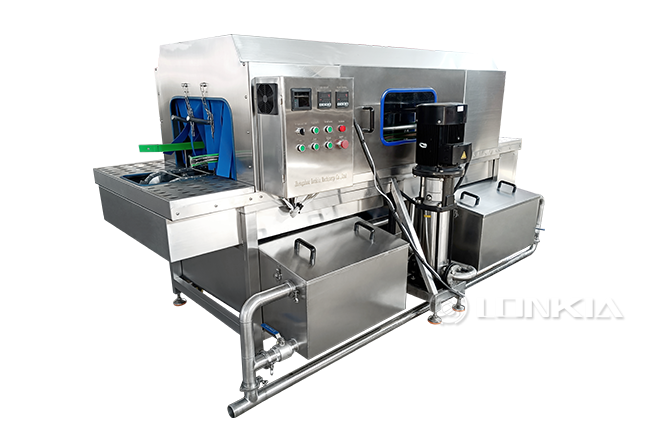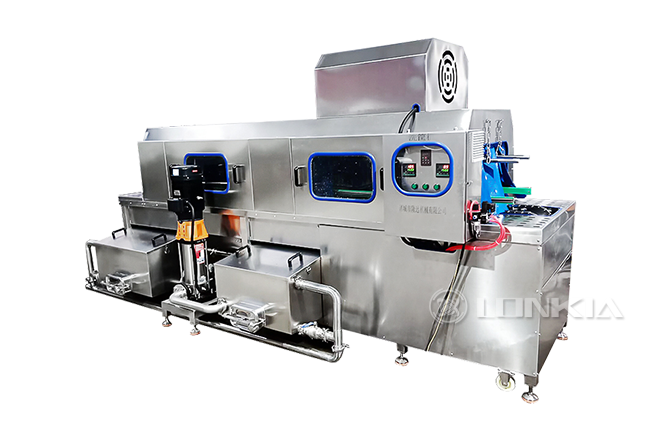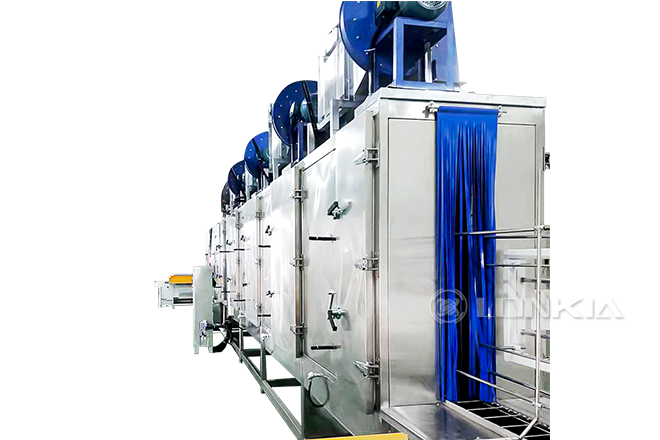
In baking and chocolate production, the cleanliness of molds and trays directly impacts product quality and production efficiency. Traditional manual cleaning is not only inefficient but also fails to thoroughly remove grease and residue. As a result, an increasing number of companies are adopting baking tray cleaners to achieve standardized, automated cleaning.
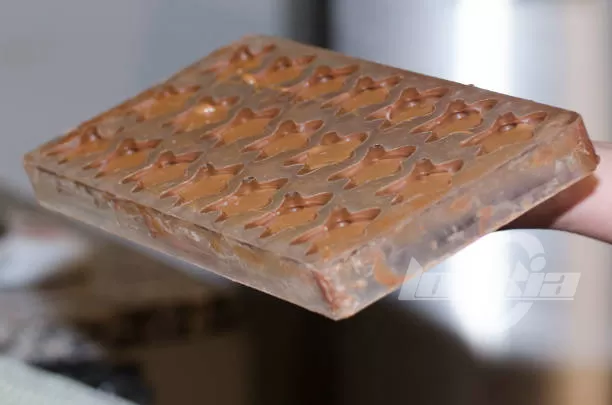
Key Challenges in Cleaning Chocolate Molds and Baking Trays
Compared to ordinary containers, cleaning chocolate molds and baking equipment is more difficult, primarily due to the following factors:
- Severe grease residue: Chocolate contains cocoa butter, which easily adheres and forms a film.
- Complex structure: Molds have many intricate details, making it difficult to clean thoroughly by hand.
- Incomplete cleaning affects quality: Residues can cause surface defects in the final product.
- Low efficiency of manual cleaning: Impacts production pace
Many factories have found that even with hot water soaking and scrubbing, repeated processing is still required, which is time-consuming and labor-intensive.
How Baking Tray Cleaners Work?
Modern baking tray washing machines utilize a multi-stage cleaning structure, typically including:
- High-pressure spray system: 360° high-pressure water jets cover the surfaces of molds and trays, penetrating deep into crevices to remove grease and residue
- Temperature-controlled cleaning technology: The baking tray cleaning machine allows for adjustable water temperatures (e.g., 30–80°C), softening stubborn chocolate residue while protecting the mold surfaces
- Multi-stage Cleaning Process: Includes pre-wash, main wash, and rinse steps to remove dirt layer by layer, ensuring no residue remains
- Automatic Drying System: Rapidly removes moisture after cleaning to prevent secondary contamination, ensuring immediate readiness for production
How Baking Tray Cleaning Machines Address Core Customer Challenges?
- Improving Cleaning Efficiency: Automated cleaning enables continuous operation, significantly reducing manual labor time and accelerating the overall production pace.
- Enhancing Cleaning Consistency: With fixed equipment parameters, cleaning results remain consistent across every batch, eliminating human error.
- Reducing Reliance on Labor: Transitioning from "multiple workers scrubbing" to "minimal staff operation" lowers labor costs.
- Improving Product Quality: Thoroughly cleaning molds helps ensure smooth, impurity-free chocolate molding.
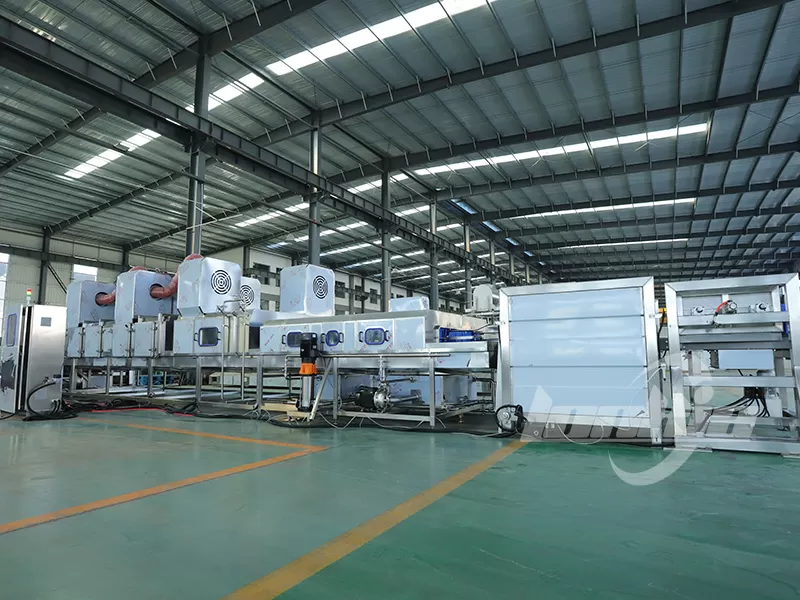
For example, a baking tray cleaner like the lonkia combines high-pressure spraying with multi-stage cleaning to quickly remove grease and achieve consistent cleaning results, making it suitable for continuous production environments.
Suitable for a Wide Range of Baking Equipment and Molds
The baking tray washing machine is not only suitable for standard baking trays, but can also be widely applied to:
- Chocolate molds (silicone, PC, metal)
- Cake pans and baking trays
- Food processing trays
- Molds with complex structures
The baking tray cleaner achieves compatible cleaning for different sizes and materials through adjustable spray angles and conveyor structures
How to Select the Right Baking Tray Washing Machine?
From the customer's perspective, the following factors should be prioritized during selection:
- Whether it features a high-pressure spray system (determines cleaning effectiveness)
- Whether it includes temperature control (affects grease removal capability)
- Whether it has a drying module (prevents secondary contamination)
- Whether it supports molds of various sizes (enhances versatility)
- Level of automation (impacts long-term costs)
Summary
In modern food processing, the baking tray cleaner has become a key piece of equipment for improving efficiency and quality.
It not only solves the problems of difficult-to-remove grease and low efficiency but also helps businesses achieve standardized production.
For companies that need to clean chocolate molds and baking equipment, selecting a cleaning machine with stable performance will directly impact product quality and production efficiency. Properly configuring equipment often offers greater long-term value than simply increasing labor.