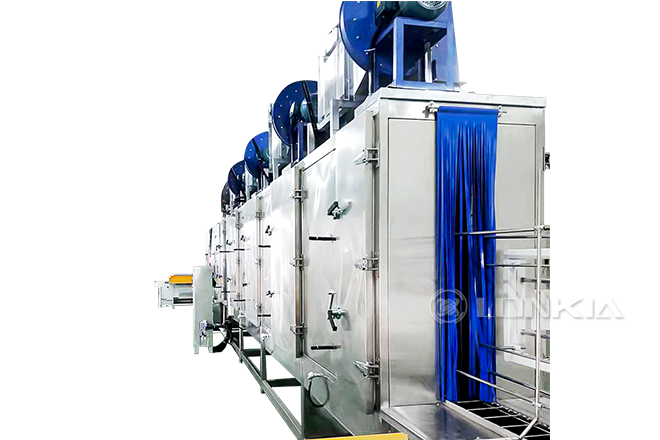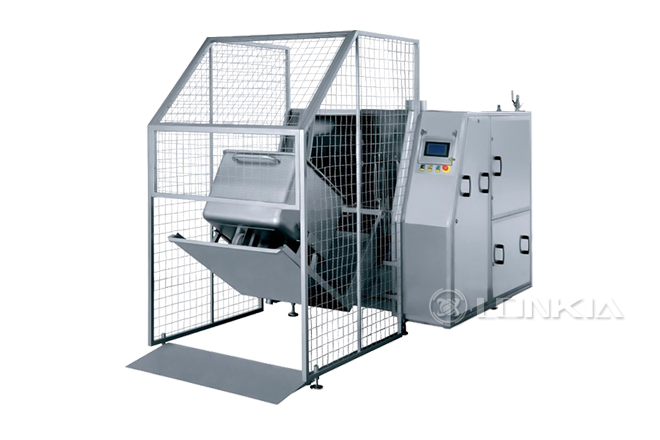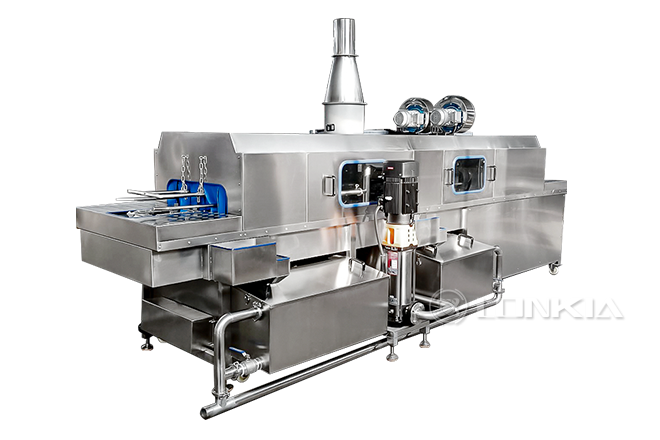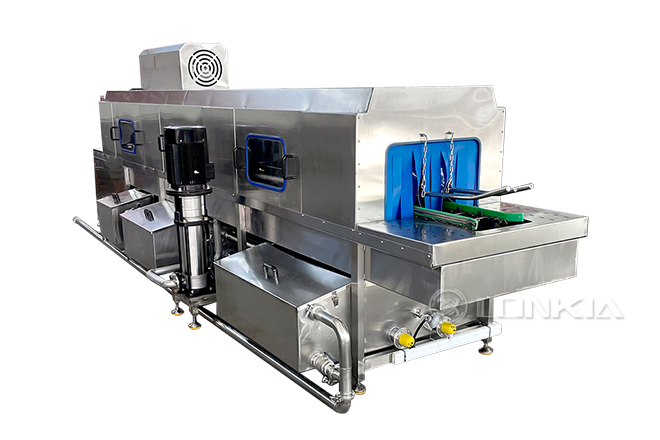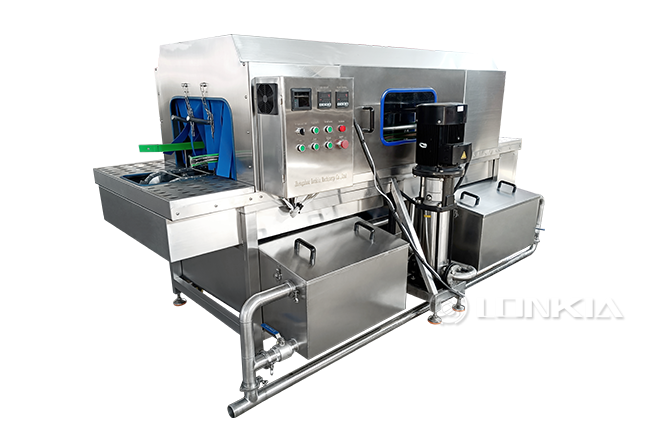
In production environments such as food processing, meat processing, and fruit and vegetable processing, pallets are prone to accumulating contaminants—such as grease, food residue, and dirt—during repeated use. While standard cold-water rinsing can remove some surface contaminants, cleaning results are often inconsistent when dealing with stubborn grease and organic residues. This is why an increasing number of manufacturers are turning to hot water pallet washer machines, which use hot water, high-pressure spraying, and multi-stage cleaning to improve pallet cleaning effectiveness.
Why Use Hot Water to Clean Pallets?
The core benefit of hot water cleaning is not simply raising the water temperature, but using heat to soften and break down grease and residues adhering to the pallet surface. When pallets are used for extended periods in meat processing, food production, or other manufacturing operations, cold water struggles to quickly remove contaminants that have solidified or become firmly adhered.
For such applications, hot water, combined with detergents and high-pressure water jets, makes it easier to dislodge contaminants from the pallet surface. The optimal temperature should be determined based on the pallet material, type of contamination, and actual cleaning requirements—rather than simply pursuing the highest possible temperature.
How Does a Hot Water Pallet Washer Machine Work?
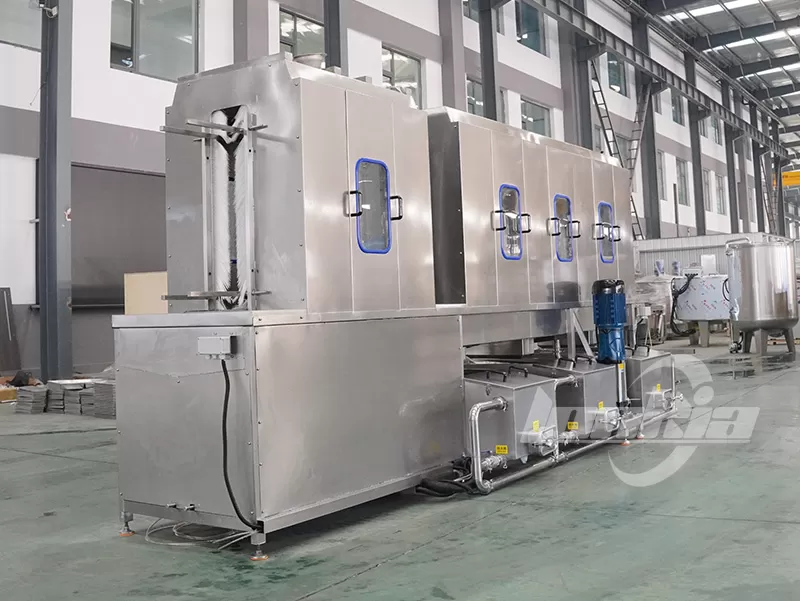
LONKIA's pallet washer machines employ a three-stage cleaning process, including hot alkaline water washing, high-temperature, high-pressure hot water washing, and high-pressure clean water rinsing. Once the pallets enter the machine, a conveyor system continuously moves them through different cleaning zones, where high-pressure nozzles spray the pallets from multiple directions to ensure thorough cleaning.
This phased design allows each cleaning stage to perform a specific task: the initial stage focuses on softening and removing contaminants; the middle stage uses high temperature and high pressure to intensify cleaning; and the final stage uses clean water rinsing to minimize residue.
When Is Heated Cleaning Recommended?
If pallets are primarily contaminated with dry dust, small amounts of particulate matter, or other light contaminants, cleaning with cold or room-temperature water may be sufficient.
However, if pallets are frequently exposed to grease, meat residues, food scraps, or stubborn organic contaminants, hot water cleaning is generally more effective. Especially in continuous production environments, a stable cleaning temperature combined with high-pressure spraying can minimize fluctuations in cleaning effectiveness caused by varying levels of contamination.
Therefore, the need for a heating system should be determined based on actual contamination levels and cleaning standards, rather than solely on the number of pallets.
What Should You Consider Before Choosing a Hot Water Pallet Washer?
Before purchasing washing machine for pallets, it is recommended to confirm the following four pieces of information:
- Pallet size and material: These determine the conveyor structure and nozzle layout.
- Number of pallets per hour: This affects conveyor speed and equipment configuration. LONKIA pallet washer machines have a reference processing capacity of 30–1,000 pallets per hour.
- Primary types of contaminants: Grease, food residue, mud, and other contaminants require different cleaning parameters.
- Cleaning temperature and duration: The appropriate hot water temperature and conveyor speed should be determined based on the degree of contamination.
In addition, the nozzles, filters, and water tank are components that require special attention. This pallet cleaning machine features a three-dimensional, four-directional nozzle arrangement and is equipped with a water tank filtration system; the nozzle piping can be disassembled without tools, facilitating daily cleaning and maintenance.
Choose the Right Cleaning System for Your Pallets
A hot water pallet washer machine does not mean that all pallets must be washed at high temperatures. A truly optimal solution should match the cleaning stages, temperature, spray pressure, and conveyor speed to the pallet size, type of contamination, throughput, and cleaning requirements.
LONKIA can provide customized pallet washing equipment configurations based on customers' pallet specifications and production needs, helping businesses establish a more stable pallet washing process. For customers planning to implement an automated pallet washing system, providing pallet dimensions, contamination levels, and hourly throughput is typically key to determining the equipment solution and quotation.