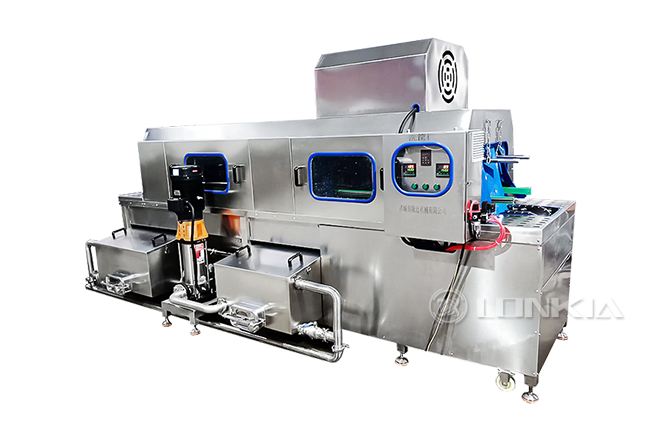
In food processing, meat processing, and fruit and vegetable production, plastic reusable crates are used for transporting raw materials, temporarily storing products, and transferring goods between production stages. As production continues, used crates must be promptly collected and washed so they can be returned to production. If the washing speed cannot keep up with turnover demands, it can easily lead to a backlog of crates awaiting washing, which may even disrupt subsequent production. Therefore, when selecting a crate washer machine, one should not focus solely on the equipment's hourly washing capacity but must also conduct a comprehensive assessment based on the facility's daily crate turnover volume.
Determine How Many Reusable Containers the Factory Needs to Clean Daily
1. Track Daily Reusable Container Usage
First, track the number of reusable containers put into use each day at the factory, as well as the average number of times each container is reused. For factories with continuous production, usage and cleaning demands across different shifts should also be considered.
It is important to note that the daily usage of reusable containers does not necessarily equal the daily cleaning volume. Some crates may be used multiple times within a single day, while others may require temporary storage before cleaning. Accurately tracking the actual number of crates returned is essential to avoid improper configuration of equipment capacity.
2. Consider Cleaning Demands During Peak Production Periods
In addition to daily cleaning volumes, attention should be paid to the rate at which crates are returned during peak production periods. If a large number of crates are returned simultaneously, the crate washer machine must have sufficient processing capacity to prevent the cleaning process from becoming a production bottleneck.
How to Calculate the Required Cleaning Capacity for a Crate Washer?
After determining the daily cleaning volume, you can estimate the required capacity based on the equipment's daily effective operating time.
Hourly cleaning volume = Actual daily cleaning volume ÷ Daily effective cleaning time
For example, if a factory needs to clean 6,000 reusable crates daily and the equipment operates effectively for 10 hours per day, then an average of 600 crates must be cleaned per hour.
When selecting a specific model, factors such as feeding intervals, brief equipment downtime, cleaning difficulty, and production peaks must also be considered. A reasonable capacity margin should be factored in, rather than selecting equipment based solely on the theoretical average.
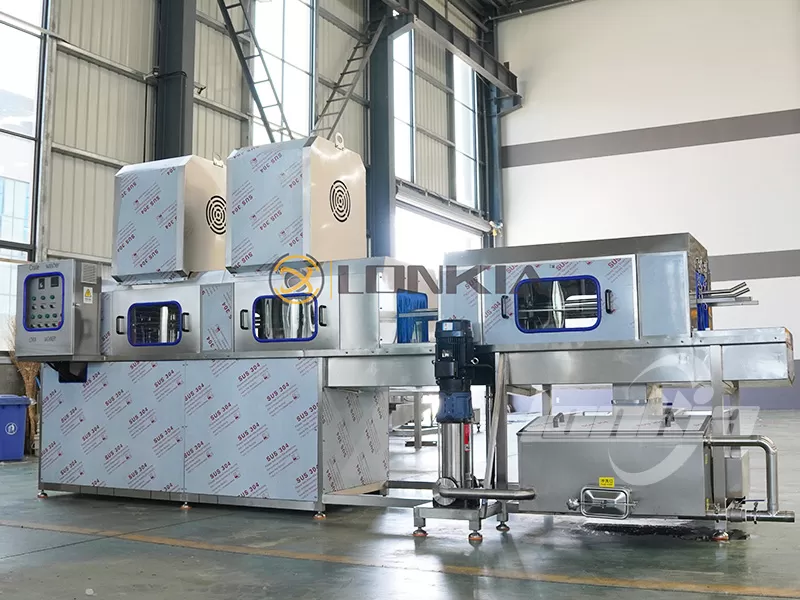
LONKIA crate washer machines have a cleaning capacity ranging from 100 to 2,000 crates per hour and can be customized according to actual production needs. Customers can determine the appropriate equipment configuration based on daily cleaning volume, operating hours, and crate specifications.
Which Configurations of a Crate Washer Affect Actual Processing Capacity?
1. Conveyor Speed and Washing Time
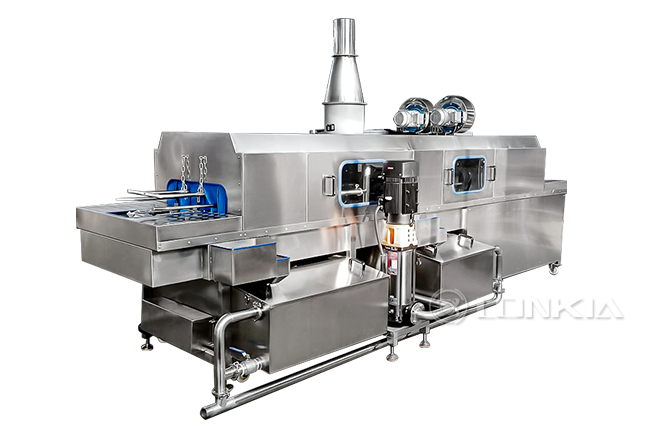
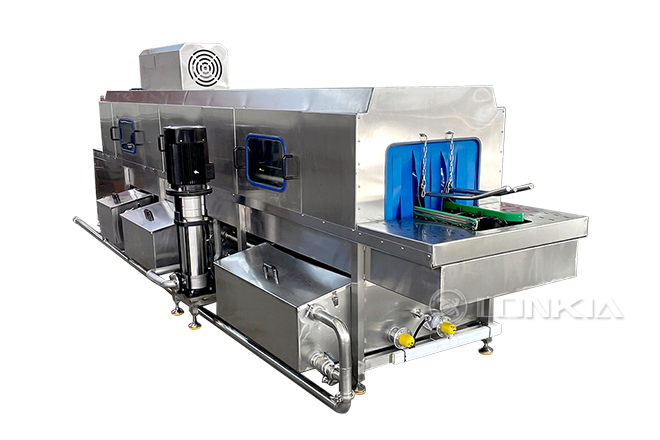
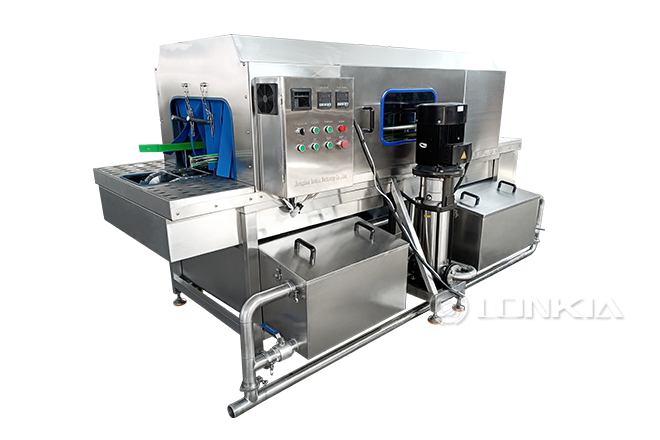
The crate washer machine uses a chain conveyor structure to enable continuous feeding and washing of reusable crates. Conveyor speed must be matched to washing time; excessive speed may compromise cleaning effectiveness, while excessive slowness reduces overall processing efficiency. Adjusting conveyor speed and washing time via the control system allows for better adaptation to varying production needs.
2. Multi-Stage Cleaning Structure
The equipment features pre-wash, main wash, and rinse zones, using multi-angle nozzles to clean both the interior and exterior surfaces of the reusable crates. Multiple water tanks and a recirculating filtration system help maintain a continuous cleaning process, meeting processing requirements for varying degrees of soiling.
3. Reusable Crate Dimensions and Conveyor Compatibility
Reusable crates of different sizes affect the design of the equipment's conveyor structure and cleaning zones. LONKIA can customize the conveying and washing zones based on returnable container specifications to ensure the crate washer machine matches the containers actually in use.
Summary
A well-designed equipment configuration must not only meet daily washing tasks but also consider the integration with upstream and downstream production processes. It is recommended to schedule washing based on returnable container recovery times to avoid backlogs caused by concentrated feed rates. At the same time, select air knives or auxiliary drying modules based on actual needs to reduce the processing wait time for return crates after washing.
LONKIA can provide customized return crate washer machine solutions based on a factory's daily return crate throughput, washing requirements, and on-site layout, helping customers effectively align equipment capacity with production rhythms to ensure timely washing and reuse of return crates.